Calendar Notes
- Wednesday, January 1st – New Year’s Day: Stock market is closed.
- Thursday, January 9th – National Day of Mourning for President Jimmy Carter – Stock market is closed.
- Monday, January 20th – Martin Luther King, Jr. Day – Stock market is closed.
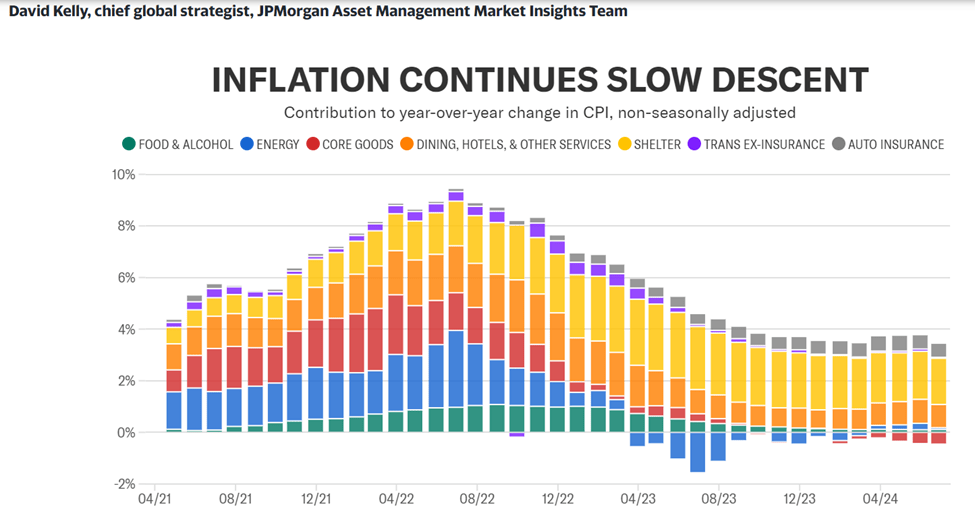
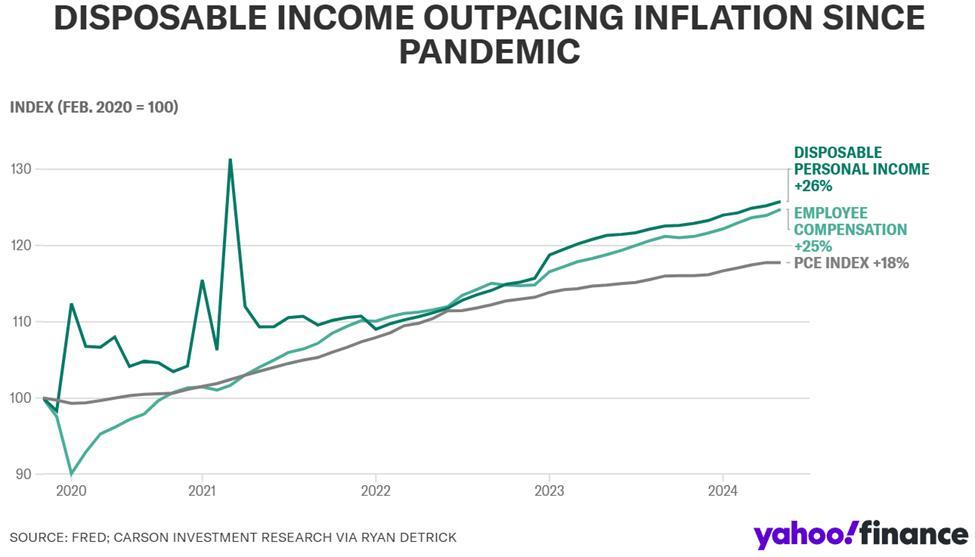
Stocks seemed a bit tired in December as the year-end rally flamed out. I can’t blame them. They worked hard all year, and it showed, racking up a 20%+ return for the second year in a row. This hasn’t happened since the 1990’s, which sounds so long ago. The biggest catalysts for this performance were the continuing AI expansion on all fronts as well as inflation dropping substantially over the past year.
For the month, the S&P 500 dropped about 2.5%. However, it was still able to finish the year with a gain of over 23.3%.
Looking ahead, we will have Q4 earnings reports coming out in a few weeks. Also, Trump and his new administration will be coming in later this month. Finally, the Federal Reserve meets at the end of the month in a very cloudy interest-rate environment. Those are some pretty big catalysts that can move the markets, making for a very busy start to the year.
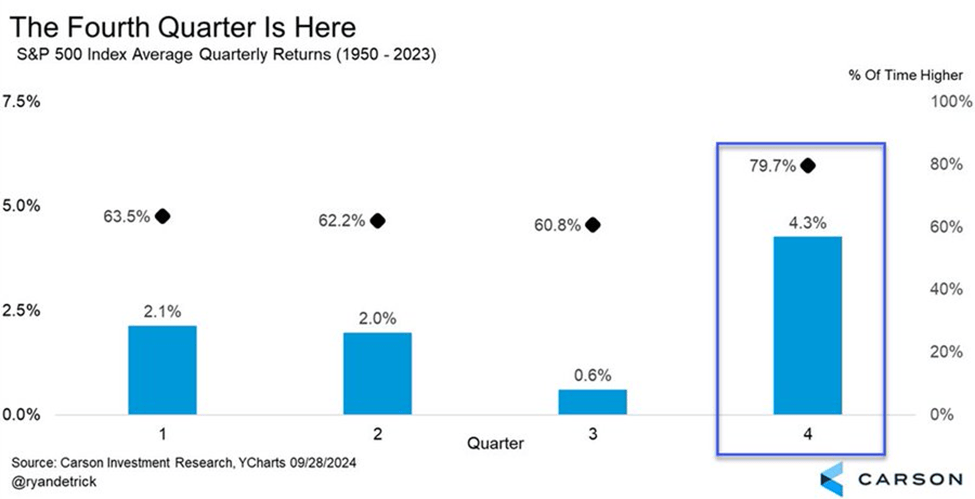
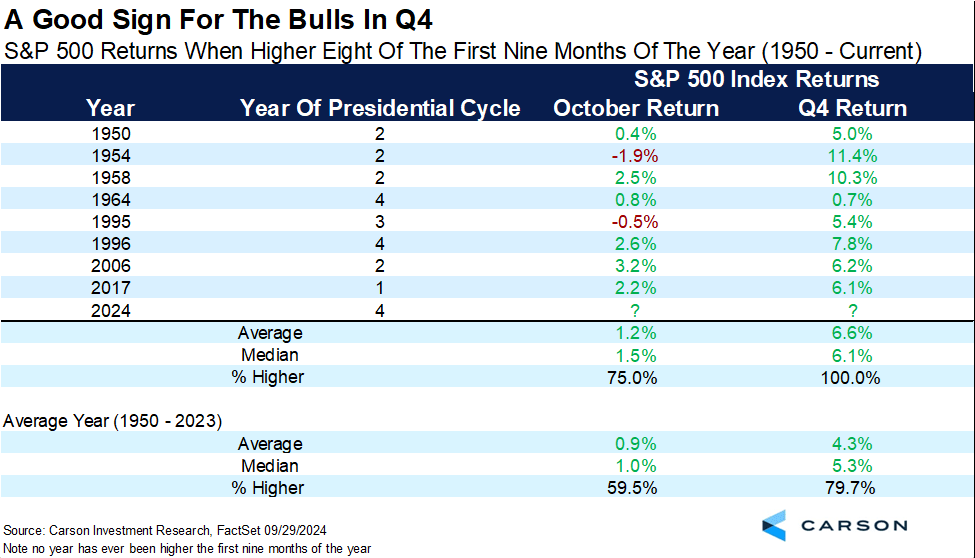
Historically, January has been a good month for stock performance. It has also been a pretty accurate indicator of how stocks will perform the rest of the year. For instance, when stocks have a positive January, full year returns have been positive 77% of the time. Let’s hope history repeats itself this month.
Take a look at the Outlook section below to see what events could move the markets over the short term.
Bond prices flip flopped once again, reflecting the uncertainty in the current interest rate environment. Both corporate and government bond prices fell during the month of December as new inflation data coming in showed that inflation is stickier than anyone expected. Still, the Federal Reserve did cut rates another 25 bps at their December meeting but where they go from here is anyone’s guess, including the Fed.
The 10-year US Treasury note yield finished higher in December, settling at about 4.57%, above the 4.18% that it was at the beginning of the month. The 30-year bond yield closed out the month at 4.79%, higher than the 4.37% that it was a month ago.
Bond investors are waiting with bated breath for the new administration to get in office and lay out their plans for trade and immigration policies, which will heavily influence the direction of bond prices and their yields. We should get some clarity on those issues by the end of the month.
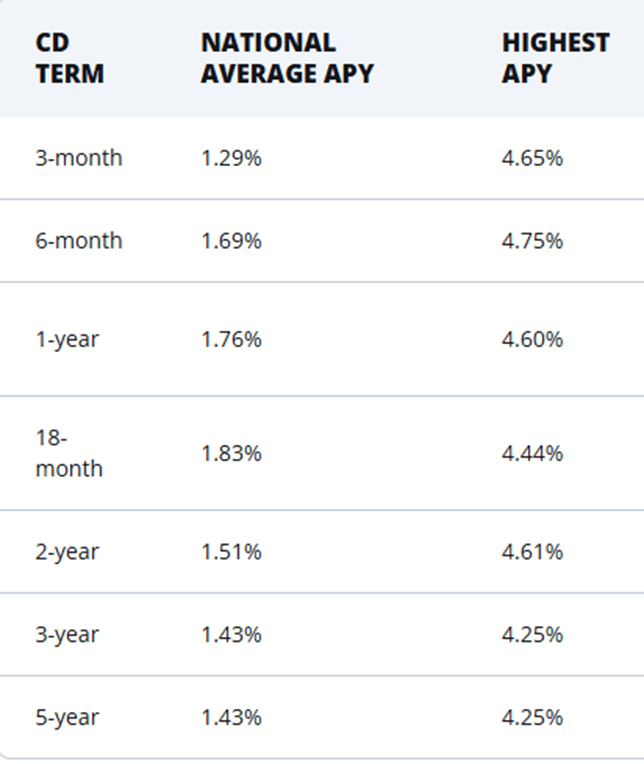
Savings rates either stopped dropping or even went up a little bit this past month. The change in direction is most likely due to the Fed’s talk of slowing down their pace of lowering short-term interest rates in 2025. The direction of where these rates are heading will continue to be uncertain until the inflation picture clears up, which will also depend on the incoming administration’s trade and immigration policies. That said, these rates are pretty good for savers and risk-averse investors. You can get above 4% return on your money currently. So, CDs and MMAs continue to be a great place to put your cash and your emergency fund, for now.
Now, take a look at the top rates for CDs and money market accounts (MMA):
MMA Rates
| National Average | High Rate |
| 0.66% | 5.00% |
The best 1-year CD interest rate is currently at 4.60%, higher than last month. The best 5-year CD rate right now is around 4.25%, a 25-basis point rise from last month. Once again, MMA and traditional bank savings account rates changed very little from last month.
Savings rates are now in a holding pattern until we get a clearer picture on where interest rates are heading. This isn’t a bad thing, especially for risk-averse investors and savers. Knowing this, it makes sense in most situations to put cash that you don’t immediately need into CDs with up to 2-year maturities. For emergency cash, stick to high yielding money market and savings accounts, which are still yielding around 5%. As always, keep the total under $250,000 per person at any one bank to ensure you are fully covered by the FDIC.
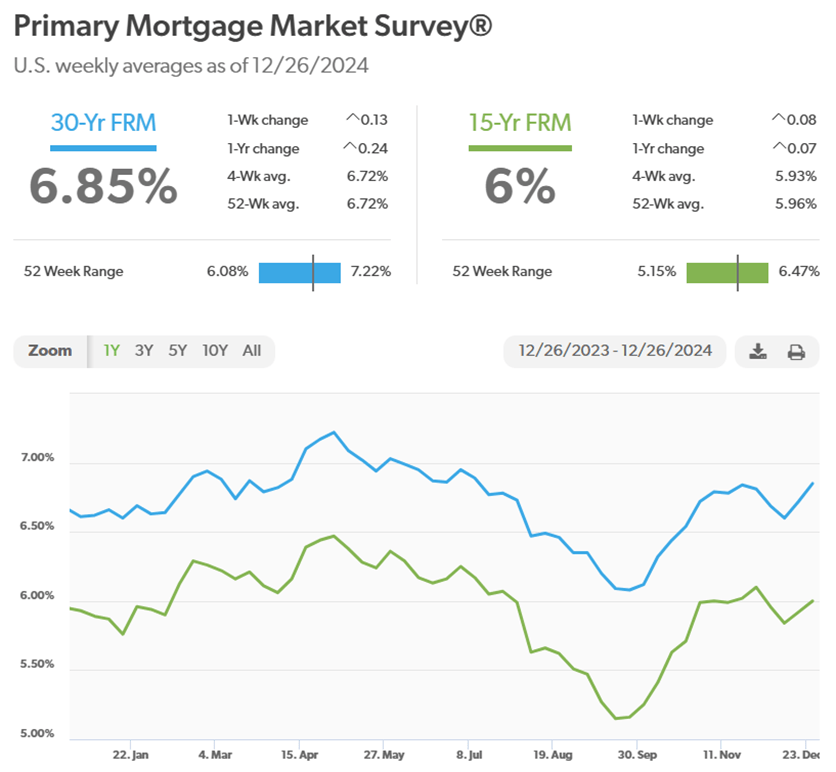
Mortgage rates stayed about the same as a month ago, with the 30-year loan getting ever so close to the 7% mark. Currently, the 30-year rate sits at 6.85%, slightly higher than a month ago, at 6.81%. There is still low inventory, especially for existing homes, so any drop in rates continues to be met with a quick surge in demand.
Oil prices headed higher as hopes of new drilling to lower oil prices were dashed by oil producers’ comments. It seems that these companies like high oil prices (shocking!) and don’t necessarily want to pump more oil. This is a global market that is motivated by profits, so it is difficult to tell them how much oil to produce unless they become operated by the government.
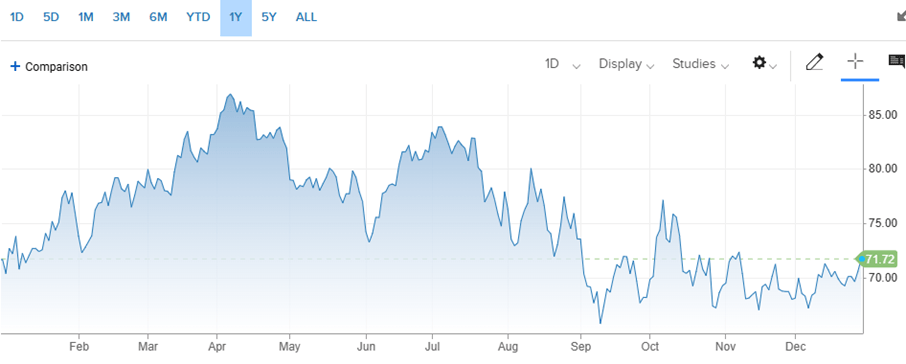
For the month, the price for a barrel of oil closed at $71.72, down from $68.15 at the beginning of December. For the year, prices ended right where they started in January. Getting oil prices below $70 for an extended period of time would help greatly in lowering the overall inflation rate.
Here’s a look at the one-year chart for U.S. oil:
Gasoline prices lagged the rise in oil prices and fell once again in December, albeit barely. Regular unleaded gasoline is now averaging $3.04 per gallon, down from $3.06 last month. Oklahoma has the cheapest gas currently, checking in at $2.58 a gallon. Hawaii has the most expensive gasoline at $4.55 per gallon. FYI, a year ago, we were paying $3.11.
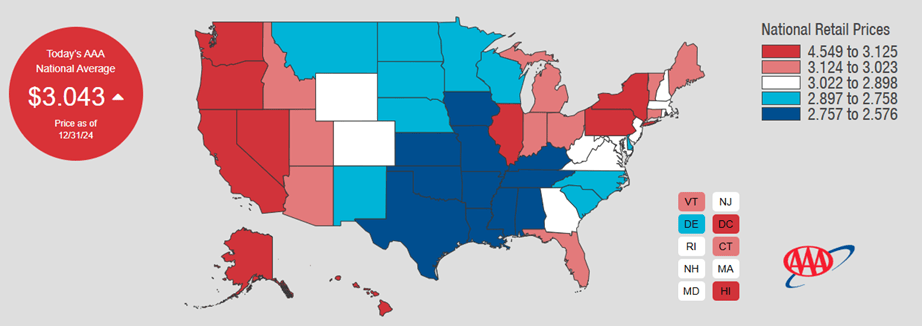
Check out the prices at the pump in your area: AAA Gas Prices.
Outlook
Events on the horizon that could move the markets in the near term:
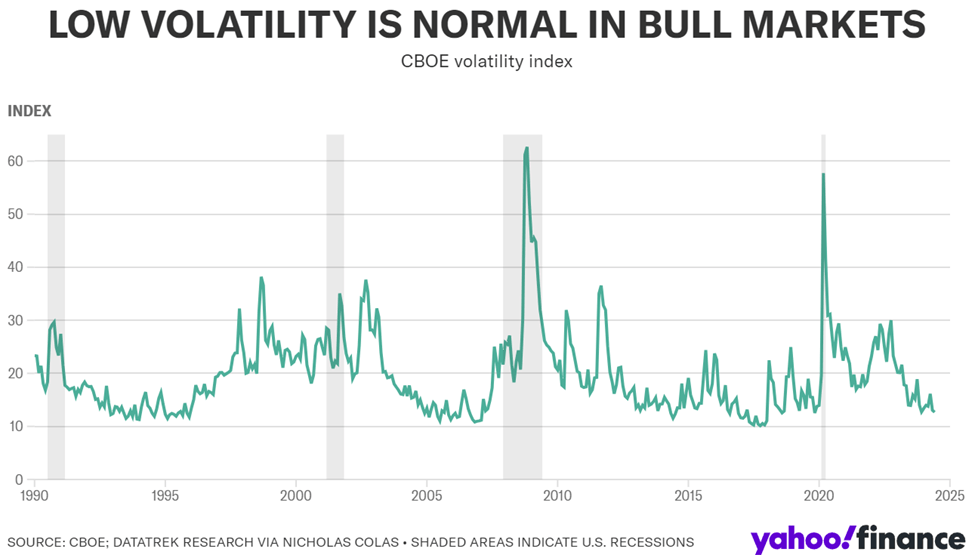
- Fed & Inflation: The Federal Reserve cut interest rates by another 25 basis points at their last meeting of 2024 a few weeks ago. They did state that they might not be as aggressive in cutting rates in 2025 as they thought just a few months ago. I believe they want to let the new administration get settled in to see what policies they plan to implement, particularly tariffs and mass deportation, since these could have a significant impact on inflation. We could know as soon as the end of this month so volatility in the stock and bond markets may be higher than normal this January.
Joe Baker, CFP®
Baker Asset Management, LLC
joebaker@bakerassetmanagement.com