The economic stars were aligning beautifully at the beginning of the year for the Federal Reserve to start to gradually lower interest rates in 2025. Then, in February our economy, and much of the world’s economies, were upended with a shock and awe tariff policy by the Trump administration. This, coupled with changing global perceptions of U.S. governance and institutions has forced the Fed to rethink its interest rate strategy. Subsequently, the odds of any rate cuts this year have dropped significantly since the end of 2024.
Here are the main suspects that may keep interest rate higher for the foreseeable future:
- Tariffs: This chart summarizes the effective tariff rate that U.S. companies have had to pay since February:
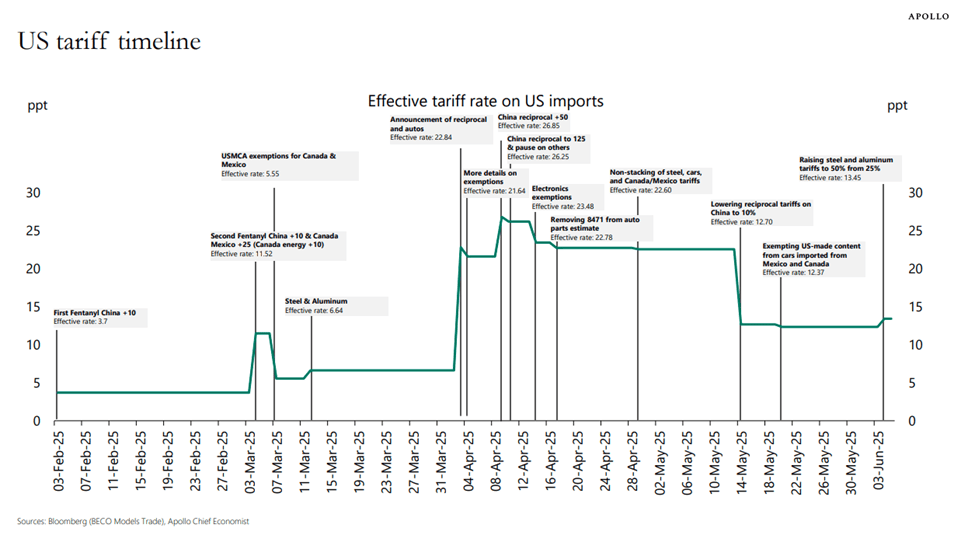
The green line shows the effective tariff rate from February to June of this year. Prior to February, the U.S. was paying an effective tariff rate of about 2.4%. Currently, we are paying an effective rate of 13.45%. We were as high as 26.85% in April, so we have come off of the highs but still are at a level that is almost 6 times what we were paying at the start of the year. Now, it’s showing up in the prices that we are paying and also in the number of small businesses that have had to lay off workers, suspend operations, or shut down completely. This increase is just not sustainable and higher prices mean rates have to stay high to fend off runaway inflation.
- Weaker Dollar: Take a look at this chart of the US Dollar hitting a 3-year low recently.
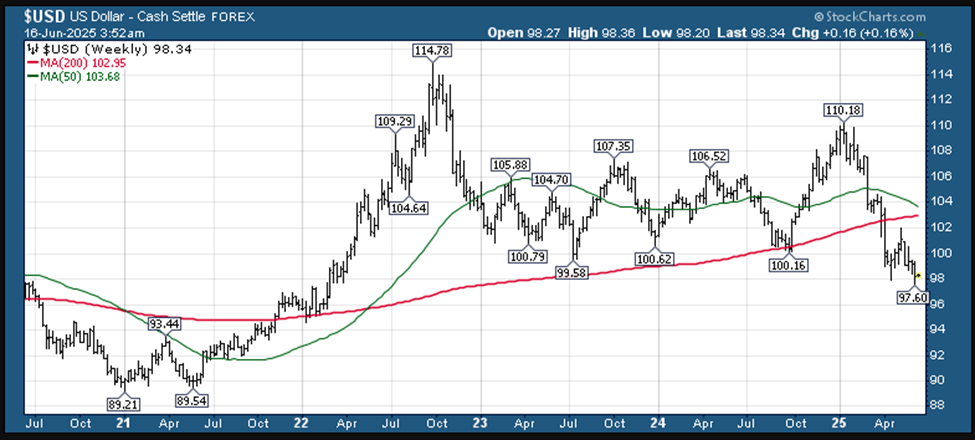
The black is the dollar index value, the red is its 200-day moving average and the green is its 50-day moving average. There are several factors contributing to the downward pressure on the U.S. dollar, including:
- Tariffs and Trade Policy
- Global Concerns about U.S. Economic Growth and Recession Risks
- Fiscal Deficit and Debt Concerns
- Erosion of U.S. Except
In essence, a combination of protectionist trade policies, concerns about the U.S. economy’s resilience, fiscal anxieties, and a shift in global investor sentiment are all contributing to the weakening of the U.S. dollar in 2025. A weaker dollar is inflationary and another reason for the Fed to keep rate elevated.
As I have said before, these issues are self-inflicted, which means they can be resolved quickly if we act now. The longer these policies are in place, the harder it will be to recover from them. Then, the Federal Reserve will have to lower interest rates but for all the wrong reasons, aka a recession.
Please comment or send an email if you have any questions.
Joe Baker, CFP®
Baker Asset Management, LLC
joebaker@bakerassetmanagement.com