

In my last post, I talked about how our tariffs could adversely affect the 33+ million small businesses in the U.S. Today, I want to continue that discussion but go into a little more detail with some interesting illustrations that show the contribution that our small businesses have to our economy.
Tariffs have been used throughout history to protect domestic industries. When implemented tactically on certain materials or products within a broader, strategic economic plan, they have had some success. However, when you carpet-bomb everything simultaneously that is imported into our country with tariffs without letting our companies prepare and plan, it results in chaos, as we have seen already.
When our government implements very high tariffs suddenly, they impact many businesses, particularly small businesses, because the tariff must be paid by the business when the imported goods arrive in the US. Small businesses that have relied on a stable US system for decades need to adjust quickly and may not have the working capital to pay tariffs. Ships might remain offshore, orders could be canceled, and many small businesses may face bankruptcy.
There have been some exceptions for large businesses, but they are the companies that need them the least. These massive corporations have the flexibility and the resources to handle unforeseen expenses. Not giving the same breaks to small businesses does not make any sense. Just look at these charts below to see why:
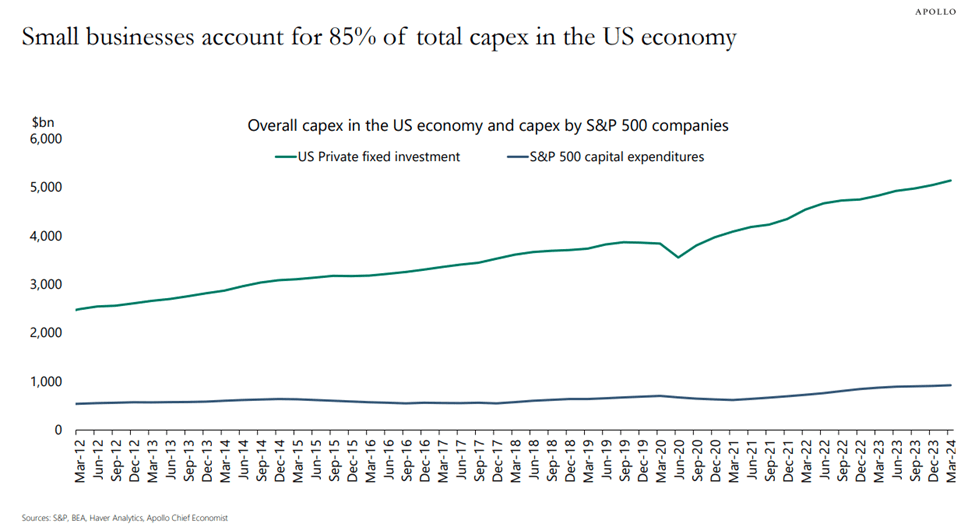
This shows that 85% of the capital expenditures, basically the money that businesses reinvest into themselves to expand and grow, in the US economy comes from small businesses. These guys should be getting the tariff exemptions.
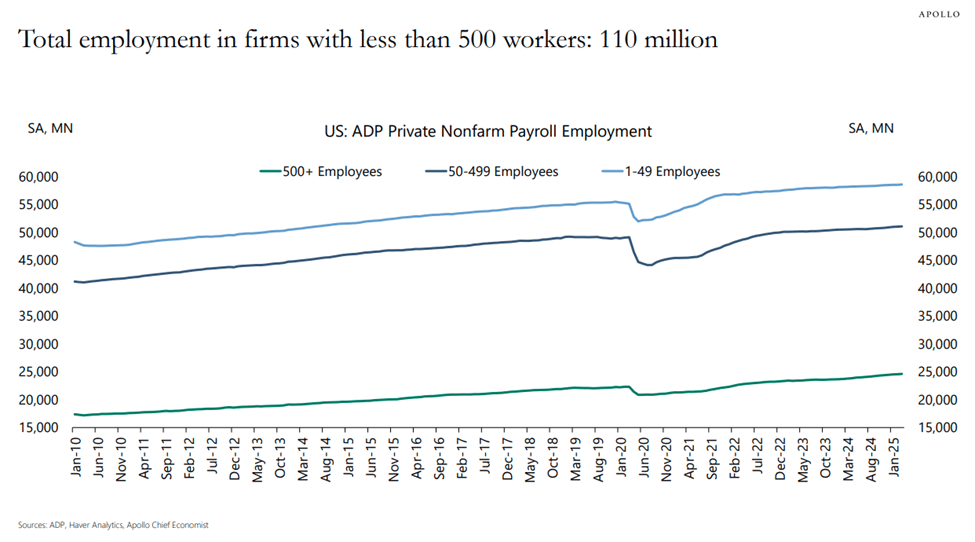
Here we see that small businesses (less than 500 employees) account for 110 million workers of the labor force, approximately 75% of the total number of workers employed in the country. Damage to this large of a swath of the economy would be devastating.
So now, the challenges for small companies have become a big problem for the US economy. Even if tariffs get knocked down substantially from their current high levels, many small businesses will not be able to absorb the costs and will have to pass the costs onto their customers, reduce their payroll, or worse, shut down.
Let’s hope we abandon the blanket tariff policy and instead develop a long-term plan along with our trading partners that will benefit all parties.
Please comment or send an email if you have any questions.
Joe Baker, CFP®
Baker Asset Management, LLC
joebaker@bakerassetmanagement.com

