Fun Facts about November
- Birthstone: Topaz and Citrine
- Flower: Chrysanthemum
- Zodiac signs: Scorpio and Sagittarius
- November in the Northern Hemisphere is similar to May in the Southern Hemisphere.
- Tuesday, November 7th, is Election Day.
- Saturday, November 11th, is Veteran’s Day.
- Thursday, November 23rd, is Thanksgiving. Stock markets are closed. Markets will also close early, at 1:00 PM, on Friday, November 24th.
Stocks continued their decline for a third month in a row as geopolitical risks rose across the globe following the horrific attack on Israel by Hamas. Meanwhile at home, investors are still worried about the Federal Reserve raising interest rates even further. High interest rates coupled with conflicts in Europe and the Middle East are luring equity (stock) investors to bonds, crypto, and precious metals.
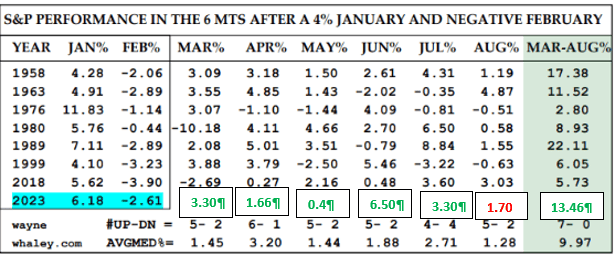
The S&P 500 dropped for the fourth consecutive month, finishing down 2.2%. For the year, it is still up, but only about 10.6%. Looking ahead to this month, November has historically been a positive month for stocks, averaging a small positive gain of+0.90% since 1928.
Q3 earnings have been rolling out over the last few weeks and have shown that the economy is still quite strong. But these numbers have been overshadowed by the Federal Reserve and its mission to get inflation below 2%. I’m pretty sure they will be successful, but it could be costly if they plunge the economy into a recession unnecessarily.
Take a look at the Outlook section below to see what events could move the markets over the short term.
Bond prices headed lower for a fourth straight month in October with the exception of treasury bills with short maturities. Their prices rose just a bit. This trend might end abruptly this week when the Federal Reserve concludes their meeting tomorrow. Investor sentiment points to the Fed holding steady on interest rates. If they raise rates or plan on raising rates anymore this year, we could see some wild swings in the bond and stock markets over the next few days.
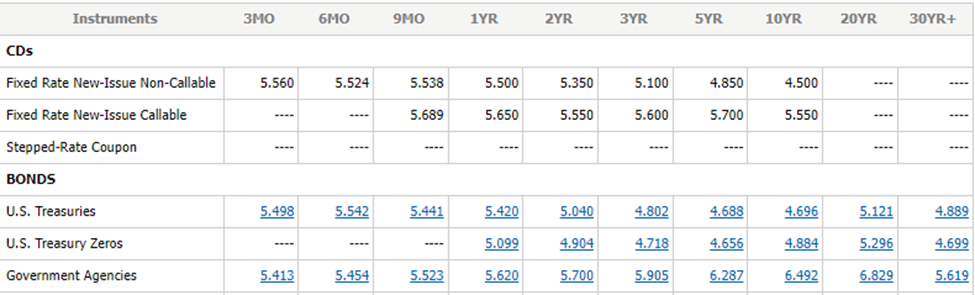
The 10-year US Treasury note yield moved up about 30 basis points to close out October at 4.88%. The 30-year bond yield rose nearly the same amount as well, closing the month at 5.03%. Although these yields have been increasing, they continue to remain below the yields of short-term treasuries. For example, the 6-month T-bill is currently yielding 5.56%. The good news is that the gap is narrowing between long-term and short-term bond yields. If the Fed holds off on raising short-term rates for a while, we could see the yield curve revert back to its normal shape and possibly avoid a damaging recession.
Bond buyers should continue to focus on bonds with short-term maturities. I would keep maturities under 18 months and just plan on holding these bonds to maturity. That way, you won’t have to worry about selling at a discount if interest rates head higher. If rates do start to drop, you can sell the bonds at a profit since their price will rise as their yield drops.
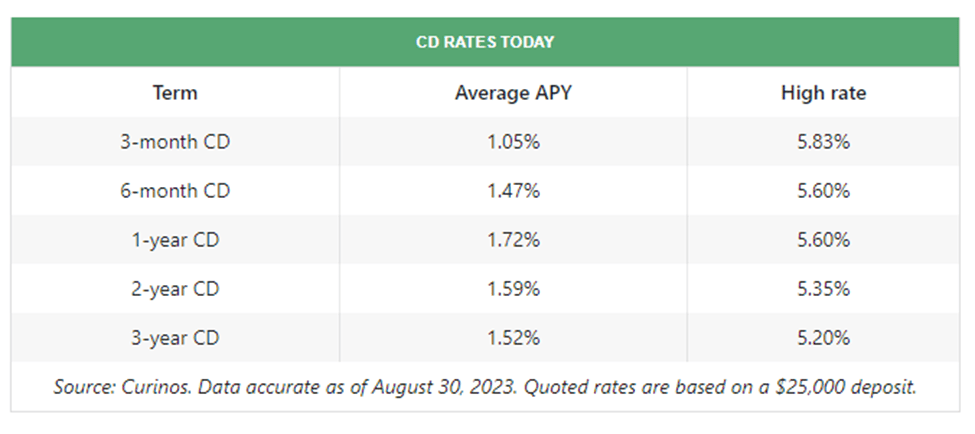
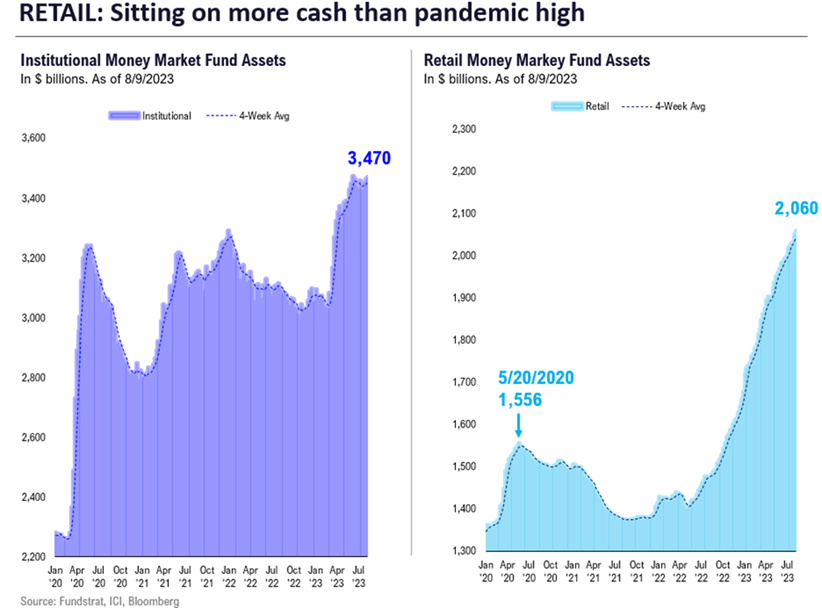
Savings rates remained at multi-year highs in October, which is great for our risk-averse investors out there and for anyone with cash in savings, money market, and CD accounts. These rates are a legitimate alternative to stocks and bonds and will keep pressure on those markets until we see this trend reverse.
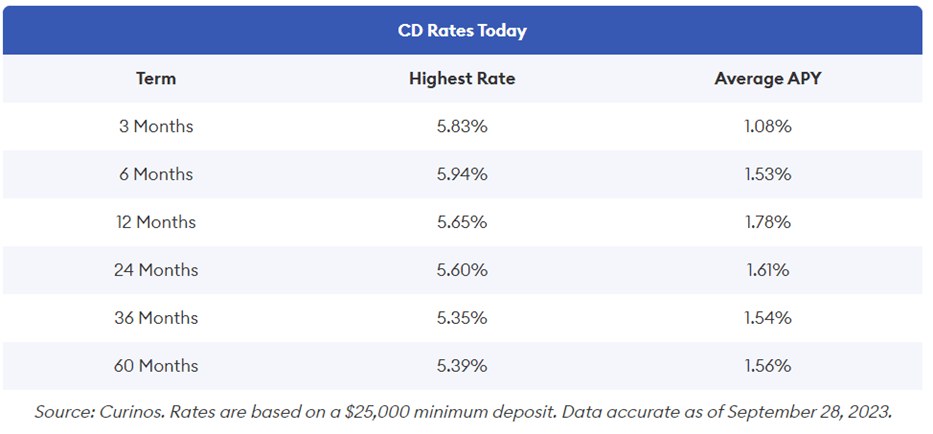
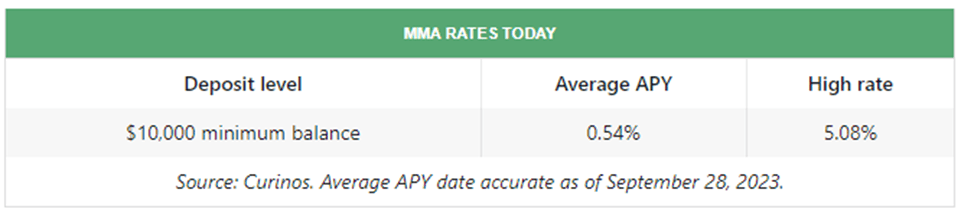
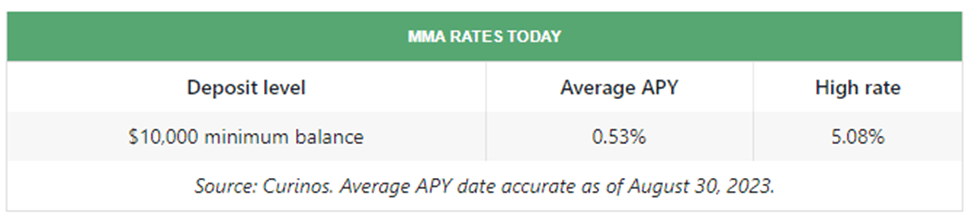
Now, take a look at the top rates for CDs and money market accounts (MMA):
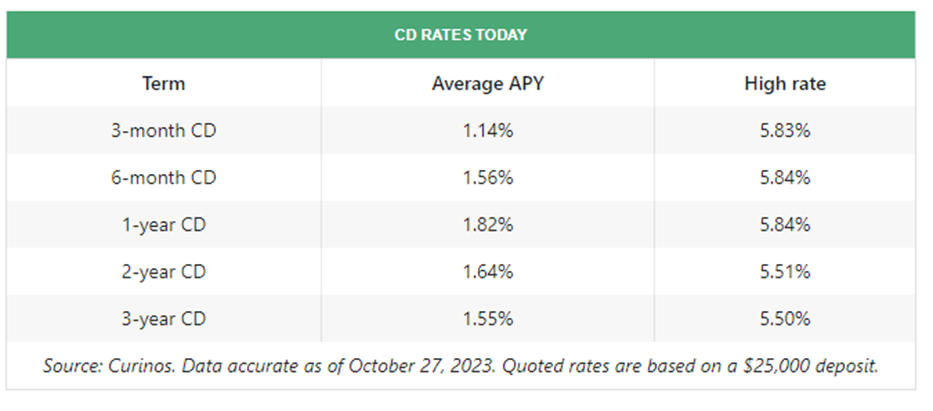
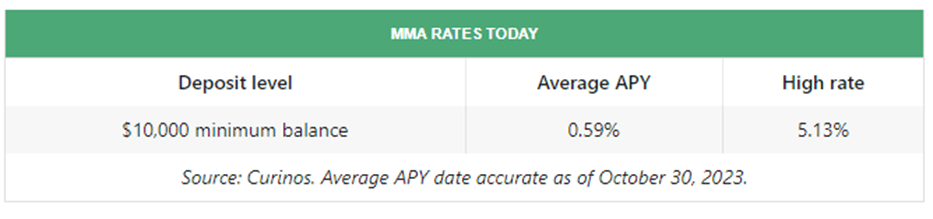
The best 1-year CD interest rate is peaking at 5.84%. The best 5-year CD rate right now is at 5.20%. These rates are still inverted, but are narrowing their spread, which means that they are normalizing. We are getting closer to the point where buying longer-term maturity bonds and CDs will make sense but for now, I would still put my savings or emergency spending money into short-term CDs, 1 year or less, and reevaluate when they mature. If you’d rather have more liquidity, look into an MMA (yielding over 5% currently). Keep the total under $250,000 per person at any one bank to ensure you are fully covered by the FDIC. As I mentioned above, CDs and MMAs have become nice alternatives for risk-averse investors and have drawn money away from stocks because of their relatively high rates that carry virtually no risk.
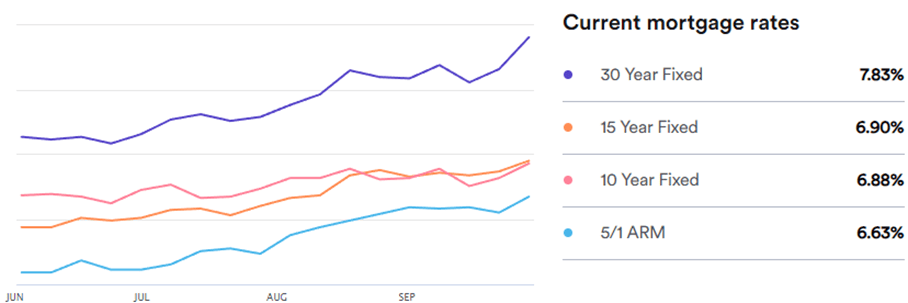
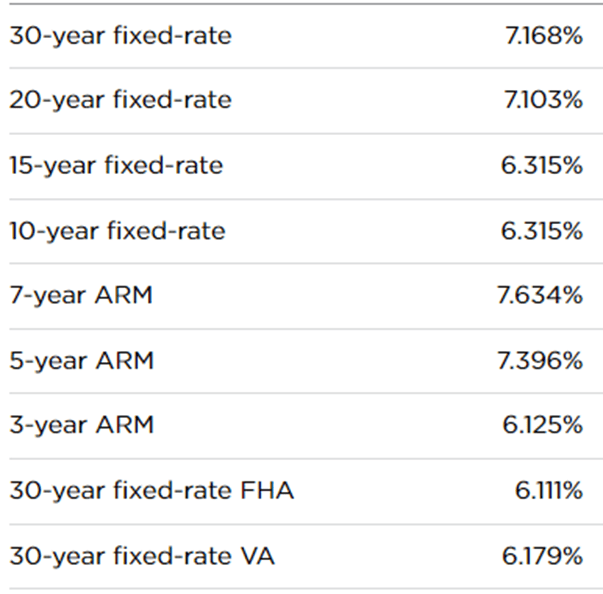
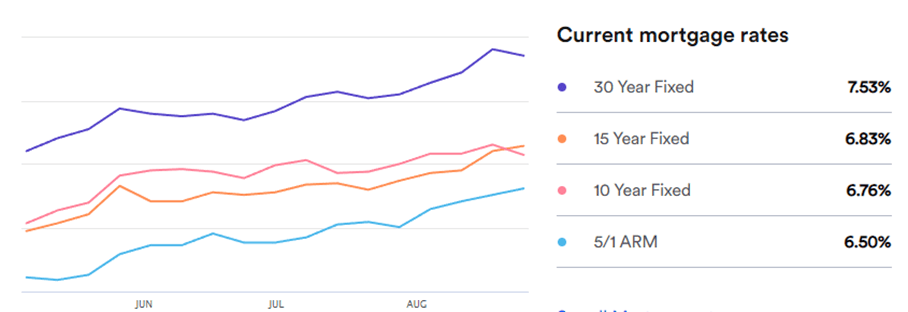
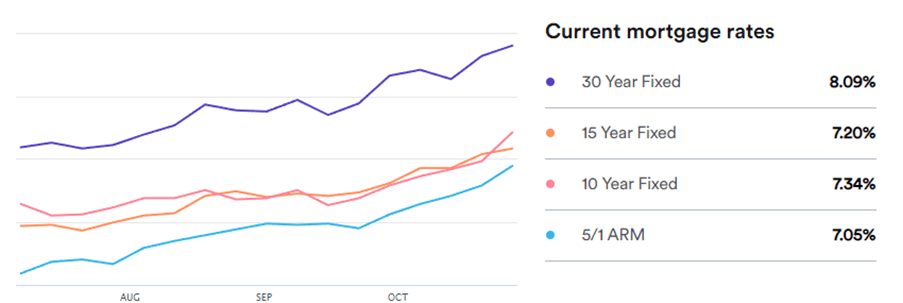
Mortgage rates continued to move higher in October, surging past the 8% mark. Currently, the 30-year rate sits at 8.09%, higher than what it was a month ago, at 7.83%. Rates are now at levels not seen since August of 2000.
With rates this high, most homeowners who want to move are sitting tight and prospective homeowners looking to buy are finding slim pickings to choose from. Plus, if they do find something, they are likely not going to be able to afford the mortgage payments. It’s a tough market for buyers, sellers, mortgage brokers, and real estate agents and it probably won’t get better until mortgage rates get below 7%. Hopefully, the Federal Reserve is taking note.
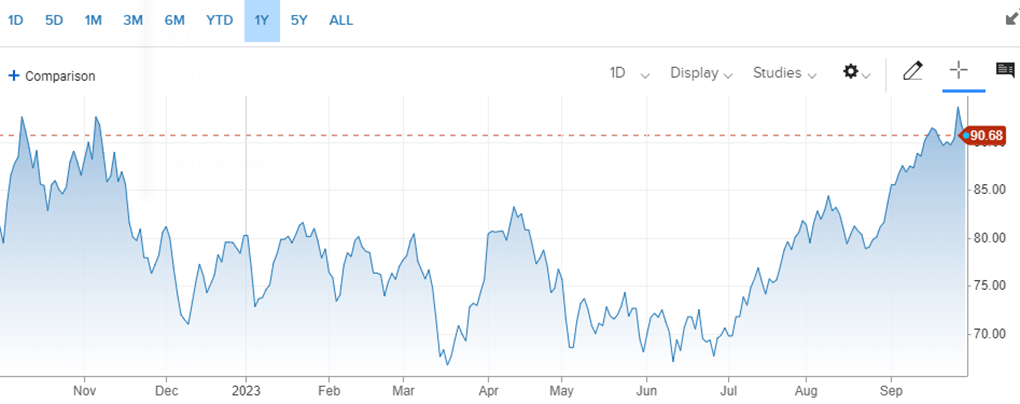
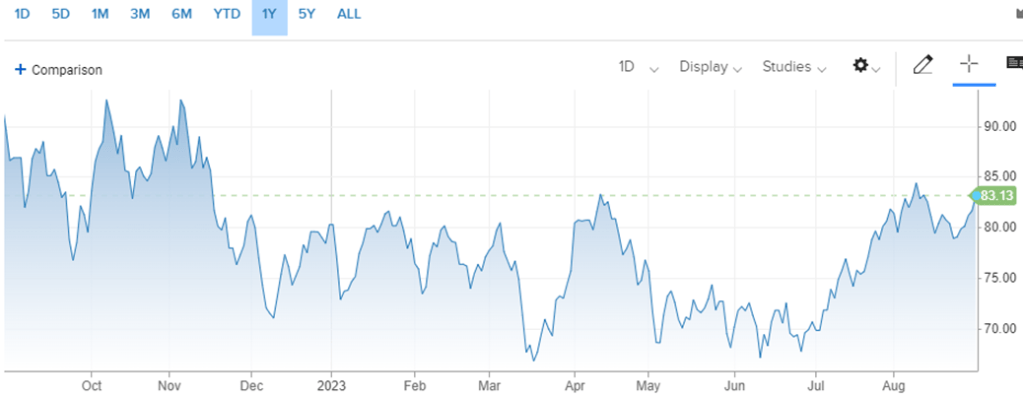
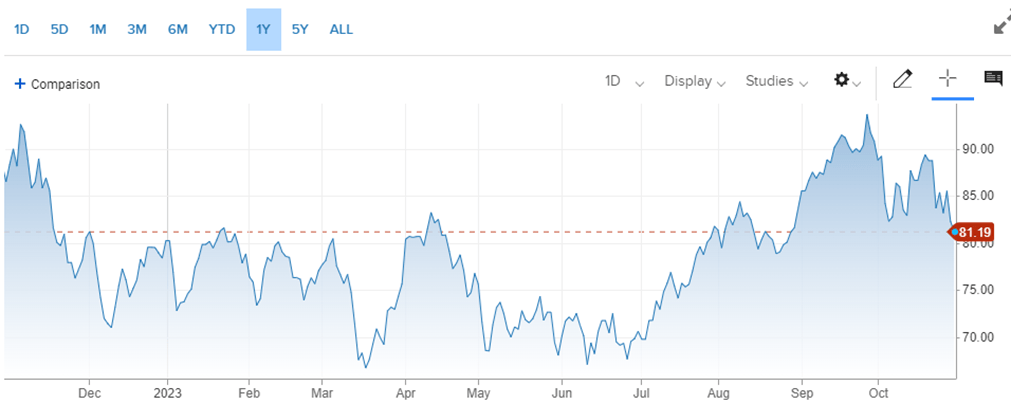
Oil prices took an abrupt U-turn and headed lower in October, despite the turmoil in the Middle East. It seems that the slowing of the economy due to the Federal Reserve’s actions to combat inflation has more than offset any tensions in the Middle East as well as supply tightening by OPEC. For the month, the price for a barrel of oil settled around $81.20, down from $90.70 at the beginning of October. Hopefully, we can keep this trend going and get prices down to the sweet spot, below $70.
Here’s a look at the one-year chart for U.S. oil:
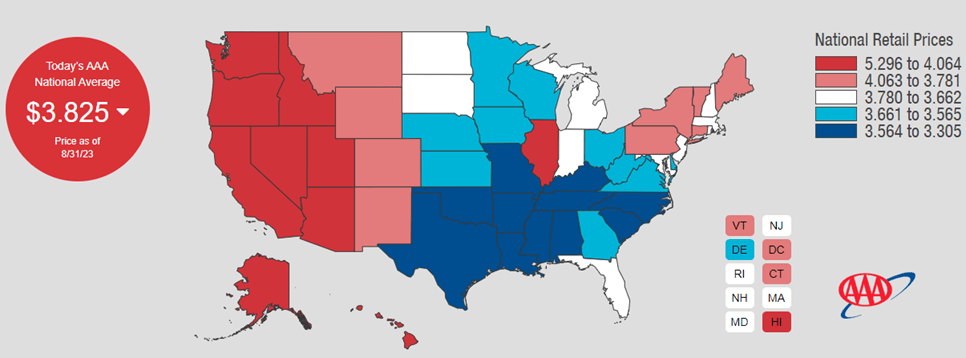
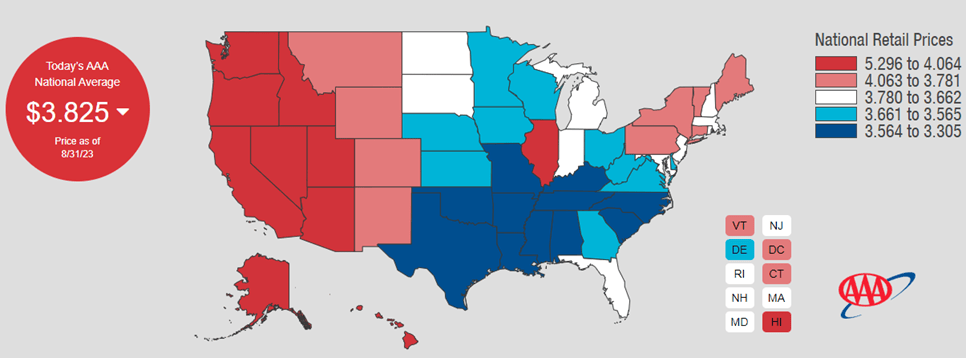
Gasoline prices took a well-needed dip in October, catching up with the recent drop in oil prices. Regular unleaded gasoline is now averaging $3.48 per gallon, down from $3.83 last month. Georgia has the cheapest gas currently, checking in at $2.95 a gallon. California has the most expensive gasoline at $5.27 per gallon. FYI, a year ago, we were paying $3.77.
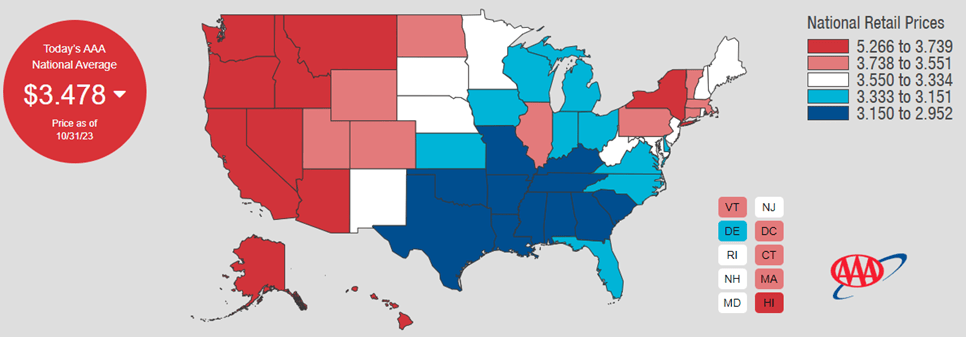
Check out the prices at the pump in your area: AAA Gas Prices.
Outlook
Events on the horizon that could move the markets in the near term:
- Fed & Inflation: When the Fed finishes their meeting tomorrow afternoon, we should have a good picture of what they plan on doing for the rest of the year with regards to their outlook on inflation. If they plan on no more interest rate hikes for the rest of the year, that could be the catalyst needed for a year-end rally for stocks and bonds. I would really like them to change their inflation target from 2% to a range of 2% to 3%. That seems like a more reasonable goal versus a specific number and gives them a much better chance of not overshooting their target and causing the economy to go into a recession. Regardless, tomorrow should be a volatile one for the markets.
- Israel/Hamas: If the U.S. gets involved in this conflict more than our current supporting role for Israel, it could continue to send the stock market lower in the near-term. Hopefully, we can steer clear from getting any deeper in this battle.
Joe Baker, CFP®
Baker Asset Management, LLC
joebaker@bakerassetmanagement.com