
With inflation hitting the front pages, I thought that it would be interesting to take a look at where the borrowing rates are for consumers and how they affect our spending habits.
I selected four of the most common loans that we use: credit cards, mortgages, auto loans, and student loans. The rates on these type of loans have increased dramatically over the past eighteen months due to the Federal Reserve raising the overnight lending rate to banks. This, in turn, raises the prime lending rate (currently at 8.50%) and that trickles down to all other lending rates in our financial system.
Credit Cards
The average interest rate for credit cards is now about 23% and there are some as high as 36%. These are all-time highs. Of course, you can avoid paying these astronomical rates by paying off your statement balances every month.
Auto Loans
Interest rates for new auto loans now average 7.4%, the highest they’ve been in over 15 years, per Edmunds. The rates on these loans are highly influenced by the borrower’s credit scores, as you can see in this table:
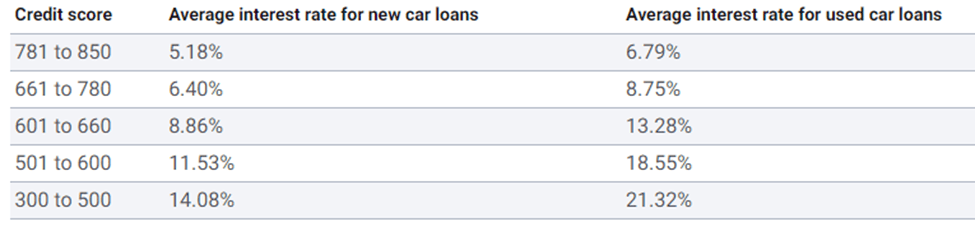
If you have a credit score below 600, you should consider improving your credit score before applying for a loan to buy a car. You can improve your score by paying down any existing debt, making timely bill payments, especially for credit cards, and hold off on submitting any other credit applications, such as for mortgages or credit cards.
Mortgage Loans
The average rate on 30-year mortgages rose to 7.62 percent last week, their highest rate since December 2000. Here’s the current averages for various terms:
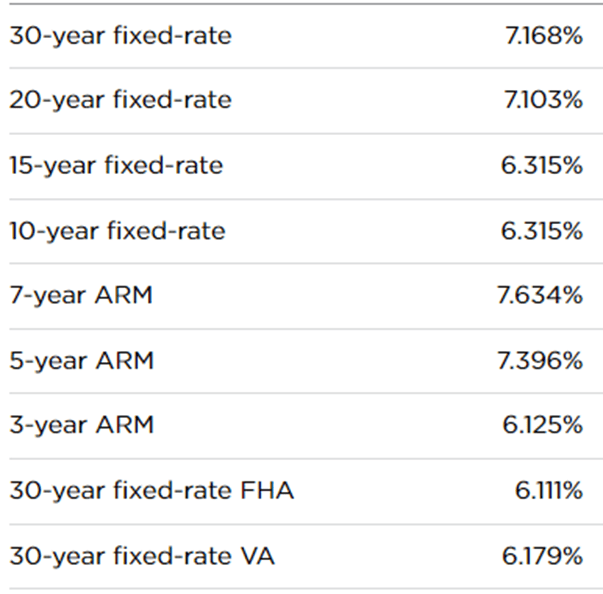
Fun fact: 30-year mortgage rate was 19% in 1981!
These high rates have caused a big drop in mortgage applications as home buyers wait it out on the sidelines for lower rates. There is also a low inventory of houses for sale that is also contributing to this drop in applications.
If you believe that rates have peaked, you may want to apply for an adjustable-rate mortgage (ARM) loan so you can take advantage of declining rates in the future. This is a big IF right now.
Student Loans
The average student loan interest rate for undergrads has risen from 4.99% during the 2022-2023 school year to 5.5% for the 2023-2024 school year, according to the U.S. Department of Education. This rate is surprisingly low compared to historical rates that I have seen.
The trends for these rates have been upward for well over a year now and where they head in the near future is dependent on what the Fed says and does at their next meeting, slated for September 20th. The consensus is that they will hold off on raising rates at this meeting. I agree because the rates that we talked about today are increasing the amount of money that we need to service our debt which means that we have less disposable income for everything else. This has been reducing demand for products and services which should bring prices down for consumers. This is the Fed’s basic strategy to combat inflation and it is working but takes time, usually up to twelve months, for an interest rate hike to be felt across the economy. That’s why they should hold off on any more raises and let these already-high rates do their job.
Please comment or send an email if you have any questions.
Joe Baker, CFP®
Baker Asset Management, LLC
joebaker@bakerassetmanagement.com

