
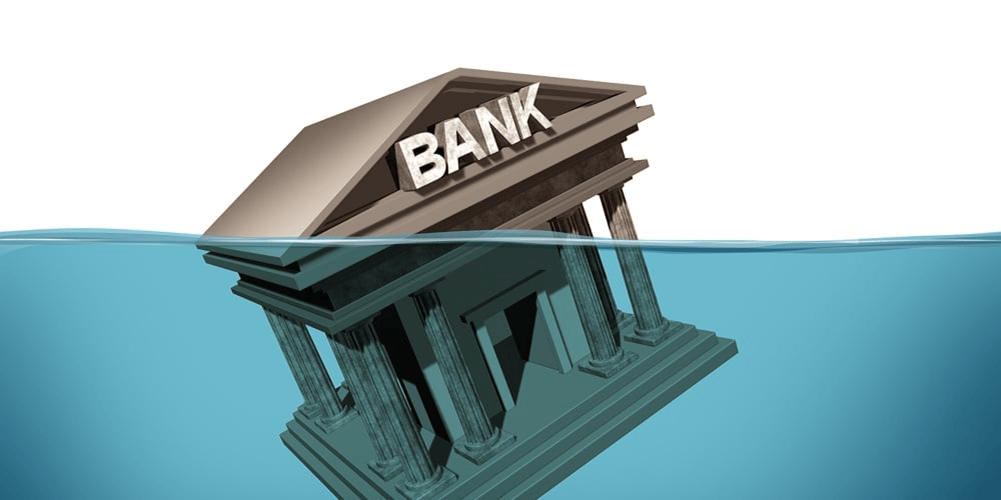
Just when you thought it was safe to go back into investing in banks, there’s cause for a pause. The banking crisis that was supposed to be contained is still spreading like a windshield crack. So far this year, we have had four large, regional banks fail: Silvergate Bank, Silicon Valley Bank, Signature Bank, and the latest, First Republic Bank. Now, there are others that look like they may be next, especially based on their stock prices. Western Alliance Bancorp and PacWest Bancorp are a few banks whose stock prices are currently freefalling.
Risk factors that typically contribute to bank failures include:
- Credit risk (loans and other assets turn bad and ceasing to perform)
- Liquidity risk (withdrawals exceed the available funds)
- Interest rate risk (rising interest rates reduce the value of bonds held by the bank and force the bank to pay relatively more on its deposits than it receives on its loans).
The recent bank failures weren’t really affected by credit risk (the main cause of the Great Financial Crisis of 2008). It was more of a combination of liquidity and interest rate risk, brought on by poor asset management by the banks themselves, coupled with poor oversight by their regulators. Also, the Federal Reserve raising interest rates did not help and is definitely not helping the banks currently in jeopardy.
This caused a loss in confidence by the banks’ depositors, and they subsequently withdrew their deposits, aka a run on the banks.
I’m not sure why the current regional banks are in trouble, but I can tell you depositors aren’t going to wait to find out. There’s a snowball effect happening, and customers are fleeing to the bigger banks or other financial institutions, such as brokerage houses (Schwab, Goldman Sachs, Fidelity, etc.).
With all this going on, I can’t imagine the Federal Reserve is going to raise interest rates any more this year. I guess that is a silver lining to come out of this mess. We’re certainly not in a systemic bank failure situation like we had in 2008/2009, but banks failing and causing a loss of depositor confidence across the country is never a good thing.
Please comment or send an email if you have any questions. Thanks!
Joe Baker, CFP®
Baker Asset Management, LLC

