Why Bonds Can Be More Riskier Than Stocks

4-reasons-why-some-investors-choose-bonds-over-stocks

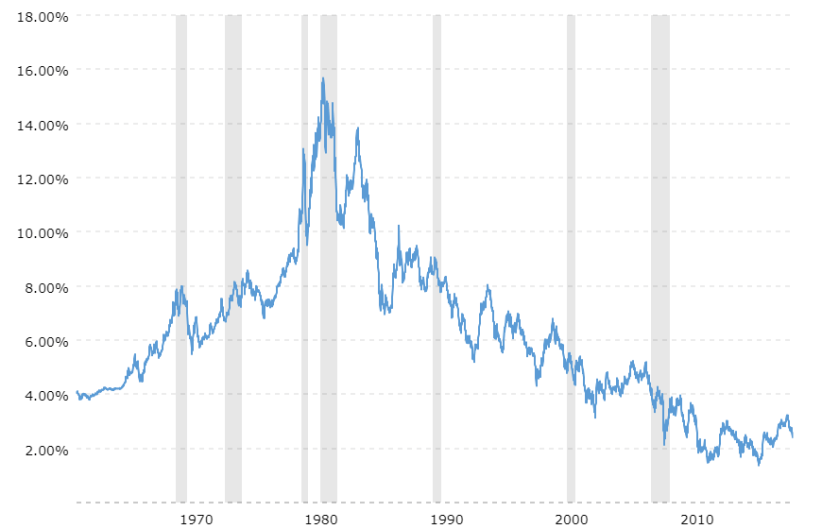
I talked about this topic back in February of last year as interest rates started to move up pretty quickly.  Since then, rates ended up peaking in November of last year and have actually declined quite a bit. For instance, the 10 year U.S. Treasury note has gone down from about 3.25% in November 2018 to about 2.5% currently.

Even so, this post still applies today and maybe even more so because of the healthy economic environment that the U.S. is currently enjoying, despite trade wars, tariffs, etc.  I did add a few updates. Here you go:

In the current environment of rising interest rates, I wanted to make sure that you were aware of the potential risks of owning bonds, particularly bond mutual funds and bond exchange traded funds (etf).

The general consensus among investors is that bonds are typically considered safer than stocks.  A couple of the reasons include:

  • Bond investors are higher in the pecking order than stockholders to get their initial investment back if the company goes bankrupt.
  • Companies that issue bonds have an obligation to pay the promised interest rate to investors.  Companies do not have an obligation to pay dividends to stockholders.
  • Bond prices are usually less volatile than stock prices.
  • Bonds trade just like stocks: their prices fluctuate as investors buy and sell them throughout the day.  Also, when a bond price changes, so does its interest rate, but in the opposite direction. So, if a bond price goes up, its interest rate goes down, and vice versa.

As we said, interest rates have decreased over the past year but have increased quite a bit since bottoming in 2016, showing a long-term trend of rising rates.  This affects bond prices because new bonds will have higher interest rates than older bonds. Bonds with higher interest rates are more desirable, all else being equal.  That means the prices of bonds with lower interest rates drop because there is less demand for them. This isn’t a big deal if you buy an individual bond and hold it until it matures – the date when the bond goes away – and you get your original investment back.

The problem occurs when you own bonds in a mutual fund or etf.  Technically, these investments have no maturity date because they continuously buy bonds.  This is risky when interest rates are rising because this will cause these fund prices to drop.  Most of the time, I find this situation when reviewing someone’s holdings in their 401k plan. They usually own some type of bond fund as part of a general strategy that their 401k provider has shown them.

If you look at the chart below of interest rates for the 10 year U.S. Treasury note, it looks like we are still in the bottoming process of a long term trend of rising rates.  This should give you all the reasons that you need to evaluate your bond strategy in current investment portfolio.
10-year-treasury-bond-rate-yield-chart-2019-04-26-macrotrends

If you do want to own bonds, please consider owning individual bonds that you plan on holding until maturity and make sure the maturity date is 2 years or less.  If you must use bond funds, use funds that only buy short term maturity bonds. These bonds are less affected by rising interest rates.

This strategy can be a little confusing to understand so if you have any questions, please let me know.

Joe Baker, CFP®
Baker Asset Management, LLC
joebaker@bakerassetmanagement.com

Playing The Quarterly Earnings Game

quartely earnings


It happens four times a year.  Investors, analysts, financial media, and traders wait with bated breath every quarter for companies to trot out their top executive team to report their earnings.  So much is at stake to see if they can meet, beat, or miss, the prognosticators’ estimates.

Amazingly (note sarcasm), most companies are able to beat earnings estimates by a penny or so.  That means the analysts that put out these estimates are as good as Vegas oddsmakers and/or companies are able to massage their numbers in such a way to make everyone happy with the results.  There’s definitely a little of both. But there is also some stuff going on that we don’t normally hear about, such as major shareholders, like hedge funds and institutions, that call up the analysts all the time to chew them out if they have a downgrade or low earnings estimates on the stock they own.  Much of the time, this pressure works and they change their analysis to be more favorable to the shareholders. Why do analysts cave to the pressure? Because these analysts get paid by selling their research and the people who buy their research are the big stockholders: hedge funds, pension funds, and other institutional buyers.  That’s why I don’t give analysts’ recommendations much weight when researching potential investments.

So, the flexible accounting rules and the chummy relationships between shareholders and analysts make it pretty easy for a company to meet or beat earnings estimates each quarter.  It’s when a company misses estimates to the downside, by say more than a few pennies, that you should take notice.

Having said that, it’s important to note that this information means different things to different kinds of investors.  As long-term investors, it’s best to avoid the quarterly earnings game if you’ve done your research and know that you own a solid company.  For traders, or short-term investors, a bad quarter for a company could mean selling everything. It could also mean a buying opportunity for investors since it might just be a small blip on the screen for a good company.

Joe Baker, CFP®
Baker Asset Management, LLC
joebaker@bakerassetmanagement.com

When A 401k Loan Makes Sense

(401k) pension plan

In an ideal world, it never makes sense to borrow from your 401k account.  However, in the real world, there are times when it is necessary, and surprisingly, it is a relatively cheap way to borrow money.

If you’re considering a 401k loan, the first thing you have to do is make sure they are available in your plan.  Most offer loans but it is not required.

If your plan allows loans, here are the basics:

  • You are allowed to borrow up to 50% of your account value, with a maximum dollar value of $50,000.
  • You have up to 5 years to pay back the loan.
  • Loan payments are deducted directly out of your paycheck.
  • The interest rate is typically the prime rate at the time the loan is taken out.  Currently, the prime rate is 5.25%.
  • Your spouse has to sign off on the loan as well.
  • If you quit or lose your job, the loan has to be repaid in full or it will be considered a distribution, which is subject to taxes and penalties.


When you take a 401k loan, you are borrowing from yourself.  Essentially, you are trading stock market returns for a fixed interest rate (the loan rate).  If the market tanks while you have a loan out, you’ll look like an investment genius. Usually though, there is an opportunity cost on that loan amount.  For example, if you didn’t take a 401k loan, that money would be invested in the stock market. The opportunity cost is the difference between what your stock market fund in your 401k returns and what the loan interest rate is.

I think there are certain situations where taking a loan out on your 401k makes sense.  If you have high interest debt, say credit card debt with an interest rate of 20%, taking a 401k loan with a rate around 5% to pay off that credit card debt is a sound financial move.

Having said that, this isn’t a one-size-fits-all solution. Your financial situation and your 401k plan is unique to you, so crunch the numbers to make sure it makes sense before pulling the trigger.

Let me know if you have any questions.

Joe Baker, CFP®
Baker Asset Management, LLC
joebaker@bakerassetmanagement.com

Monthly Update – April 2019

april

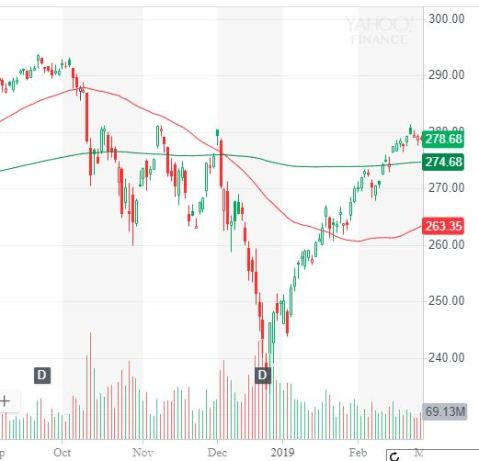
Stocks continued their upward climb in March, making it 3 months in a row of positive returns for the S&P 500.  The index finished up about 1.2% for the month. This has been a great first quarter to start the year, fully recovering from that monster drop in December.  We’re going to need some good earnings numbers from Q1 to keep this party going. A trade deal or an infrastructure plan from Congress would be very helpful as well.

Bonds had an amazing month in March.  Every type of bond was up big. I think the Fed’s clarity on where they stand and worries of a possible economic slow down around the globe contributed to rates dropping across the whole bond spectrum.  In this environment, it is still a good idea to own individual bonds or better yet, bond ETFs, that mature in 1 or 2 years and to hold them to maturity. That way, you don’t have to worry as much about big price fluctuations while you own the bonds.

Interest rates have continued to drop since peaking in early fall of last year.  In fact, the yield on the 10 year treasury note has dropped back down to levels not seen since December of 2017.  Recession worries have come into play and I think a big reason why are the tariffs, both the ones that Trump imposed and the retaliatory tariffs by other countries.  We need some resolution on this front to keep our economy chugging along.

On the savings side, rates have dropped in March in concert with bond yields.  This is reflected in the rates for savings accounts, money markets, and CDs.

Currently, the average savings account is paying 1.21%, down from the previous month.

The 1 year CD interest rate is now averaging 2.69% and the 5 year CD rate is at 2.87%, both down from where they ended in February.

Mortgage rates continue to decline, with the 30 year barely holding on to the 4% level.  Currently, the 30 year rate is at 4.08%, down from 4.33% last month and down for the third month in a row.  Some sources are noting the drop is due to lack of housing inventory, especially on the west coast. There seems to be plenty of inventory in my small part of the world: Charleston, SC.

Oil prices continued to climb in March to end Q1 on a very positive note.  A barrel of US oil cost over $60 by the end of the month. OPEC continues to clamp down on production, keeping prices elevated.  The mess that is Venezuela now is not helping either.

Domestically, we are producing and exporting more oil than ever.  On the export front, we have almost doubled our exports compared to this time last year.

Nationally, gasoline prices followed suit with the rise in oil prices by increasing across the board.  Prices at the pump are averaging about $2.69 per gallon, 28 cents higher than a month ago. Utah has the cheapest fuel, at $2.41.  FYI, a year ago, we were paying $2.66.

Check out the prices at the pump in your area: Gas Buddy.

Outlook

Events on the horizon that could move the markets in the near term:

  • Federal Reserve: It seems like the Fed is in a good place now.  They have made some moves over the past 3 to 4 months and are waiting to see if further rate increases, or even decreases, are needed.  This is a positive for markets because there is much less guessing as to what they are going to do next.
  • Trump-related Investigations: Finally! Mueller submitted his findings to the Attorney General and there are no other indictments.  So, it sounds like we can finally put this one to bed. Although there are other investigations still ongoing, the Mueller probe was the most influential to the markets, in my opinion.  With this out of the way, there should be less uncertainty for stocks, which is always a good thing.
  • Trade Wars: Negotiations continue with China to try and get a deal that suits both parties.  There appeared to be some progress made towards the end of March, but as we’ve seen before, things could stall out  quickly. Any deal that gets done will be one less thing for the markets to worry about so it should be a positive boost.
  • Tariffs: These are starting to take a toll on certain sectors of our economy, particularly farming and manufacturing.  I believe that tariffs create adversarial relationships and result in a no win situation for all parties. We have to find a better way to fix our trade imbalances.

Joe Baker, CFP®
Baker Asset Management, LLC
joebaker@bakerassetmanagement.com

One Way To Still Save On Your 2018 Taxes

save on taxes word on laptop keyboard key, business concept

2018 is long gone but there is still time to reduce your taxable income for last year.

Make a contribution to your IRA.

If you qualify, an IRA contribution can be a great way to reduce your 2018 taxes.  You are allowed to contribute up to $5,500, or even more if you are an old-timer like me: $6,500 for people age 50 and over.

Plus, if you are married, you can double up the amount with a spousal IRA.

If you are not covered by a retirement plan at work, you can deduct the full amount of your contribution, regardless of how much money you make.

If you do have a retirement plan at work, there are restrictions and limitations to qualify for the full deduction.  Here’s a table that summarizes these rules. They are confusing so feel free to shoot me an email with any questions.

2018 Traditional IRA deduction limits

Filing Status Modified adjusted gross income (MAGI) Deduction Limit
Single individuals ≤ $63,000 Full deduction up to the amount of your contribution limit
> $63,000 but < $73,000 Partial deduction
≥ $73,000 No deduction
Married (filing joint returns) ≤ $101,000 Full deduction up to the amount of your contribution limit
> $101,000 but < $121,000 Partial deduction
≥ $121,000 No deduction
Married (filing separately) Not eligible Full deduction up to the amount of your contribution limit
< $10,000 Partial deduction
≥ $10,000 No deduction
Non-active participant spouse (i.e., those with spouses who earn no income) ≤ $189,000 Full deduction up to the amount of your contribution limit
> $189,000 but < $199,000 Partial deduction
≥ $199,000 No deduction

If you’re self-employed, you can sock away a lot more by opening up a Simplified Employee Pension (SEP) plan before filing your taxes.  For 2018, you can contribute up to $55,000, depending on your income.

Let me know if you have any questions!
Joe Baker, CFP®
Baker Asset Management, LLC
joebaker@bakerassetmanagement.com

5 Things You Should Know About Your IRA

IRAs

Here’s some useful facts that you should know about your IRA.  These change quite frequently so it’s always a good idea to take a look at these every year or so.

  1. How much can I put in?
    $6,000 for 2019; $7,000 if you’re over age 50
  2. Are my contributions tax deductible?
    If you don’t have a retirement plan at work:
    Yes, regardless of your income.
    If you do have a retirement plan at work:
    Yes, if your modified adjusted gross income is less than $63,000 (single) or $101,000 (married).
  3. When can I contribute?
    Pretty much whenever you want, but if you want it to count for 2018, you have to make the contribution before April 15, 2019.
  4. Can I have an IRA if I don’t work?
    Typically, no.  But, if your spouse works, you can open a spousal IRA and contribute to it.  Same contribution limits apply.  Also, you can’t contribute to an IRA if you are over age 70.5, even if you’re still working.
  5. When can I take money out of my IRA?
    After age 59.5, if you want to avoid a 10% penalty.  Also, you’ll have to pay taxes on the withdrawals, regardless of age.  You have to start taking required minimum distributions (RMDs) at age 70.5.


Keep in mind, there are many caveats, exceptions, and loopholes to these general rules, as is anything that involves our tax code, so please talk to your tax adviser or just shoot me an email.

Joe Baker, CFP®

Baker Asset Management, LLC

joebaker@bakerassetmanagement.com

Monthly Update – March 2019

March

Stocks made it 2 months in a row of positive returns, with the S&P 500 rising about 3% in February.  It’s still off the highs from last September but the comeback from the Christmas lows is pretty incredible.  Check this chart out of the S&P 500 over the last 6 months (it bottoms out on Christmas Eve 2018):

sp500 chart 2001902

The markets can’t keep this pace up so expect a pause or a pullback in the near future, as this is a normal market reaction.  The catalyst for this will most likely be one of the events that I talk about in the Outlook section below.

Bonds had a mixed performance in February.  Low risk government bond prices were flat for the month but corporate bonds had some nice gains.  I think this is a continuation from January when the Fed stated they would put the brakes on any more rate increases.  In this environment, it is a good idea to own bonds that mature in 1 or 2 years and to hold them to maturity. That way, you don’t have to worry as much about big price moves while you own the bond.

Interest rates seem to have stalled out since their big rise last year.  A pause was definitely needed and it is a healthy and normal reaction in the current economic environment.  So, if you are investing in bonds, make sure their maturity is 3 years or less and expect to hold the bonds until maturity.  Also, try to avoid investment vehicles that have no maturity constraints, such as bond mutual funds.

On the savings side, rates have leveled off as the Fed goes into a wait and see mode.  This is reflected in the rates for savings accounts, money markets, and CDs.

Currently, the average savings account is paying 1.34%, gaining a little bit back from the big drop in January.

The 1 year CD interest rate is now averaging 2.72% and the 5 year CD rate is at 3.03%, pretty much unchanged from the beginning of the month.

Mortgage rates have reversed course, although the 30 year still remains firmly above 4%.  Currently, the 30 year rate is at 4.33%, down from 4.40% last month and down for the second month in a row.  These rates are responding to the slow down in home sales, the change in policy from the FOMC, and the effects that the tariffs are having on our economy.  Rates are responding the right way, so there are no surprises here.

Oil prices followed up its huge rise in January with a 6% gain in February, ending the month around $57 a barrel.  The main reasons for this continued upswing are OPEC’s agreement to tighten supplies and the sanctions on Iran and Venezuela.

Obviously, higher prices is good for producers and since the U.S. is the biggest oil producer in the world now, it is good for our economy.  But, we are also the world’s biggest oil consumer, so higher prices hurts us as well. It’s a blessing and a curse. Prices right now are in a nice sweet spot, between $50 and $75.  Hopefully, they’ll stay there for awhile.

Nationally, gasoline prices haven’t jumped up that much with the increase in oil prices.  Prices at the pump are averaging about $2.41 per gallon, 12 cents higher than a month ago.  Arkansas has the cheapest fuel, at $2.16. FYI, a year ago, we were paying $2.52.

Check out the prices at the pump in your area: Gas Buddy.

Outlook

Events on the horizon that could move the markets in the near term:

  • Federal Reserve: Jay Powell, the chairman of the Federal Open Market Committee (FOMC), had his routine hearing with Congress this past week.  He calmed Wall Street once again with his words. This is a positive event for the stock and bond markets.
  • Trump-related Investigations: I had to rename this event because there are so many offshoots that have sprung from the original investigation: 17 known investigations.  Still nothing from the Mueller-led investigation but I’m pretty sure they have to wrap it up by June of this year, so at least the end is in sight for one investigation.  This event will be ongoing for quite awhile, most likely through the 2020 presidential election and will cause some unexpected market swings, in both directions.
  • Trade Wars: Negotiations continue with China to try and get a deal that suits both parties.  Right now, this standoff is hurting China more than us, but again, they can take the pain for much longer than we can.  The deal will get done at some point this year and it should give the market a nice boost if we get the concessions that we want.  I kind of think that some of the upswing in stock prices recently is due to the anticipation that a deal will get done, so when it actually does gets done, the boost might not be as big as many expect.


Joe Baker, CFP®

Baker Asset Management, LLC

joebaker@bakerassetmanagement.com
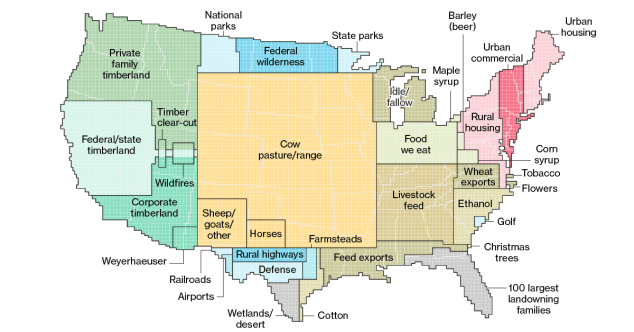
The Largest Group Of Land Users in the U.S. is….Cows?

US Land use


I was catching up on some reading this past weekend and came across an article that I thought was very informative.  It was written by By Dave Merrill and Lauren Leatherby from Bloomberg and is more of a data report put in graphics with small explanations, which makes more some easy reading.

As you scroll through the various maps of the U.S., you’ll see some things that you might find surprising, like the fact that 41% of our land is used for pastures and crops to feed livestock.

Here is the link to the report: https://www.bloomberg.com/graphics/2018-us-land-use/

Joe Baker, CFP®

Baker Asset Management, LLC

joebaker@bakerassetmanagement.com
The Latest Way To Fund College…And Beyond


gaming 1

I thought that this was a pretty cool article that I just read in Wired magazine.  It was written by Rebecca Heilweil at Wired Magazine and it gives some incredible statistics on video gaming and how big it has become in the United States.

While I was reading it, I kept thinking of parents that are always trying to get their kids off video games and thought, maybe, they should be a little more lenient with their kids’ video game time.  Who knows, they could be getting a full ride to college for their Fortnite gaming skills and possibly even a lucrative career.  The article is below and the link for it is here as well: https://www.wired.com/story/infoporn-college-esports-players-cashing-in-big/

INFOPORN: COLLEGE ESPORTS PLAYERS ARE CASHING IN BIG
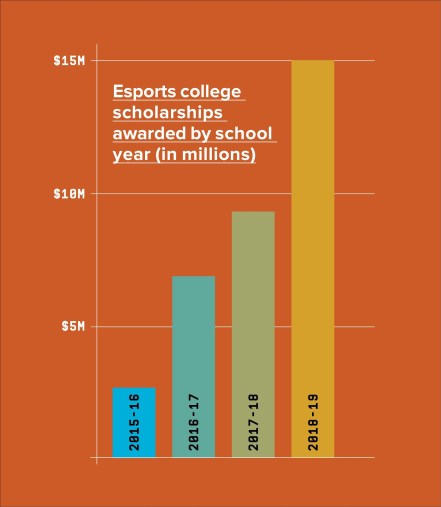
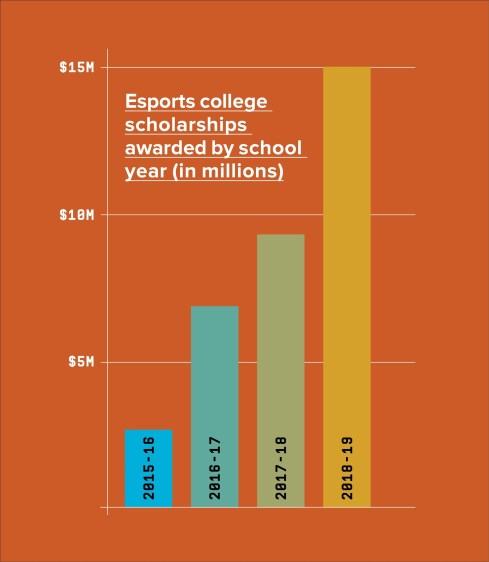
MOST PARENTS DISMISS video­games as a mind-dulling distraction from their kids’ studies. Little do they know all that button mashing could translate into a fat college fund. Over the past five years, esports have grown into an estimated $906 million industry, with recruiters, coaches, and dedicated arenas. Nearly 200 US colleges are offering around $15 million per year in scholarships for the esports elite, and university teams can earn millions more in tournament prizes. Unsurprisingly, Silicon Valley is getting in on the market: PlayVS, a startup that organizes high school esports leagues, has raised $46 million from investors like Diddy and Adidas. Game recognize game.

1. Pay for Play
The average esports scholarship student receives $4,800 in tuition awards a year, according to the National Association of Collegiate Esports—but some can receive up to half off tuition.

gaming 2

SOURCE: NATIONAL ASSOCIATION OF COLLEGIATE ESPORTS

2. The Esports Explosion
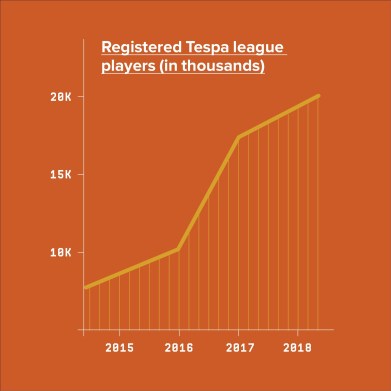
In 2013, videogame developer Blizzard Entertainment partnered with Tespa, an official collegiate league for titles including Overwatch, Hearthstone, and StarCraft. Tespa has since grown to around 850 schools (nearly 20,000 players) and has awarded students more than $3 million in tournament winnings.

gaming 3
SOURCE: TESPA
  1. New Recruits
    Though Fortnite is the most played game among high schoolers by far, League of Legends and Overwatch are the most popular titles for collegiate esports teams. Both LoLand Overwatch have official college leagues sanctioned by the videogames’ publishers.
gaming 4
SOURCE: INTERPRET SURVEY OF 895 GAMERS
  1. Go Long
    Among college students, 51 percent think being an esports athlete is a viable career option. They may be onto something: The 2018 League of Legends World Champion­ship attracted more viewers than the Super Bowl and the NCAA Final Four combined.
gaming 5
SOURCE: INTERPRET
  1. No Pain, No Gain
    Collegiate esports players practice an average of four hours a day, according to a recent survey of gamers at five universities. While they’re considerably less active than traditional athletes—24 percent of gamers surveyed reported that they don’t do any form of exercise—competitive gamers are nonetheless prone to certain niche ailments.
gaming 6
SOURCE: CURRENT SPORTS MEDICINE REPORTS

BY THE NUMBERS

  • 180: Beats per minute a gamer’s heart rate can reach during play
  • 400: Approximate number of movements an esports athlete conducts per minute while gaming
  • 150: Milliseconds slower Starcraft players in their thirties react, compared with players in their twenties
  • $32,000: The average cost of starting a college esports program
  • 1972: Stanford students host the first known collegiate videogame tournament for the combat game Spacewar!First prize is a year’s subscription to Rolling Stone.
  • 2009: The Collegiate Starleague launches its inaugural StarCraft tournament with 25 participating schools.
  • 2014: Robert Morris University in Chicago is the first US university to offer League of Legends scholarships.
  • 2016: UC Irvine founds a varsity esports program—with a 3,500-square-foot gaming arena.
  • 2017: Two years after introducing its esports scholarship program, Maryville University in St. Louis wins the League of Legends College Championship. More than 26,000 people have watched the victory on YouTube.
  • Jan 2018: Riot Games announces nearly $500,000 in scholarships for students attending Big Ten colleges.
  • Oct 2018: Full Sail University in Florida unveils plans for a $6 million, 11,200-square-foot esports facility.

Rebecca Heilweil (@rebeccaheilweil) is a WIRED editorial fellow.


Joe Baker, CFP®

Baker Asset Management, LLC

joebaker@bakerassetmanagement.com
5 Ways A Reverse Mortgage Can Upgrade Your Retirement Plan

reverse_mortgage

Before getting into the ways a reverse mortgage can help you in planning your retirement income, let’s just review what a reverse mortgage is all about.

Just like the name states, a reverse mortgage is pretty much the opposite of a regular mortgage.  With a regular mortgage, you borrow money from a bank to buy a home.  As you make monthly payments to the bank, you pay down the loan and increase your equity in your home.

With a reverse mortgage, the bank pays you to buy the equity in your home.

So, with a regular mortgage, ownership of your home shifts from the bank to you. With a reverse mortgage, ownership shifts from you to the bank.

To be eligible for a reverse mortgage, you have to be at least 62 years old and own the home outright, or very little left on your mortgage.

That’s about as simple as I can make it.  If you need a better explanation, just shoot me an email (joebaker@bakerassetmanagement.com).

Okay, now we know that a reverse mortgage basically turns an illiquid asset, the equity in your home, into a liquid asset, cash, so you can use it for other purposes, like upgrading your retirement plan.  Here’s a couple ways you can do that:

  1. You can delay Social Security and pension payouts.  Instead of taking your social security benefits at age 62 or even your normal retirement age, you can use the cash from a reverse mortgage to help pay for expenses.  Meanwhile, your social security payments will increase at about 8% per year until age 70.  This will give you a much higher payment than if you started receiving it earlier.
  2. You can postpone withdrawing from your 401k or IRA, allowing them to grow tax-deferred.  This is the same strategy as described above with social security.
  3. You can create an income stream to help fund your healthcare costs.  Instead of having one of your biggest assets, your home, locking up a big chunk of your wealth, you can use a reverse mortgage to fund your health care.  This can allow you to keep your retirement funds intact and prevent you from selling your investments when you don’t want to.
  4. You can have annuity-style payments using your home’s equity.  With a reverse mortgage, you can choose the option of receiving your funds as monthly payments. This is perfect for people who would rather have a predictable income stream.
  5. You can replace cash reserves.  Some people have less cash in reserve than they would like. A reverse mortgage gives you the chance to catch up and replace your cash reserves, getting you up to speed financially.

Now, don’t go signing up for a reverse mortgage just yet.  You need to speak to properly licensed reverse mortgage specialists to make an informed decision.

If it does make sense for you, a reverse mortgage could be just the strategy your retirement plan needs.

Joe Baker, CFP®

Baker Asset Management, LLC

joebaker@bakerassetmanagement.com