
I talked about this topic back in February of last year as interest rates started to move up pretty quickly. Since then, rates ended up peaking in November of last year and have actually declined quite a bit. For instance, the 10 year U.S. Treasury note has gone down from about 3.25% in November 2018 to about 2.5% currently.
Even so, this post still applies today and maybe even more so because of the healthy economic environment that the U.S. is currently enjoying, despite trade wars, tariffs, etc. I did add a few updates. Here you go:
In the current environment of rising interest rates, I wanted to make sure that you were aware of the potential risks of owning bonds, particularly bond mutual funds and bond exchange traded funds (etf).
The general consensus among investors is that bonds are typically considered safer than stocks. A couple of the reasons include:
- Bond investors are higher in the pecking order than stockholders to get their initial investment back if the company goes bankrupt.
- Companies that issue bonds have an obligation to pay the promised interest rate to investors. Companies do not have an obligation to pay dividends to stockholders.
- Bond prices are usually less volatile than stock prices.
- Bonds trade just like stocks: their prices fluctuate as investors buy and sell them throughout the day. Also, when a bond price changes, so does its interest rate, but in the opposite direction. So, if a bond price goes up, its interest rate goes down, and vice versa.
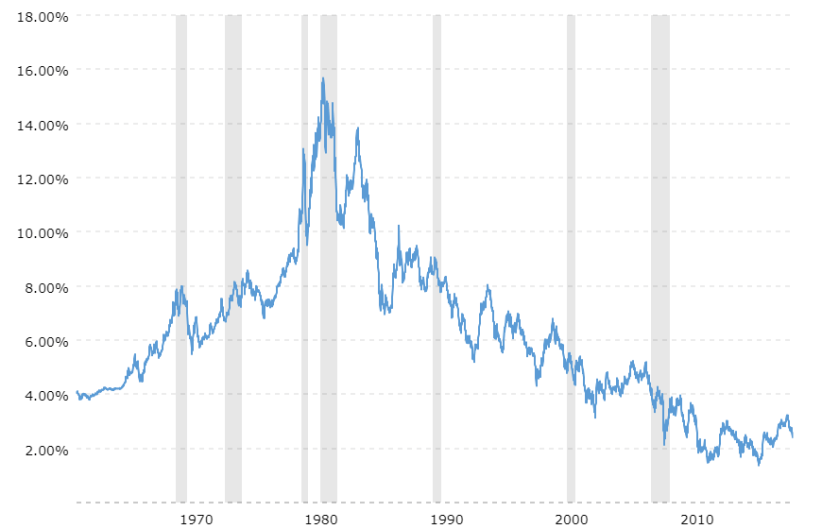
As we said, interest rates have decreased over the past year but have increased quite a bit since bottoming in 2016, showing a long-term trend of rising rates. This affects bond prices because new bonds will have higher interest rates than older bonds. Bonds with higher interest rates are more desirable, all else being equal. That means the prices of bonds with lower interest rates drop because there is less demand for them. This isn’t a big deal if you buy an individual bond and hold it until it matures – the date when the bond goes away – and you get your original investment back.
The problem occurs when you own bonds in a mutual fund or etf. Technically, these investments have no maturity date because they continuously buy bonds. This is risky when interest rates are rising because this will cause these fund prices to drop. Most of the time, I find this situation when reviewing someone’s holdings in their 401k plan. They usually own some type of bond fund as part of a general strategy that their 401k provider has shown them.
If you look at the chart below of interest rates for the 10 year U.S. Treasury note, it looks like we are still in the bottoming process of a long term trend of rising rates. This should give you all the reasons that you need to evaluate your bond strategy in current investment portfolio.
If you do want to own bonds, please consider owning individual bonds that you plan on holding until maturity and make sure the maturity date is 2 years or less. If you must use bond funds, use funds that only buy short term maturity bonds. These bonds are less affected by rising interest rates.
This strategy can be a little confusing to understand so if you have any questions, please let me know.
Joe Baker, CFP®
Baker Asset Management, LLC
joebaker@bakerassetmanagement.com

