
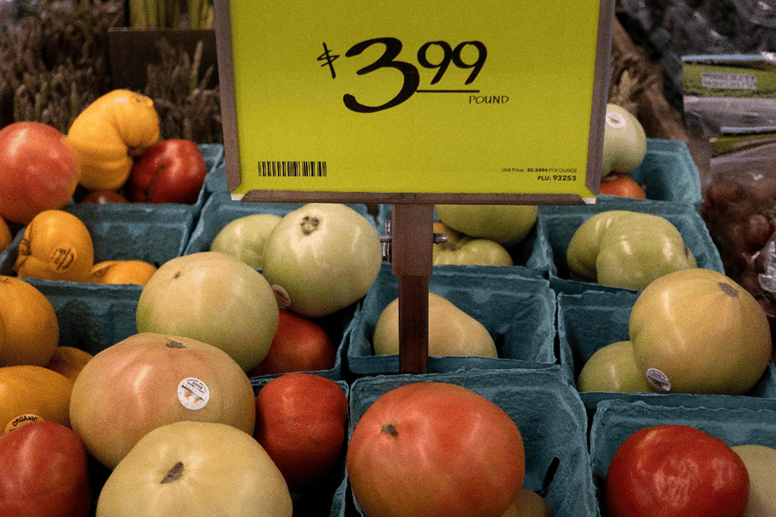
When will we see food prices come down to where they were before the pandemic? Probably not anytime soon, if ever. The combination of the pandemic, the Russia-Ukraine war, and more recently, droughts and an avian flu outbreak, have cut supply and raised the costs of producing and transporting food products. These increased costs have been passed on to us, the consumers. The good news is that grocery inflation has come down to levels that were around before the pandemic so we should expect prices to not rise as much going forward.
One piece of data that supports this is the most recent Consumer Price Index (CPI) reading that came out today. It shows that price hikes slowed more than expected in July, and, for the first time in more than three years, the CPI has landed below 3%. Here is a chart of CPI over the last twenty years. Shaded areas are periods of recession.
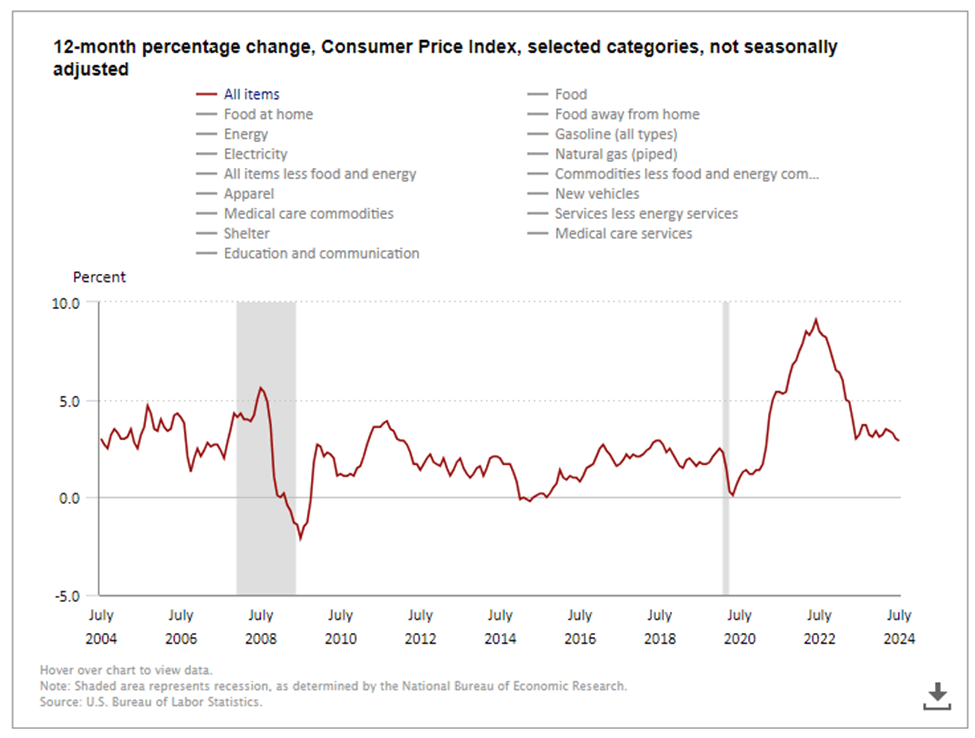
As you can see, it peaked at about 9.1% in June of 2022. Since we’re talking about groceries, specifically, here is the chart of Food at Home, or groceries:
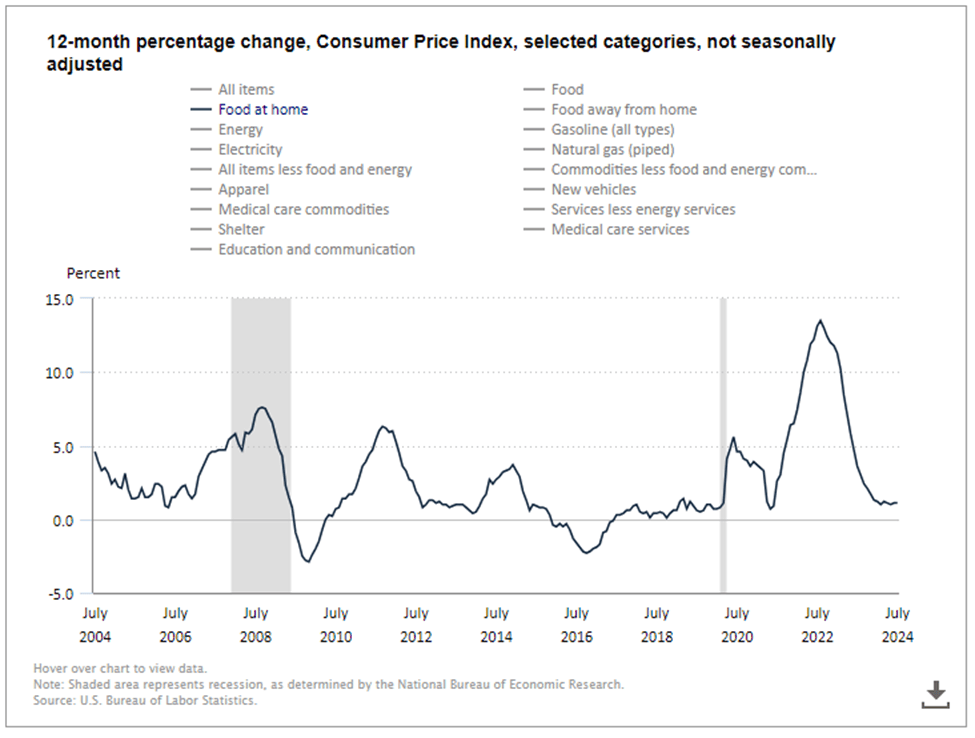
Grocery inflation peaked at 13.5% in August of 2022. Since then, it has steadily declined and has levelled off throughout 2024 so far. Remember, this shows that price increases have slowed down, not that actual prices have dropped. If prices were dropping, we would be in a deflationary period (negative inflation, if you will). Historically, food deflation happens about once a decade and lasts about eight months. The last times this happened were in 2008/2009 and 2016/2017. This is where the CPI line dips below the 0% horizontal line in the chart above.
All this to say that prices at the grocery store should be stabilizing going forward but very unlikely to come down signficantly. You can check out prices of specific grocery items on the U.S. Bureau of Labor Statiistics’ website. They have all sorts of interesting data and charts on our economy.
Please comment or send an email if you have any questions.
Joe Baker, CFP®
Baker Asset Management, LLC
joebaker@bakerassemanagement.com

