
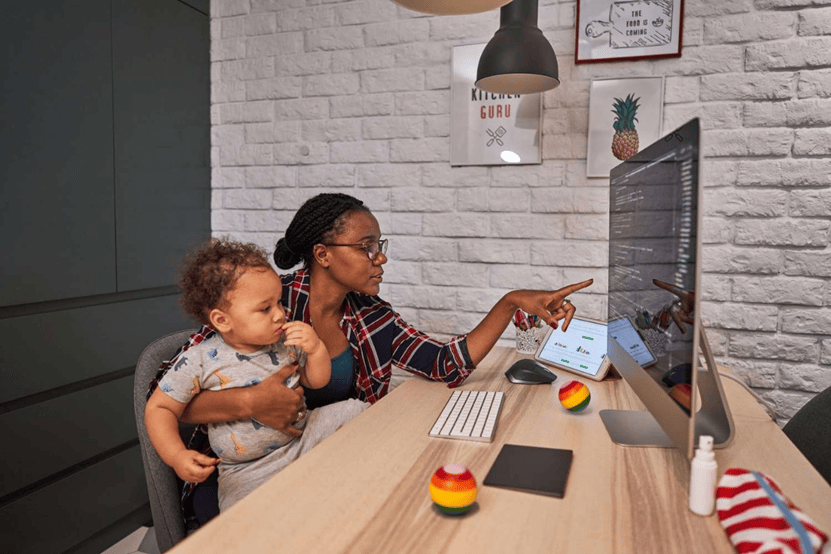
It looks like working from home (WFH) has secured its place in the domain of the American job force. Prior to 2020, WFH had been creeping into the workplace for quite some time but once the pandemic hit, its acceptance at companies accelerated much faster than anyone expected. Now, many companies are trying to get their office workers back to, well, the office, but employees are pushing back and have about three years of data to support their case for staying home.
I thought it would be interesting to take a look at the positive and negative impacts that WFH has on the economy:
Positives
For Employees
- Increased flexibility: WFH gives employees more flexibility, which can be a major benefit for parents, caregivers, and those with disabilities. This flexibility can help employees to better balance their work and personal lives.
- Reduced commuting costs: Employees who work from home save money on commuting costs, which can be significant. This can free up money for other expenses, such as housing, food, and entertainment.
Both of these positives can be backed up by this:
Liberty Street Economics, a blog that features writing from New York Fed analysts, reported last year that collectively, Americans now spend 60 million fewer hours per day traveling to work. That’s 60 million hours for which they weren’t being compensated that they can now spend exercising, taking care of their children, getting a bit more sleep and starting their workday earlier or ending it later.
For Employers
- Increased employee productivity: Studies have shown that employees who work from home are more productive than those who work in an office. This is likely due to a number of factors, including a lack of distractions (this one is questionable), a more comfortable work environment, and the ability to set their own hours.
- Higher profit margins: Office leases are not being renewed and/or smaller office spaces are being leased due to the reduced head count in offices.
- Easier to recruit/retain quality personnel.
Negatives
For Employees
- Reduced social interaction: Working from home can lead to decreased social interaction, which can be harmful to both mental and physical health. This is especially true for employees who are new to working from home or who do not have a strong support network in place.
- Increased distractions: Working from home can be more distracting than working in an office. This is because there are more potential distractions at home, such as pets, children, and household chores.
- Increased isolation: Working from home can lead to feelings of isolation, which can be harmful to mental health. This is especially true for employees who do not have a strong support network in place.
For Employers
• Difficult to monitor employees.
• Lose the feeling of being a part of a team among employees, which results in less loyalty to the company.
Both employers and employees have strong arguments for their stances. But it is hard to argue with WFH employees when companies’ financials are as strong as ever while having improved quality of life and big benefits to the environment with reduced commuter traffic and reduced air pollution.
It is likely that work from home will become more permanent, but it is unlikely that it will become the only way to work. Many companies are already adopting a hybrid model, where employees work from home part-time and in the office part-time. This model allows employees to get the benefits of both working from home and working in an office.
Please comment or send an email if you have any questions. Thanks!
Joe Baker, CFP®
Baker Asset Management, LLC

