

Note: Last March, I sent this out to all of the participants in the 401k plans that I advise on. We were just realizing how bad the pandemic was and would be. I think the following is still relevant and applicable to most crises that cause markets to plummet. Hopefully, everyone stuck to their plan and continued to invest through these past, very tumultuous, twelve months.
Technically, this isn’t a tip or trick for how to use the 401k website, but it could be the most important tip that I’ll ever give you about saving for your retirement.
We all know how far and how fast the stock market has dropped over the past month. The amount of the drop is as deep, or in some industries, worse than what happened in the tech wreck of 2000 and the Great Recession in 2008. The speed of the drop surpassed anything that I have seen in my 23 years as an investment adviser. Remember, we were just at all-time highs only 1 month ago!
Will we recover like we did in the past? Yes, we will. It may take longer, as this is something that we haven’t dealt with since 1918 (Spanish Flu), but we will make it.
If you believe this, then you should be confident in continuing to invest in your future by keeping your contributions flowing into your 401k account. As 401k participants, you are adding to your account every paycheck. So, during times like these when the market has gone way down, you are buying a lot more shares of the same investment than you were just a few weeks ago. This is Investing 101: Buying Low. Prices of the main stock indexes are at the same value as they were in 2017, so if you wished that you had started investing sooner, consider this a mulligan!
I have been fielding a lot of calls, emails, and texts about whether or not to put everything in the money market fund or stop contributions. I know everyone’s situation is different but you can use the following as a general guide if you haven’t gotten in touch with me yet:
Anyone that will not need the money in their 401k account for at least 2 years, should continue to invest in a properly diversified portfolio (mix of different stocks, bonds, etc.) based on their risk tolerance and their time horizon. Even if you plan on retiring in a few years but don’t plan on needing all of your money in the account, just put the amount that you think you’ll need for the next few years in the money market fund. With interest rates as low as they are and will likely stay that way for a while, having some of your investments in stocks that have the chance to grow at a greater rate than inflation is a prudent move. Finally, a picture is worth a thousand words:
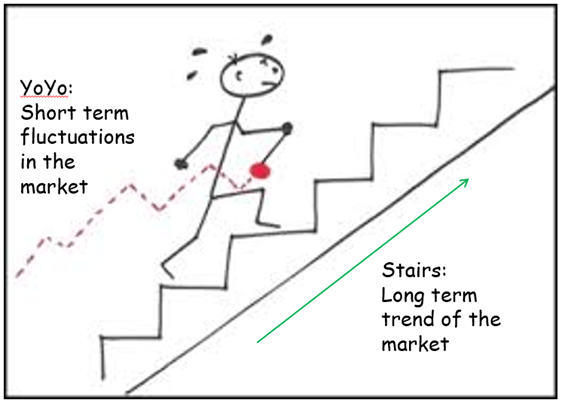
Please let me know if you have any questions.
Joe Baker, CFP®
Baker Asset Management, LLC
joebaker@bakerassetmanagement.com

