
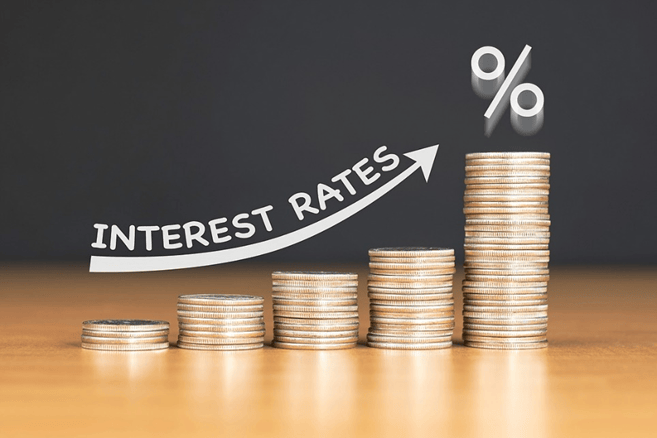
In the financial world, everything today is about the Federal Reserve and interest rates. Currently, rates are at a level not seen since about 2007. As you know, rates affect how much it costs to borrow money and also how much interest that you receive when you lend money, like when you deposit it in a savings/money market account or buy a bond. So, it’s not all bad when interest rates are high. In fact, rates are closer to historical norms now than they have been in the last 16 years.
That said, why haven’t these higher rates had their desired effect on reducing inflation? Here are a few reasons:
- About half of all mortgages have an interest rate locked in below 4% – When rates plummeted during Covid, anyone that had a high mortgage rate refinanced to a fixed rate mortgage below 4%, many in the 2% to 3% range. So, their biggest monthly expense was reduced significantly and will be for decades to come if they don’t sell. Thus, higher rates will have less of an influence on these consumers.
- Homeowners are making money on their mortgage loans – You heard that right. People with a low-rate fixed mortgage are taking the money that they borrowed and are buying CDs and government bonds that pay five percent interest or more. For example, if you have a mortgage at 3.5%, instead of paying down your mortgage, you can take any extra cash and buy a CD at 5% and make 1.5% on your money.
- People are still spending even with sustained high prices – Usually, when prices have risen this much (groceries, utilities, insurance, etc.), consumers tighten their belts and pull back on discretionary spending (vacations, big ticket items). This has not happened, at least not yet. With historically low unemployment and decent wage increases, people are still traveling and spending, especially those with no mortgage or a low mortgage rate.
Higher interest rates will eventually work to lower inflation, but it may take longer than anyone expected. Plus, it is a good thing for risk-averse investors and savers.
Please comment or send an email if you have any questions. Thanks!
Joe Baker, CFP®
Baker Asset Management, LLC
joebaker@bakerassemanagement.com

