
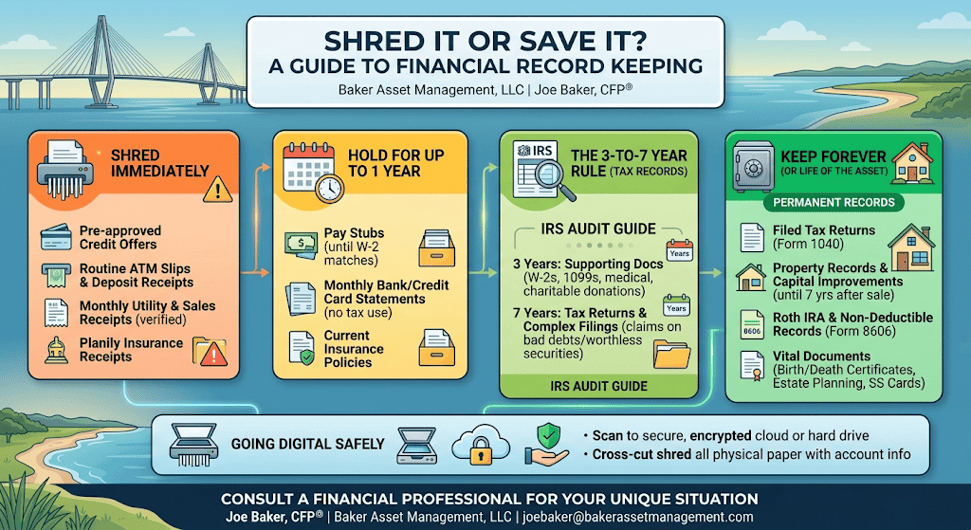
Between physical filing cabinets and sprawling digital downloads, managing financial paperwork can quickly become overwhelming. Holding onto every piece of paper creates unnecessary clutter, while tossing the wrong document can lead to headaches at tax time—or worse, identity theft if improperly discarded.
Knowing what to keep, what to digitize, and what to run through the shredder keeps your financial life secure and organized.
Shred Immediately
- Pre-approved credit card offers and loan solicitations: Primary targets for identity thieves if left in the trash.
- Routine ATM slips and deposit receipts: Shred as soon as you verify the transaction on your online bank statement.
- Monthly utility and sales receipts: Toss after verifying payment, unless you need the receipt for a product warranty, insurance, or a home-office tax deduction.
Hold for Up to 1 Year
- Pay stubs: Hold until you receive your annual W-2 to verify that earnings and withholdings match.
- Monthly bank and credit card statements: Keep for up to a year to review annual spending patterns, unless they contain transactions needed for tax deductions.
- Current insurance policies: Retain current declarations pages; shred expired policies once new coverage is active.
The 3-to-7 Year Rule (Tax Records)
- Supporting tax documentation (3 Years): The IRS standard period of limitations for an audit is generally three years from the date you filed. Keep 1099s, W-2s, medical bills, and charitable donation receipts for at least this timeframe.
- Tax returns and complex filings (7 Years): To be safe, retain supporting tax files for seven years. The IRS audit window extends to six years if income is underreported by more than 25%, and seven years for claims on bad debts or worthless securities.
Keep Forever (or Life of the Asset)
- Filed tax returns (Form 1040): Keep actual tax returns permanently—either as PDFs or physical copies—for personal reference and Social Security verification.
- Property records & capital improvements: Retain home closing documents, title deeds, and major renovation receipts until at least seven years after you sell the property to substantiate your tax cost basis.
- Roth IRA & non-deductible IRA records: Keep Form 8606 and contribution records indefinitely to prove tax-free basis upon future withdrawals.
- Vital personal documents: Birth/death certificates, marriage licenses, military discharge papers, estate planning documents (wills, trusts, powers of attorney), and Social Security cards should remain locked in a fireproof safe.
Going Digital Safely
When clearing out physical files, scanning documents to a secure, encrypted cloud storage service or encrypted hard drive is an effective way to stay organized. However, always use a cross-cut shredder for any physical paper containing account numbers, Social Security numbers, or personal identifying information.
Please comment or send an email if you have any questions.
Joe Baker, CFP®
Baker Asset Management, LLC
joebaker@bakerassetmanagement.com

