
BAM Blog

Monthly Update – March 2020

March 2020

Stocks took an absolute shellacking in February as the Coronavirus continued to spread across the globe.  The magnitude of the drop was surprising, but the real shocker was how fast it dropped.  The S&P 500 dropped almost 13% from its record high in February and it all occurred within the last seven days of the month.  It brought the index back down to levels last seen in October of 2019.  For the year, the S&P 500 is down almost 9%.

For historical perspective, this was the worst February for stocks since 2009, during the financial crisis.  It wasn’t like we weren’t expecting some sort of correction, but we definitely weren’t expecting a correction this big and in such a short time.  Financial markets do not like uncertainty and there is so much of it surrounding this virus: how deadly it is, how it will disrupt supply chains, how it will affect our lives in general.  Until we can find answers to questions like these, stocks may find a hard time coming back from these lows.  The good news is that there is some progress in developing a vaccine.  A research institute in Israel is claiming that they will have a vaccine ready to begin the approval process in two weeks (and no, I can’t find a way to invest in them…yet!).  It is wait and see mode for traders and investors alike right now.

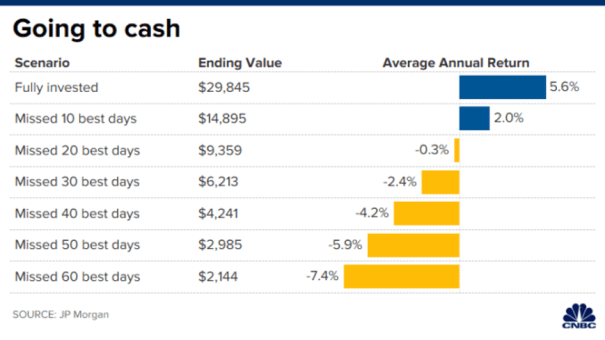
Selloffs like the one we are experiencing right now are gut wrenching.  It may seem hard to stick to your plan and stay the course.  Looking at history might provide you with a better perspective on what the best move is for your investments right now.  The chart from J.P. Morgan shows how $10,000 invested in the S&P 500, for the 20-year period of 1999 through 2018, would have performed under various scenarios.
going to cash

If the $10,000 remained fully invested, it would have grown to $29,845 with an average annual return of 5.6%.

In comparison, missing out on just the best 10 days in that time period would have reduced the growth of the initial investment by more than half: After 20 years, that $10,000 would be just $14,895 with a 2% average yearly return.

And if the best 20 or more days were missed, the returns over that 20-year period are in the red.

Even if you think you’ll just wait it out for a few weeks to see what happens, be aware that six of the S&P’s ten best-performing days during the 20-year period occurred within two weeks of the 10 worst days.

What this data is telling us is that it is time in the market, not timing the market, that creates the portfolio growth that you need to reach your financial goals.

Take a look at the Outlook section below to see what events could move the markets between now and then.

Bonds reacted as expected, with their prices moving sharply higher as investors flocked to the safe haven of US Treasury and high-quality company bonds.  Also as expected, high yield, or junk, bond prices dipped a little bit but nothing like their companies’ stock prices.

The yield curve took a dramatic reversal from normalizing, almost completely inverting.  Only until you go out to a 20-year maturity bond, can you get a higher interest rate than a 1 month bond.  This will make the Fed cut rates sooner as well since they can control the shorter end of the curve much easier than the long end.

This action still hasn’t changed my outlook on bond ownership.  I’m sticking to my guns and staying away from bonds that mature more than two years from now.  For me, there just seems like too much risk to take on, compared to other investment options, such as high-quality stocks.

Interest rates, which were already heading lower, really fell off a cliff at the end of February.  Most US government issued bonds hit all-time lows on yield.  The bellwether 10 year note closed February at a yield of 1.16%.  That is impressive.  This is great for borrowers and bad for savers.  This type of interest rate environment forces savers to take on more risk to get the returns that they need to hit their financial goals.  The Fed probably has no choice but to cut short term rates now that long-term rates have sunk to all-time lows.

On the savings side, short-term rates, like savings and money market accounts, as well as longer-term rates, like CDs, continued to trend down.

Currently, the average savings account is paying 0.94%, surprisingly up a bit from 0.87%.

The 1-year CD interest rate is now averaging 1.81%, slightly less than the 1.89% it was yielding a month ago and the 5-year CD rate is at 1.87%, down from 1.95%.  These rates are brutal for savers.

Mortgage rates continued down in February.  Currently, the 30-year rate is at 3.62%, down from 3.64% last month.  Refi’s really look good right now, especially if you plan on being in your home for at least 5 more years.

Oil prices plummeted in February, as travel restrictions kicked in and uncertainty about the coronavirus spread.  It had dropped about $10 a barrel in January and more bad news this month clipped another $4 off of the price, which now sits at $45.26.

This virus will definitely put a lid on oil prices as commerce and travel continue to get shut down to halt the spread of the disease.

Nationally, gasoline prices are following oil prices lower.  Prices at the pump are averaging about $2.45 per gallon, 4 cents lower than a month ago.  Mississippi and Texas have the cheapest fuel, at $2.14.  FYI, a year ago, we were paying $2.41.

Check out the prices at the pump in your area: Gas Buddy.

Outlook

Events on the horizon that could move the markets in the near term:

  • Coronavirus: Last month, I said that this virus wouldn’t have any long-term effects on stock prices and I still believe that, but it sure had some short-term effects! We are going to see continued market volatility as the virus spreads.  Until we get answers on the virus’ lethality and vaccine availability, expect stock prices and interest rates to remain low.  Any information that removes uncertainty about the disease will cause a move up in stock prices.
  • Interest Rates: The Fed is now expected to lower rates to help bolster our economy as the coronavirus takes hold here in the states. This may help stock prices a little in the very short term, but it won’t cure people infected with the virus and it won’t help reconnect supply chains.
  • Trade Wars/Tariffs: These policies are still taking a toll on US companies, even more so with the coronavirus disrupting supply chains.  Farmers continue to take a beating: The Department of Agriculture has distributed about $19 billion of the $28 billion allocated to help farmers, but most are still having a tough time surviving the trade war.  Farm bankruptcies reached an 8-year high in 2019.  This is not good for our economy, which is not good for stock prices.  In light of the current global economic chaos being caused by the coronavirus, it may be a good time for our government to re-evaluate the effectiveness of tariffs and trade wars and take action.
  • Impeachment: The trial finished with the expected verdict: not enough votes to remove the president from office. There was muted reaction from the markets as this was a foregone conclusion.


Joe Baker, CFP®

Baker Asset Management, LLC

joebaker@bakerassetmanagement.com

We Were Due

elevator

To say the stock market was due for a pullback is quite an understatement.  The last time the S&P 500 has had a drop of any significance was back in early August of 2019, when it dropped over 6% in about a week.   It took about 3 months to regain that loss and has marched steadily higher, for the most part, until today.

Markets never drop just for the sake of dropping.  There is always a catalyst.  Right now, it looks like the spread of the corona virus is causing the markets to panic.  And in today’s high-frequency, computer-driven trading algorithms, the selling is amplified and accelerated, much like a snowball rolling downhill.  This action is a classic pattern, best described by one of Wall Street’s many adages: stocks take the stairs up and the elevator down.

Everybody always says that pullbacks every once in a while are healthy for markets and they are right, but it still never feels good.  Still, there are actions that you can take when these drops occur.  If you’re a trader (that means not a long-term investor), hopefully you have taken some money out of the market during the recent rise just for times like these where you can buy back in at a lower price.  For the rest of us long-term investors, sticking to your plan is the way to go.  Any money that you might need in the next one or two years should not be in the stock market but somewhere safe and readily available.  The rest should be in a diversified portfolio that matches your risk tolerance.  For those contributing to a retirement plan every paycheck and are properly diversified, you love these dips because you are buying more shares for the same amount of money coming out of your paycheck.

I would expect to have more drops this year like the one we’re having today, especially with the elections coming up in November.  The good news is that the economy is still doing decent but the best news for stocks is that interest rates are still extremely low, which means that stock sellers in these market drops will realize their mistake and buy back into the stock market.  This keeps a floor under stock prices.

As always, be prepared and have a plan.

Joe Baker, CFP®

Baker Asset Management, LLC

joebaker@bakerassetmanagement.com

You Can Still Reduce Your 2019 Taxes

reduce taxes

2019 is in the rearview mirror but there is still time to reduce your taxable income for last year:

Make a tax-deductible contribution to your IRA.

If you qualify, an IRA contribution can be a great way to reduce your 2019 taxes.  You are allowed to contribute up to $6,000, or even more if you are an old-timer like me: $7,000 for people age 50 and over.

Plus, if you are married, you can double up the amount with a spousal IRA.

If you are not covered by a retirement plan at work, you can deduct the full amount of your contribution, regardless of how much money you make.

If you do have a retirement plan at work, there are restrictions and limitations to qualify for the full deduction.  Here’s a table that summarizes these rules. They are confusing so feel free to shoot me an email with any questions.

2019 Traditional IRA deduction limits

Filing Status Modified adjusted gross income (MAGI) Deduction Limit
Single individuals ≤ $64,000 Full deduction up to the amount of of your contribution limit
> $64,000 but < $74,000 Partial deduction
≥ $74,000 No deduction
Married (filing joint returns) ≤ $103,000 Full deduction up to the amount of of your contribution limit
> $103,000 but < $123,000 Partial deduction
≥ $123,000 No deduction
Married (filing separately)* Not eligible Full deduction up to the amount of of your contribution limit
< $10,000 Partial deduction
≥ $10,000 No deduction
Non-active participant spouse (e.g., those with spouses who earn no income) ≤ $193,000 Full deduction up to the amount of of your contribution limit
> $193,000 but < $203,000 Full deduction up to the amount of of your contribution limit
≥ $203,000 Full deduction up to the amount of of your contribution limit

If you’re self-employed, you can sock away a lot more by opening up a Simplified Employee Pension (SEP) plan before filing your taxes.  For 2019, you can contribute up to $56,000, depending on your income.

Let me know if you have any questions!


Joe Baker, CFP®

Baker Asset Management, LLC

joebaker@bakerassetmanagement.com
The Stretch IRA Has Shrunk

stretch ira

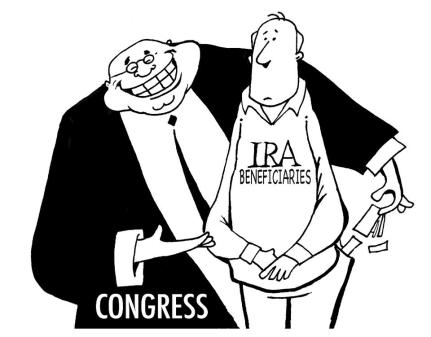
The SECURE Act will be having an immediate impact on beneficiaries of IRAs in 2020 and beyond.  Specifically, it will greatly reduce the tax benefits of a strategy known as the Stretch IRA.

Before 2020, heirs of traditional or Roth IRAs could take their required minimum withdrawals (RMDs) over their lifetimes instead of the original account owner’s lifetime.  For example, a 20 year old beneficiary of an inherited IRA could “stretch” out the RMDs over her lifetime, which could be another 60 years or more.  If the inherited IRA was a Roth IRA, those withdrawals would all be tax free!

Now, many beneficiaries will have to empty the inherited account within 10 years.  If it’s a traditional IRA with a balance of a million bucks and you make equal withdrawal payments over the 10 year period, you will have about $100,000 in extra income annually over those years.  If it’s a Roth, you will still enjoy tax-free withdrawals, you’ll just have to take it all out within 10 years.  In the Roth case, if you don’t need the money, then you should just leave it in there and let it grow for 10 more years before withdrawing it all at once, all tax-free.

There are exceptions to these new rules.  Here’s who can still stretch an inherited RIA:

  • Surviving spouses
  • IRA beneficiaries whose original owners died before 2020
  • Chronically ill or disabled heirs
  • Heirs within 10 years of age of the original owner
  • Minor children up to the age of majority (18 in most states), or age 26 if the child is still in school. At that point, the 10-year payout begins.

This rule really upends any estate planning that was completed before 2020, such as converting a traditional IRA to a Roth IRA, or using a trust to distribute an IRA.  You’ll need to revisit your estate plan to address how these new rules will affect it.

As always, please let me know if you have any questions.

Joe Baker, CFP®

Baker Asset Management, LLC

joebaker@bakerassetmanagement.com

Monthly Update – February 2020

leap year

Stocks started off great in the first few weeks of 2020, but then the virus hit, Coronavirus, that is.  Flights to and from China have been canceled by most countries.  Its affect will be reflected in this quarter’s earnings for many companies, but it is already showing up in their stock prices.  The S&P 500 finished almost exactly where it closed on New Year’s Eve one month ago.

They say that how stocks perform in January is a good predicter of how they will do for the rest of the year.  Historically, that has been a very accurate statement.  Since 1950, every year that the S&P 500 had a positive January, the annual gain was positive 87% of the time.  Not bad.  Here’s another interesting stat: only 4 of the last 23 election years (since 1923) were negative for the S&P 500.  That means 83% of the time, an election year is positive for stocks.  I don’t want time to fly but I’m very interested to see where the markets will end up at the end of this year.  Take a look at the Outlook section below to see what events could move the markets between now and then.

Bonds were mostly higher in January with the exception of high yield, or junk, bonds, which tracked stock prices for the most part.  As you know, bond prices move in the opposite direction of their yield.  Over the past 18 months, bond yields have been slowly sliding lower, helping make bonds some of the best investments over that time period.  I’m still in the camp that the path of least resistance for bond yields is up, meaning bond prices are going to drop.  One day, I’ll be right but the way things are going, I don’t think it’s going to be anytime soon.

The yield curve continues to get back to normal, meaning longer term rates are higher than shorter term rates.  That’s good stuff.

I’m sticking to my guns and staying away from bonds that mature more than two years from now.  For me, there just seems like to much risk to take on, compared to other investment options, such as high quality stocks.

Interest rates keep heading lower.  This is great for borrowers and bad for savers.  This type of interest rate environment forces savers to take on more risk to get the returns that they want/need to hit their financial goals.  The rate for the benchmark 10 year Treasury note continues to stay under 2%.  The Fed just met and will keep rates low for the foreseeable future so don’t expect much movement upward with interest rates.

On the savings side, short-term rates, like savings and money market accounts, as well as longer-term rates, like CDs, continued to trend down, just like in November.

Currently, the average savings account is paying 0.87%, down a bit from 0.96%.

The 1-year CD interest rate is now averaging 1.89%, slightly less than the 1.97% it was yielding a month ago and the 5-year CD rate is at 1.95%, down from 2.06%.  These rates are brutal for savers.

Mortgage rates headed back down in January.  Currently, the 30-year rate is at 3.64%, down from 3.86% last month.  Refi’s continue to look like a good move, especially if you plan on being in your home for at least 5 more years.

Oil headed lower in January, drifting down to under $52 a barrel to end the month.  That is about a $10 drop.  Much of that can be tied to the virus outbreak that occurred around mid-month.

I really don’t see oil prices going much higher, unless we have a major event that halts production.  It really seems like we are approaching peak demand for oil as companies and countries commit to becoming more energy efficient and environmentally friendly.  This can really help keep prices low in the foreseeable future.

Nationally, gasoline prices are following oil prices lower.  Prices at the pump are averaging about $2.49 per gallon, 9 cents lower than a month ago.  Missouri has the cheapest fuel again, at $2.13.  FYI, a year ago, we were paying $2.26.

Check out the prices at the pump in your area: Gas Buddy.

Outlook

Events on the horizon that could move the markets in the near term:

  • Coronavirus: The virus continues to spread worldwide. There is still a lot that experts don’t know about the virus and this fear of the unknown is causing much of the panic.  For most Americans, the risk of getting sick or dying from the flu is much greater than the risk from coronavirus, as of right now.  Already during this flu season, about 15 million Americans have been infected and more than 8,000 have died.  Worldwide, flu kills about 650,000 people every year.  I’m sure it will take awhile to get this under control, but this virus should not have any long-term effects on stock prices.
  • Trade Wars/Tariffs: Trump signed a trade agreement with China, called Phase 1, that removes some tariffs and allows American businesses to work in China without having to share their technology. Also, China has committed to spending about $200 billion on U.S. goods and services over the next 2 years, which is a 50% increase from 2017.  That’s great if China can fulfill that promise, especially for farmers, who are in deep kimchi since this trade war started.  Finally, there is still a big 25% tariff on most products that our companies import from China.  This is really hurting us, since these companies are paying these tariffs, not China.  The deal hasn’t gotten us back to where we were before the trade war started, but we should get there by the end of this year.  The stock market is considered a leading indicator and has already begun factoring in the effects of this trade deal, which are mostly positive.
  • Impeachment: The trial is almost over. Each side will have their closing arguments and then the senators will vote whether or not to remove the president.  As I said last month, there will not be enough votes to remove him and this outcome is already priced into the market, so I wouldn’t expect much impact once the trial concludes.


Joe Baker, CFP®

Baker Asset Management, LLC

joebaker@bakerassetmanagement.com

Good-To-Know IRA Info for 2020

ira egg

An Individual Retirement Account, known as an IRA, allows anyone to save for retirement while earning an income.  The main reasons for contributing to an IRA are:

  • You may get a tax deduction on contributions.
  • Account grows tax-deferred, meaning you don’t have to pay taxes on the account as long as you don’t withdraw any money from it.

Since the contribution amounts, income limits, and other regulations for Traditional IRAs change almost every year, I thought it would be a good time to review the current rules.

Here we go:

Eligibility

Anyone who has earned income can contribute to an IRA.  According to the IRS, earned income includes all income from employment, but only if it is includable in gross income.  Examples of earned income are wages; salaries; tips; and other taxable employee compensation.  Earned income also includes net earnings from self-employment.  Rental income and capital gains are not considered earned income.

Contribution Limits

The maximum annual contribution limit for 2020 is $6,000 (or $7,000 if you’re age 50 or older).

Income limits on Tax Deductibility of Contributions

Contributions may be tax-deductible in the year they are made.  I say maybe because, although you’re always able to contribute the full amount, you may not be able to deduct all of your contributions.

First off, if neither you nor your spouse are covered by a retirement plan, like a 401k, at work, you can deduct 100% of your contributions regardless of how much money you make.

It gets tricky if either you or your spouse have a retirement plan at work.  Here is a table that summarizes the income limits when you and/or your spouse are covered by a retirement plan at work:


Filing Status Modified adjusted gross income (MAGI) Deduction Limit
Single individuals ≤ $65,000 Full deduction up to the amount of your contribution limit
> $65,000 but < $75,000 Partial deduction
≥ $75,000 No deduction
Married filing jointly (both covered by retirement plans at work) ≤ $104,000 Full deduction up to the amount of your contribution limit
> $104,000 but < $124,000 Partial deduction
≥ $124,000 No deduction
Married filing jointly (only one spouse covered by retirement plan at work) ≤ $196,000 Full deduction up to the amount of your contribution limit
> $196,000 but < $206,000 Full deduction up to the amount of your contribution limit
≥ $206,000 Full deduction up to the amount of your contribution limit

Withdrawal Requirements

You can withdraw money out of your account at any time, but taxes and penalties may apply.  You can avoid paying any penalties if you wait until you are at least 59½ years old before making any withdrawals.

You have to start taking money out of your IRA starting at age 72, known as required minimum withdrawals, or RMDs.


These are the basic rules that apply to most people for regular IRAs.  Rules are different for Roth IRAs, SIMPLE IRAs, and inherited IRAs so please talk to your financial advisors or let me know if you have any questions.


.Joe Baker, CFP®

Baker Asset Management, LLC

joebaker@bakerassetmanagement.com
To Keep Or Shred? – That Is The Question

keep or shred

As we approach tax season, I thought this would be a good time to go over some of the guidelines for what to do with all of your financial records, like bank statements, cancelled checks, 401 k and brokerage statements, etc.

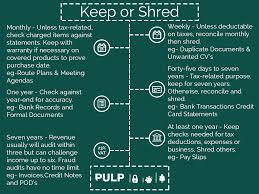
I like to categorize my documents into 4 categories based on how long you should hold onto them: Less than 1 year, At least 1 year, At least 7 years, and Keep forever.

Here’s a list of the most common items but you can always search online for more comprehensive lists:

Keep for less than a year

  • ATM receipts
  • Cancelled checks
  • Credit card receipts

Keep these until you reconcile them with your monthly statements.  Retain any receipts or checks that you may need for filing taxes, otherwise, shred.  You can delete electronic versions as well or just archive them.

Keep at least 1 year

  • Loan documents, until loan is paid off.
  • Car title, until you sell the vehicle.
  • Trade confirmations for taxable brokerage accounts, until you receive your 1099-B in January of the next year.
  • Bank, brokerage, retirement plan statements for 3 years. All of these statements are held at their respective institution, so as long as you have access to them online, you can toss after 1 year.  The same goes for trade confirmations.  But make sure if you transfer your account(s), that you download them first.  This will make your life mush easier if you need those old statements.

Keep at least 7 years

  • All state and federal tax documents. The IRS has up to 3 years to audit your tax returns.  However, if you omitted more than 25% of your income, they can go back 6 years.

Keep forever

  • Birth certificates
  • Death certificates
  • Social security cards
  • Marriage licenses
  • Estate planning documents, such as wills, trusts
  • Life insurance policies
  • Inventory of safe deposit box


You should set aside a day in February or March of every year to go through these documents and replace, update, and purge as needed.  I suggest these months because you definitely want to wait until you get in all of your previous year’s tax forms and year-end statements before going through your files.  Let me know if you have any questions.


.Joe Baker, CFP®

Baker Asset Management, LLC

joebaker@bakerassetmanagement.com
Be Fearful When Others Are Greedy

be fearful

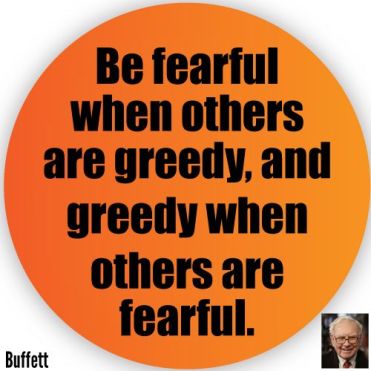
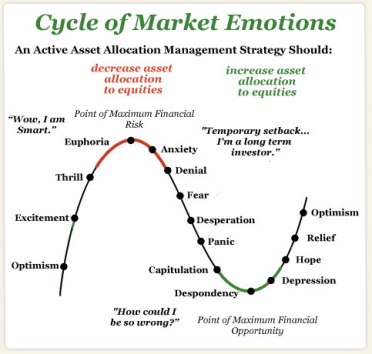
As most major stock market indices hit fresh all-time highs, I thought it would be a good time to reboot this timeless quote by one of the smartest investors of all time, Warren Buffett: Be fearful when others are greedy, and greedy when others are fearful.

Based on current market conditions, I would focus on just the first part of this statement, be fearful when others are greedy.  If you look at one of my favorite graphs below, the “be fearful” part would show up somewhere between Thrill and Anxiety.  It seems like investors are entering that range right now: nothing seems to shake the stock market and if something does make it drop, it almost immediately bounces back.

cycle of emotions

Now, I’m not trying to give the stock market the malocchia (Italian curse, literally means evil eye) and I’m not saying to sell everything and run to cash.  I just want to point out that it is never a bad move to take some profit at a time when everybody else is buying.  For example, if you have held a stock or mutual fund that has grown in value and now makes up 20% of your portfolio, maybe you should sell 2% of it and use the cash from that sale to buy another investment or wait for the original investment to drop down and rebuy it at a lower price.

I don’t think anybody can predict what the stock market will do over the short term (less than 2 years) but we do know that markets don’t always go up and they don’t always go down.  During times like these, when pretty much every stock is going up, it doesn’t hurt to assess your investments and take some profit, even if it feels like you should be doing the exact opposite.

.Joe Baker, CFP®

Baker Asset Management, LLC

joebaker@bakerassetmanagement.com
Monthly Update – January 2020

january

Stocks had the Santa Claus rally that everybody was hoping for, bumping up over 2% in December, making it four positive months in a row.  The S&P 500 finished the year up about 28%, its best year since 2013.

Nobody can ever predict, with any accuracy, how the stock market will perform over a certain time period.  When the markets tanked in December of 2018, there weren’t many “experts” saying to put all of your money in stocks.  Also, during this past year, there were many events that could have derailed a market rise: tariffs, trade wars, Russian probe, impeachment, etc.  But the market shrugged these off, taking one step backward and two steps forward at each obstacle, climbing a wall of worry to record highs.

Will this upward trend last?  I have no idea, but I do know there is one thing that can help the rally continue: historically low interest rates.  I believe these low rates are putting a solid floor underneath stock prices.  Couple that with growing industries and fundamentally sound companies, and you could have a winning combination for your investments.  Of course, there is always something that could derail this rally.  Take a look at the Outlook section below to see what events could move the markets in the near future.

Bonds were a mixed bag in December: government treasury prices headed lower but corporate bonds moved up in price.  It looks like the Fed is going to continue to hold off on changing short-term rates anytime soon, based on their last meeting notes.  I think this bodes well for markets.

I took a look at the yield curve again and it is flat up to the 5 year note maturity and then rates start to climb.  This is telling me that rates are trying to normalize: the longer that you lend out your money, the more interest that you should be paid.

Global bond yields are still in bizarro world but heading the right way to normal.  Germany, France, Japan, and Switzerland have negative bond yields.  Switzerland’s 50-year bond still has a negative yield.  That’s ludicrous!  This is a bubble that could burst big time if interest rates reverse course and quickly head higher.  Stay away from any bonds that mature more than 2 years out.

Interest rates continued to drift lower as wage growth shows little movement along with consumer prices.  The rate for the benchmark 10 year Treasury note continues to stay under 2%.  Rates will most likely remain in this low range until we start to see signs of inflation, which, so far, are non existent.

On the savings side, short-term rates, like savings and money market accounts, as well as longer-term rates, like CDs, continued to trend down, just like in November.

Currently, the average savings account is paying 0.96%, down from 1.04%.

The 1-year CD interest rate is now averaging 1.97%, slightly less than the 1.98% it was yielding a month ago and the 5-year CD rate is at 2.06%, about the same as last month.  Notice that the 5-year rate has stayed above the 1-year rate.  That’s how it’s supposed to be, although I still wouldn’t touch a CD with a maturity longer than 1 year.

Mortgage rates ticked up in December, but the 30 year is still below the 4% level.  Currently, the 30-year rate is at 3.86%, up a bit from 3.73% last month.  Refi’s continue to look like a good move, especially if you plan on being in your home for at least 5 more years.

Oil prices rose steadily in December, topping out at a little over $61 per barrel.  For the year, prices have gone up nearly 35%, which was surprising, given the glut of oil sitting in storage around the globe.

I really don’t see oil prices going much higher, unless we have a major event that halts production.  It really seems like we are approaching peak demand for oil as companies and countries commit to becoming more energy efficient and environmentally friendly.  This can really help keep prices low in the foreseeable future.

Nationally, gasoline prices are not following oil prices higher, which us drivers like.  Prices at the pump are averaging about $2.58 per gallon, a penny lower than a month ago.  Missouri has the cheapest fuel, at $2.22.  FYI, a year ago, we were paying $2.27.

Check out the prices at the pump in your area: Gas Buddy.

Outlook

Events on the horizon that could move the markets in the near term:

  • Trade Wars: We got the NAFTA upgrade completed in December, now known as the USMCA. This modernized our old trade agreement with Mexico and Canada, with major changes mostly in the automotive sector and labor.  It definitely will discourage U.S. companies from moving plants to Mexico but could force them to relocate elsewhere because the agreement will cause prices to rise in all 3 countries.  On the China front, no actual progress has been made.  However, Trump recently tweeted that he will sign a Phase 1 trade deal with China by mid-January.  This basically turns off the tariffs and gets us almost back to where we were before the trade war.  If this actually happens, we should get a boost for stocks in January.
  • Tariffs: These taxes on U.S. importers continue to take a heavy toll on our economy. According to a recent study by the Federal Reserve, the tariffs have led to higher producer prices and a loss of jobs across the country, specifically in the following industries: aluminum sheet, iron and steel, motor vehicles, household appliances, and electronic equipment.  The tariffs go hand-in-hand with the trade war, so any deal would include a reduction or removal of tariffs, which would be good for U.S. companies and their stock prices.
  • Impeachment: The president was impeached by the HOR in December. Now, it’s on to the Senate for the trial.  Unless new witnesses appear in the trial with new information, it doesn’t look likely that there are enough votes in the Senate to remove Trump.  This whole process looks like it will run through January so stay tuned.  If the outcome is as expected, it would be positive for the markets, but I’m pretty sure that it is already priced in so we might not see any movement as a result.

Joe Baker, CFP®

Baker Asset Management, LLC

joebaker@bakerassetmanagement.com

How The SECURE Act Will Affect Your Retirement

SECURE-ACT.png

The Setting Every Community Up for Retirement Enhancement Act, better known as the SECURE Act, was signed into law on Friday, December 20.  There are a lot of changes to the tax laws but I just want to point out the major updates that will affect your IRA and other retirement accounts.

 Required Minimum Distributions (RMDs) Will Start at Age 72, not 70½

Starting January 1, 2020, you will need to start withdrawing money from your traditional IRA at age 72, a change from the current withdrawal requirement of age 70½.

If you turn 70½ in 2019, you will still need to take your RMD for 2019 no later than April 1, 2020. If you are currently receiving RMDs (or should be) because you are over age 70½, you must continue taking these RMDs. Only those who will turn 70½ in 2020 or later may wait until age 72 to begin taking required distributions.

You Can Now Contribute to Your Traditional IRA After Age 70½

Beginning in the 2020 tax year, the new law will allow you to contribute to your traditional IRA in the year you turn 70½ and beyond, provided you have earned income. You still may not make 2019 (prior year) traditional IRA contributions if you are over 70 ½.

Inherited Retirement Accounts

Upon death of the account owner, distributions to individual beneficiaries must be made within 10 years. There are exceptions for spouses, disabled individuals, and individuals not more than 10 years younger than the account owner. Minor children who are beneficiaries of IRA accounts also have a special exception to the 10-year rule, but only until they reach the age of majority.

Adoption/Birth Expenses

The new law allows penalty-free withdrawals from retirement plans for birth or adoption expenses, up to certain limits.


Please let me know if you have any questions and Happy New Year!


.Joe Baker, CFP®

Baker Asset Management, LLC

joebaker@bakerassetmanagement.com