Monthly Update – October 2020

Stocks do not like September, for whatever reason. Historically, it is the worst month for stocks, with the S&P 500 averaging a decline of 0.5%. This September, the S&P dropped 4.3%. This puts the index up about 8.5% for the year.

Anything related to Covid and its treatments are still the main market movers but the election news cycle is starting to claim more frontpage space as we near November, as evidenced by the fallout from the dumpster fire that was the first presidential debate this week.

Progress continues on several vaccines for this disease. You can track where we are in this process here: https://www.nytimes.com/interactive/2020/science/coronavirus-vaccine-tracker.html.

Realistically, a vaccine could be approved by the end of the year, which would be the biggest step for getting back to some sort of normalcy. It would take much longer to have it available to everybody but just knowing it’s out there will boost markets.

Interest rates continue to plummet. Although horrible for savers and risk averse investors, low rates put a hard deck under stock prices because investors want to make money and when rates are so low, they always come back to the stock market.

Even with the drop in September, I feel like stocks still need to come down a little bit more, based on technical analysis of the markets.

Take a look at the Outlook section below to see what events could move the markets over the short term.

Bond prices had little action in September and ended up flat or slightly lower in the case of high yield, or junk, bonds. The Fed is going to continue to buy up bonds as part of their Covid response, so this should help keep prices stable going into the end of the year.

The 10-year US Treasury note is yielding 0.69% and the 30 year is at 1.47%, both lower from last month. These low yields continue to force more money into the stock market because they are just too low to tie up money for such long periods of time.

Interest rates trended lower over the last month as the economy is trying to figure how to exit from the pandemic. There is no reason for rates to go up at this time. In fact, the Federal Reserve stated in their September meeting that they don’t plan on raising the federal funds rate until at least 2023. The uncertainty of Covid and all the shuttered or semi-open businesses is ensuring rates stay low.

On the savings side, short-term rates, like savings and money market accounts, as well as longer-term rates, like CDs, all trended lower, particularly after the Fed meeting.

Currently, the average savings account is paying 0.39%, down from a month ago, 0.43%.  Nobody is making money in cash, but at least it is safe.

The 1-year CD interest rate is now averaging 0.62%, noticeably lower than the 0.72% it was yielding a month ago.  The 5-year CD rate is tracking lower as well, now at 0.77% from 0.91%. With people saving their income at an unprecedented high rate, these rates will continue to stay historically low. The good news for stock investors is that all this cash is going to have to go somewhere and this usually is a precursor to higher stock prices and a lot of home improvement projects.

Mortgage rates continued to trend downward. Currently, the 30-year rate is at 3.09% down from 3.13% a month ago. The Fed flooding the market with liquidity is helping to keep these rates extremely low, particularly for the variable rate mortgage loans. I wanted to point out that the 15 year fixed mortgage remains at 2.59%. Never thought I would see mortgage rates this low. With rates this low, it is no surprise that new home sales are still on fire this year.

Oil prices finally halted their rise on expectations of a reopening economy. Reality might be setting in that the economy is going to take a bit longer to return to normalcy and that there is still a glut of oil sitting in storage around the world. The price for a barrel of crude dropped almost 7% in September to $39.74. I don’t want to jinx us, but the tropics seemed to have calmed down so that factors into lower oil prices as well.

Gasoline prices conformed with the drop in oil prices in September as opposed to the previous 2 months. Prices at the pump are averaging about $2.19 per gallon, $0.04 cents lower than a month ago.  Mississippi takes the crown again with the cheapest fuel, at $1.85. FYI, a year ago, we were paying $2.65.

Check out the prices at the pump in your area: Gas Buddy.

Outlook

Events on the horizon that could move the markets in the near term:

Coronavirus: New cases in the U.S. have started to head back in the wrong direction. However, this was expected due to schools opening back up across the country. Fortunately, hospitalizations and deaths continue to trend down as more Covid data has helped improve prevention and treatments. Front page news has shifted away from the pandemic and now is focused on the supreme court nomination and the November elections. Pro sports are up and running with little disruption from the disease. The conferences in college football that canceled their seasons have a severe case of FOMO and plan to start play in October. Unless deaths spike, any new news regarding Covid should be positive for the markets.

Interest Rates: Historically, low rates are bad for savers, pension plans, and those on a fixed income. They are great for borrowers and for those that want to invest in riskier assets, such as stocks. During their September meeting, the Federal Reserve forecasted inflation remaining below 2% until 2023. They also projected the unemployment rate will remain relatively high during this period as well. As a result, they don’t plan on raising rates until at least then. This certainty in their stance is a big positive for the markets.

Election: Debates have started (please God, no more), and we are going to be in full election mode from here on out until November. Depending on what version of reality that you believe, most voters have already decided who they are siding with come November 3rd. Based on the amount of money pouring in for candidates, the real winners are going to be the media, TV networks, and online advertising.

Trade Wars/Tariffs: I don’t expect any progress on these issues until after the election. It is all about Covid and the elections right now.

Joe Baker, CFP®

Baker Asset Management, LLC

joebaker@bakerassetmanagement.com
Important Info Regarding IRA Required Minimum Distributions

There have been a bunch of changes to IRA rules in 2020 due to fallout from Covid. As I talked about in a previous post, IRA owners can withdraw up to $100,000 and owe no taxes on that distribution for 3 years. Also, if it is put back into an IRA within those 3 years, no taxes will be owed.

There is also a provision in the new law that waives the required minimum distribution (RMD) from your IRA in 2020. Normally, any IRA owner over the age of 72 or owner of an inherited IRA is required to take an RMD every year. Because 2020 is anything but normal, this requirement is waived.

So, if you haven’t taken your RMD yet and you don’t need it, you might consider keeping it in your IRA to reduce your taxable income for 2020. Also, if you have already taken it, you can spread that distribution over the next 3 years to reduce your taxable income for this year. Keep in mind, doing this may increase your taxable income over the following 2 years so consult your tax advisor in order to make the most informed decision.

Please let me know if you have any questions.

Joe Baker, CFP®

Baker Asset Management, LLC

joebaker@bakerassetmanagement.com

Tax Loss Harvesting – What It Is and When To Do It

Tax loss harvesting (TLH) is a term used in the financial industry to describe strategies employed by investors to minimize their taxes due on any realized gains of investment sales for the year.  Realized gains occur when you sell an investment at a higher price than when you bought it.

Before reading any further, please note that TLH only applies to investments in taxable accounts, not retirement accounts or any other tax deferred accounts.  That said, let’s take a look at what this harvesting is all about.

I think an example is the best way to understand how this strategy works:

Suppose you sold shares of XYZ earlier this year for a $10,000 profit, also known as a realized gain.  Let’s say that you also have a stinker, ABC, in your account that is down $15,000 from when you bought it.  You can sell ABC and now have a realized loss of $15,000.  This will offset the $10,000 realized gain.  It will also offset up to $5,000 of any other realized gains that you have this year.  If you don’t have any other gains, you can apply $3,000 to reduce your taxable income and the remaining $2,000 of losses can be carried forward to next year.

In this example, you were able to avoid paying taxes on that gain of $10,000 by using the TLH strategy.

Most people like to do this strategy towards the end of the year, but you can do it any time during the calendar year.  I like to do it for my clients during the slow summer months because that is one less thing to worry about during crunch time in December.

I also want to share with you some do’s and don’ts when you are considering TLH:

  1. Don’t sell losers just to offset gains.  Make sure that the investment no longer fits with your investment objectives.
  2. Do sell losers if they no longer fit your strategy, even if you don’t have any gains to offset.  You can always carry the losses forward to use in later years.
  3. Considering #1 above, do maximize your tax savings by using TLH when you have short term capital gains, since they are taxed at your ordinary income tax rate, which may be much higher than the long term capital rate.
  4. Don’t buy a substantially identical investment within 30 days before or after the TLH sale.  If you do, this will disallow the loss.
  5. Don’t ever consider any tax strategy, such as TLH, as the sole reason to buy or sell any investment.  They should be incorporated into your investment decisions as part of your overall game plan.

Please let me know if you have any questions.

Joe Baker, CFP®
Baker Asset Management, LLC
joebaker@bakerassetmanagement.com

Monthly Update – September 2020

Stocks typically don’t do much as far as price movement in the dog days of summer. But this August was one of their best ones ever. The S&P 500 gained about 7% this past month, giving it an almost 9% gain for the year. I’m pretty sure in mid-March when the bottom was falling out, nobody was thinking that stocks would be performing this well.

Anything related to Covid and its treatments are the main market movers so far this summer. It will remain that way and will be joined by the election news cycle very shortly.

Progress continues on a vaccine for this disease. You can track where we are in this process here: https://www.nytimes.com/interactive/2020/science/coronavirus-vaccine-tracker.html.

Realistically, a vaccine could be approved by the end of the year, which would be the biggest step for getting back to some sort of normalcy.

Interest rates are as low as they have ever been. This puts a nice floor under stock prices because investors want to make money and when rates are so low, they always come back to the stock market.

We continue to have a very overbought market, so don’t be surprised if we have a correction between now and the elections in November.

Take a look at the Outlook section below to see what events could move the markets over the short term.

Bond prices halted their rise in August, with most government and corporate bonds remaining flat or dropping slightly in price. The Fed saying that they will let inflation creep up a little more than their 2% benchmark probably was the biggest contributor to this price movement.

The 10-year US Treasury note is yielding 0.73% and the 30 year is at 1.51%, both up from last month. These low yields continue to force more money into the stock market because they are just too low to tie up money for such long periods of time.

Interest rates trended lower over the last month as the economy is trying to figure how to exit from the pandemic. There is no reason for rates to go up at this time. The uncertainty of Covid and all the shuttered or semi-open businesses is ensuring rates stay low.

On the savings side, short-term rates, like savings and money market accounts, as well as longer-term rates, like CDs, all took a slight dip and are at incredibly low levels.

Currently, the average savings account is paying 0.43%, down from a month ago, 0.51%.  Nobody is making money in cash, but at least it is safe.

The 1-year CD interest rate is now averaging 0.72%, noticeably lower than the 0.85% it was yielding a month ago.  The 5-year CD rate is tracking lower as well, now at 0.91% from 0.97%. With people saving their income at an unprecedented high rate, these rates will continue to stay historically low. The good news for stock investors is that all this cash is going to have to go somewhere and this usually is a precursor to higher stock prices.

Mortgage rates continued to trend downward. Currently, the 30-year rate is at 3.13% down from 3.14% a month ago. The Fed flooding the market with liquidity is helping to keep these rates extremely low, particularly for the variable rate mortgage loans. I wanted to point out that the 15 year fixed mortgage is at 2.59%. Never thought I would see mortgage rates this low. Amazing!

Oil prices are having a very nice rally, slow and steady since their lows in April. The price for a barrel of crude rose about 8% in August to $43.32. Besides world economies recovering from their self-induced shut downs, there is also a seasonal effect moving oil prices higher: hurricane season. When hurricanes enter the Gulf of Mexico, oil rigs have to shut down, which causes a drop in supply, which causes a rise in prices, all else being equal.

Gasoline prices, like last month, didn’t get as much of a bump as its oil cousin. This is mainly because we are still not driving as much as pre-Covid, even though many people are driving in lieu of flying. Prices at the pump are averaging about $2.23 per gallon, $0.04 cents higher than a month ago.  Mississippi has the cheapest fuel again, at $1.89. FYI, a year ago, we were paying $2.58.

Check out the prices at the pump in your area: Gas Buddy.

Outlook

Events on the horizon that could move the markets in the near term:

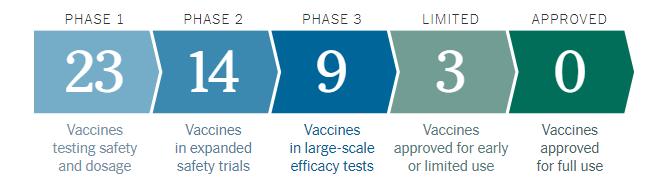
  • Coronavirus: New cases in the U.S. have been decreasing since about mid-July and deaths have been trending down since early August. Now, as schools and colleges start to open, it will be interesting to see if these trends can stay intact. I can’t imagine that they would. As I said the last few months, the markets will rise and fall as news of a vaccine swirls around but when the real deal is announced, we will get a huge boost for stocks across the board. Here’s where we stand on Covid vaccines:

  • Interest Rates: Historically, low rates are bad for savers, pension plans, and those on a fixed income. They are great for borrowers and for those that want to invest in riskier assets, such as stocks. According to the Federal Reserve, rates are not going up anytime soon, so this is good for stocks and even bonds. This was reinforced in August when the Fed indicated that they will give inflation a little more room to run.
  • Election: Both major parties had their national conventions this past month. Everything is now official. They have a little over 2 months to sway any voters on the fence (are there any, really?) to jump to their side. Buckle up.
  • Trade Wars/Tariffs: I don’t expect any progress on these issues until after the election. It is all about Covid right now.

Joe Baker, CFP®

Baker Asset Management, LLC

joebaker@bakerassetmanagement.com
More Interesting Tidbits During The Pandemic

Since it is a relatively slow news cycle right now in the dog days of summer, I thought I would share some interesting stats and facts that I’ve come across in my weekly readings:

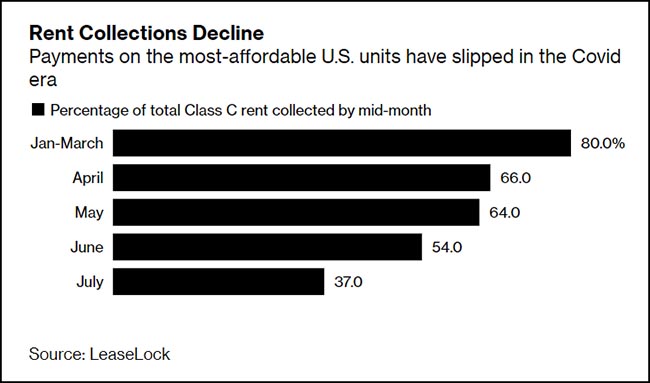
More renters are not paying their rent:

FYI, Class C properties are typically more than 20 years old and located in less than desirable locations. One-third of U.S. apartment units are in Class C space.

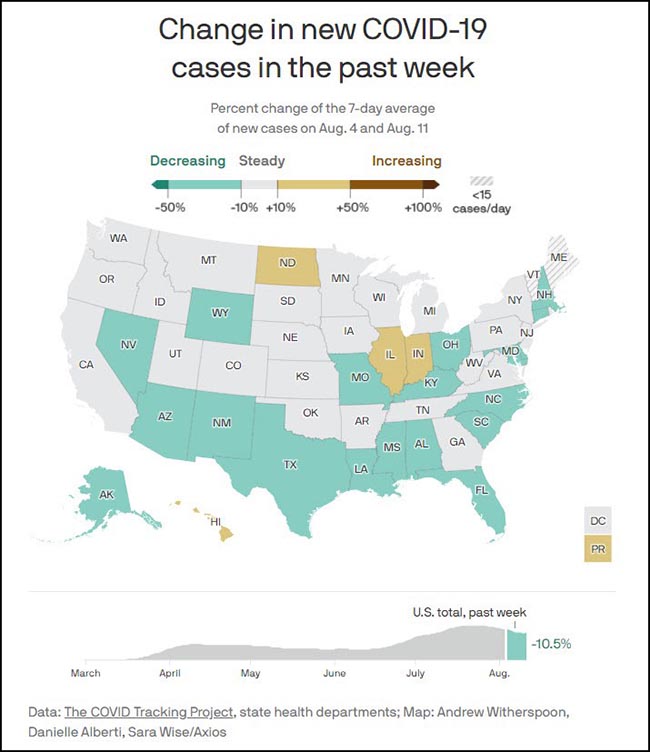
Covid cases are on the decline in the U.S.:

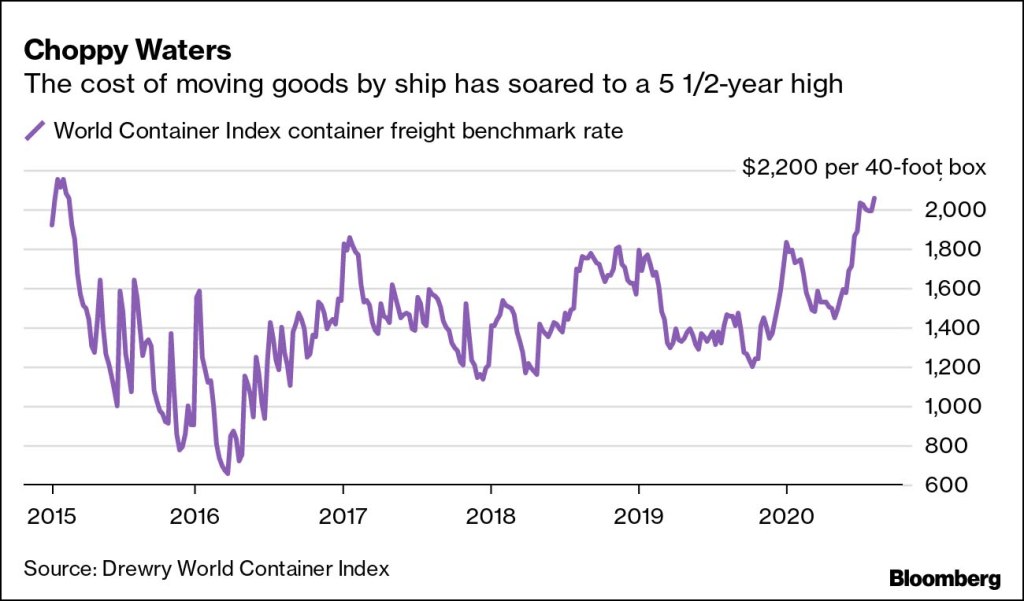
Who knew that commercial passenger flights handle about half of the world’s airborne cargo? Because of that, it makes sense then that the cost of moving goods by ship has climbed 12% in 2020 to the highest in 5 1/2 years, according to the Drewry World Container Index.

Let me know if you have any questions.

Joe Baker, CFP®

Baker Asset Management, LLC

joebaker@bakerassetmanagement.com

Why Owning A Home Is A Bad Investment

house


A big part of the American Dream is to be a homeowner: to have that plot of land with your own private home to live in and raise a family.  You certainly can’t put a price on that….but I am.

Looking at homeownership from a financial investment point of view only, I think it is a horrible place to put your money.  Here’s why:

  • Illiquid – One of the parameters that I use when choosing investments for my clients is liquidity.  This means how fast and how easy it will be for me to buy into, and sell out of, an investment.  As you know, buying and selling a home is neither fast nor easy, so it is considered a very illiquid investment. This is a bad attribute of an investment, particularly when you need to sell quickly.
  • Buying on Margin – Buying on margin means that you’re borrowing money to purchase an investment.  It is a great way to leverage your money by buying more than what you can buy outright with cash.  I never use margin to purchase an investment for my clients because margin calls are not good calls to get.

When you get a mortgage to buy a home, you are using margin or leverage.  You pay interest on that loan and although you may get a mortgage interest deduction tax break, it still eats into your return on investment (ROI).  More importantly, a margin call on your home means you’re getting kicked out of it!

  • Taxes & Insurance – Property taxes, homeowners insurance, flood insurance, liability insurance all eat into your (ROI).
  • Maintenance & Repair Costs – Besides regular maintenance like landscaping, you have to pay for repairs to your home, which could be huge (roof or HVAC system replacement).  And guess what? These costs eat into your ROI as well!

I recently found a very comprehensive buy versus rent calculator on the NY Times website (https://www.nytimes.com/interactive/2014/upshot/buy-rent-calculator.html) that can help you figure out if it makes sense, financially, to invest in a home or rent and invest the difference.

I didn’t write this to discourage people from buying a house.  Heck, I have owned several houses over the last 25 years.  I just wanted to lay out the facts for you and make sure that you are owning a home for other reasons than as an investment.

Please let me know if you have any questions.


Joe Baker, CFP®

Baker Asset Management, LLC

joebaker@bakerassetmanagement.com
 

Reverse Mortgages and Retirement

reverse mortgage

The following is a recent article written by Janet E. Perrigo for CharlestonPhysicians.com that includes expert material on reverse mortgage by one of my colleagues, David Heilman. It is a quick and easy read that gives you a good understanding of how reverse mortgages work and how they can be a part of your overall retirement plan.

COULD A REVERSE MORTGAGE MAKE YOUR RETIREMENT MORE ENJOYABLE?

Have you seen any of those celebrity-endorsed ads for reverse mortgages on TV? Perhaps you’ve wondered if these

are gimmicks or sound financial plans. The good news is that they are not gimmicks; in fact, most today are loans insured by the Federal Housing Administration with protections and safeguards to ensure you and your heirs aren’t negatively impacted. If you are a homeowner and 62 or older, take the time to learn whether this is a viable way to fund your retirement.

Also known as home equity conversion mortgages, reverse loans are designed to make immediate cash available to those who have accumulated equity in their current residence; how-

ever, there are some conditions. For example, the homeowner should plan to remain at home for some time and must be able to afford the home’s property taxes, insurance and general upkeep. The amount of the loan is based upon three variables: the age of the youngest homeowner, current interest rates and the value of the home.

Reverse mortgages offer retirees a variety of options for using the equity in their home to finance vacations, maintain active lifestyles, travel, start new projects or save up for a rainy day – all with no requirement to make a monthly mortgage payment. Once approved, the loan can be received in one lump sum, monthly payments for the rest of the life of the borrower, monthly payments for a specific number of months, given as a line of credit or handled as a combination of the above.

Because retirement usually results in less income, today’s seniors are looking for alternative ways to increase their monthly cash flow. A reverse mortgage loan is designed for just that purpose.

According to Mount Pleasant resident David Heilman, founder and principal owner of Homegrown Financial, LLC, “We know that traditional retirement income sources are becoming unreliable, leaving many to future financial strain. That’s why we’ve devoted ourselves to helping people make use of their existing home equity as a way to fund their retirement.”

For homeowners who are worried about inheritance issues, heirs can still retain the home or any excess equity once you or they sell the property. Neither they nor you will ever be held responsible for anything owed above the value of the home.

If you wish, you may even choose to repay the loan while you are still living. Otherwise, at the death of the last surviving spouse or upon permanently moving, you simply sell your home and pay off any remaining reverse mortgage debt.

As an experienced and recognized Certified Reverse Mortgage Professional®, Heilman maintained, “We believe everyone deserves to have financial independence and make their own decisions for as long as possible. Homegrown Financial, LLC, is committed to allowing older homeowners a way to enrich their retirement and to securely fund their lifestyle needs today and tomorrow.” With the variety of options available, you will definitely want to discuss your choices with a caring professional. Before time slips away, consider a personal, free consultation with David Heilman at Charleston’s own Homegrown Financial, LLC.

Please let me know if you have any questions.


Joe Baker, CFP®

Baker Asset Management, LLC

joebaker@bakerassetmanagement.com
Monthly Update – August 2020

august

Stocks had a pretty decent July, all things considered. Most major indices were able to continue their slow climb upward after stalling in June. The S&P 500 gained about 5% this past month, which enabled it to get slightly above breakeven for the year. For 2020, the resilience of this stock market is incredible.

Covid news is the major market influencer, with the November elections starting to cause some turbulence as well. Progress is being made on the vaccines and treatment fronts for the disease. Realistically, a vaccine wouldn’t be readily available to the general public for at least a year from when it is approved, but the markets will react to the upside way before that.

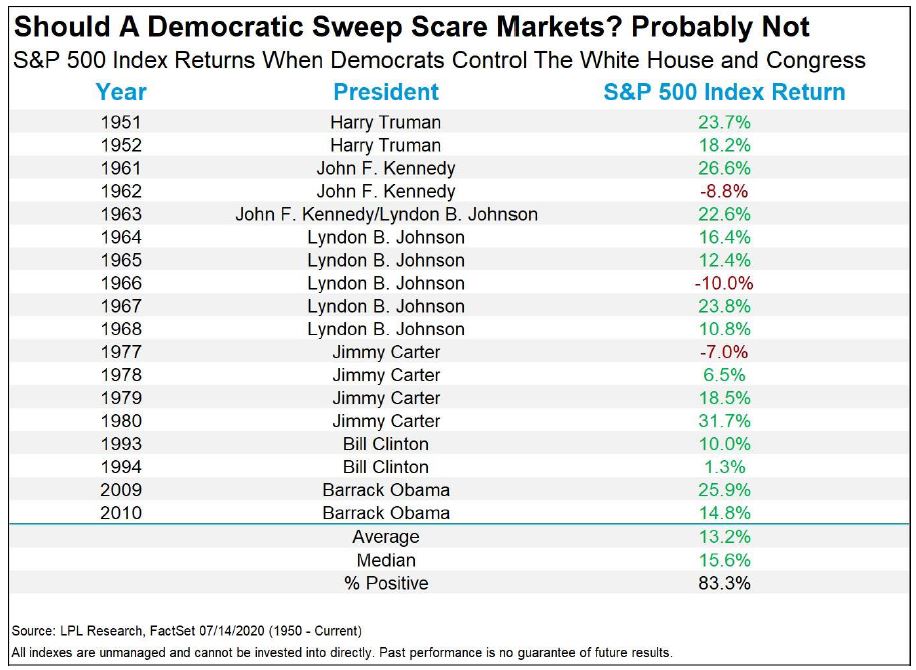
I’m starting to hear a lot of chatter that if the democrats win in November, the markets will tank. Historically, stocks have done much better during democratic administrations than republican so you should not allow this to factor into your investment decisions.

Finally, as I’ve said many times before, interest rates are as low as they have ever been. This puts a nice floor under stock prices because investors want to make money and when rates are so low, they always come back to the stock market.

Having said all that, we still have a very over bought market, so don’t be surprised if we have a correction between now and the elections in November.

Take a look at the Outlook section below to see what events could move the markets over the short term.

Bond prices trended higher across the entire debt spectrum as rates continue to plummet. As long as the Fed is buying bonds, we are not going to see this trend change direction much.

The 10-year US Treasury note is yielding 0.54% and the 30 year is at 1.20%, both lower than last month. These low yields continue to force more money into the stock market because they are just too low to tie up money for such long periods of time.

Interest rates seemed to have stabilized by the end of July. There is no reason for rates to go up at this time. The uncertainty of the pandemic and all the shuttered or semi-open businesses is ensuring rates stay low.

On the savings side, short-term rates, like savings and money market accounts, as well as longer-term rates, like CDs, have levelled off at a very, very low level.

Currently, the average savings account is paying 0.51%, slightly down from a month ago, 0.53%.  Nobody is making money in cash, but at least it is safe.

The 1-year CD interest rate is now averaging 0.85%, less than the 0.90% it was yielding a month ago.  The 5-year CD rate is tracking lower as well, now at 0.97% from 0.99%. With people saving their income at an unprecedented high rate, these rates will continue to stay historically low. The good news for stock investors is that all this cash is going to have to go somewhere and this usually is a precursor to higher stock prices.

Mortgage rates headed lower yet again in July. Currently, the 30-year rate is at 3.14% down from 3.29% a month ago. The Fed flooding the market with liquidity is helping to keep these rates extremely low, particularly for the variable rate mortgage loans. I wanted to point out that the 15 year fixed mortgage is at 2.75%. That’s cheap money!

Oil prices continued their bounce back after the drop into the abyss in April. The price for a barrel of crude rose about 4% to $40.43. Like stocks, the comeback from all-time lows earlier this year is very impressive. Rising oil prices are reflecting the promise of more demand worldwide as countries begin to open to a more normal operating mode. These prices are good news for all those employed in the fossil fuels industries. I still don’t see demand getting back to where it was 6 months ago so maybe oil prices in the $30 to $40 range will be the new normal. There is so much oil stored already and sitting in ships that it would be tough for prices to continue this uptrend unless there are significant production cuts by the U.S. and OPEC.

Gasoline prices didn’t get as much of a bump as its oil cousin. Prices at the pump are averaging about $2.19 per gallon, 1 penny higher than a month ago.  Mississippi has the cheapest fuel again, at $1.84.  FYI, a year ago, we were paying $2.74.

Check out the prices at the pump in your area: Gas Buddy.


Outlook

Events on the horizon that could move the markets in the near term:

  • Coronavirus: Since last month, the numbers have continued to get worse in the southern and western parts of the country. California’s chart of Covid cases looks like a reflection of New York’s chart. Now, as states prepare for schools to open for the fall semester, there is a deep divide across the country as to what to do. There are valid arguments on both sides. Regardless of whether there is in person or online classes, there are going to be a lot of kids being home schooled this year. This could have a significant effect on the U.S. economy. As I said last month, the markets will rise and fall as news of vaccine rumors swirl around but when the real deal is announced, we will get a huge boost for stocks across the board.
  • Interest Rates: Historically, low rates are bad for savers, pension plans, and those on a fixed income. They are great for borrowers and for those that want to invest in riskier assets, such as stocks. According to the Federal Reserve, rates are not going up anytime soon, so this is good for stocks and even bonds.
  • Election: For the past decade or so, it seems like every election is the most important election ever. The upcoming November elections are getting the same treatment. I’ve always said that the President doesn’t really affect the stock market (although the current one has certainly tested that theory). The real market movers are the guys and gals in Congress. It’s too early to tell how it’s all going to play out but I’m pretty sure the road there will be as crazy as 2020 can make it. And for anyone that fears a democratic sweep in November will tank the markets, check this out:

Dem win

  • Trade Wars/Tariffs: I don’t expect any progress on these issues until after the election. It is all about Covid right now.


Joe Baker, CFP®

Baker Asset Management, LLC

joebaker@bakerassetmanagement.com
From This Pandemic, A Silver Lining Is Found

silver lining

As Covid cases continue to increase here in the states as well as many other parts of the world, an unexpected silver lining has popped in the Southern Hemisphere: sharply reduced cases of the flu. Since that part of the world is in their winter season now, we are fortunate enough to get a peek into what our near future could look like regarding a combo of Covid plus flu season.

Here are a few examples:

  • In Chile, they have recorded 1,134 seasonal respiratory infections (flu cases) so far this year, compared with 20,949 such infections over the same time period last year. And in the first two weeks of July, which typically is the height of flu season in the Southern Hemisphere, Chile reported no new cases of the flu.
  • In Argentina, the number of lab-confirmed cases of the flu plummeted by 64% from the same time last year.
  • South Africa hospitals are saying there hasn’t been a sufficient number of flu cases to even report that the seasonal epidemic happened.
  • Australia has recorded only 85 new laboratory-confirmed cases of influenza in the last two weeks of June—a stark difference from the 22,047 confirmed cases recorded during the same time last year.

Experts credit these drops in flu cases to the restrictions imposed due to Covid, such as wearing masks, hand washing, social distancing, school closings, etc.

Can this trend hold true in the U.S. this fall/winter? I think so, as long as we continue to wear masks, wash hands, and not gather in large groups indoors. That sounds great on paper but I’m not sure if we can have a united front on this. There are so many different degrees of Covid restrictions as you go from state to state.

If it does hold true, it will be a welcome relief for our healthcare system and all of its tireless workers.

Please let me know if you have any questions.

Joe Baker, CFP®

Baker Asset Management, LLC

joebaker@bakerassetmanagement.com

The Race For A Vaccine

vax tracker

There has been a ton of good news this past week or so coming out of the pharmaceutical industry regarding promising results for a covid vaccine. There is even talk of being able to start producing an approved vaccine by the end of the year. I noted in my last monthly update that news of a vaccine would give the markets a nice pop and you can see that already as the major market indices are at or near the highs for 2020.

The NY Times has created a pretty comprehensive website, https://www.nytimes.com/interactive/2020/science/coronavirus-vaccine-tracker.html, that tracks all of the vaccine candidates and what stages they are all in.

If you go down to the bottom of the home page and click on “Approved”, under Filter the list of vaccines, you’ll see that there is one vaccine that has been approved in China for use on military personnel only. I thought that was very interesting.

For investing purposes, use this site with a grain of salt. Remember, there are going to be many losers and maybe only a handful of winners out of all these candidates.

Please let me know if you have any questions.

Joe Baker, CFP®

Baker Asset Management, LLC

joebaker@bakerassetmanagement.com