

Calendar Notes
- None
Stocks climbed higher once again in March, making it the fifth month in a row of positive returns for the S&P 500. The rally wasn’t limited to the big technology companies either, as gains were more broad-based across many sectors of the economy. For the month, the S&P 500 was higher by 3.1% and reached a new all-time high to close out the month. For 2024, it is up an impressive 10.4%.
Looking ahead, we have Q1 earnings coming out over the next month or so, supplying plenty of ammunition to shake up the markets. We can put the Federal Reserve on the back burner for a little bit since they don’t meet again until May.
From an historical perspective, April has always been a great month for stocks. In fact, it has been in the top three of the best performing months for stocks since forever. Specifically, from 1950 to 2023, April on average is the second best-performing month of the year, with a gain of about 1.5%. Also, since March marks the fifth straight month of positive returns for the S&P 500, history favors strong performance in the future: Since 1950, there have been 30 five-month streaks in the S&P 500. In all but two of the prior 28 cases, the S&P 500 was higher 12 months later, with an average gain of 12.5%. Data on the economic front continues to look very favorable for avoiding a hard landing or recession in the near future. This should translate into some interest rate cuts later this year, which could give a boost to stocks.
Take a look at the Outlook section below to see what events could move the markets over the short term.
Bond prices changed course once again and headed higher as it looks more and more probable that the Federal Reserve will like what it sees on the inflation front. Expectations are for them to start cutting rates by mid-summer as long as the trend in consumer prices continues to head lower. Switzerland has already started to cut rates in an encouraging sign that inflation has been tamed over in Europe.
The 10-year US Treasury note yield took a dip but still stayed comfortably above the 4% level, finishing the month of March at 4.21%, lower than the 4.25% that it was at the beginning of the month. The 30-year bond yield closed out the month at 4.35%, about 2 basis points lower from a month ago.
I would keep maturities under 18 months and just plan on holding these bonds to maturity. That way, you won’t have to worry about selling at a discount if interest rates head higher.
Savings rates moved higher in March as uncertainty abounds on the direction of interest rates. By the way, savings rates typically follow, but lag, the direction of bond yields. These current savings rates are still relatively high, especially with respect to inflation. So, CDs and MMAs continue to be a great place to park your cash and your emergency fund. These rates continue to be a legitimate alternative to stocks and bonds and will keep pressure on those markets until we see this trend reverse, which looks like it will be happening later in the year than expected.
Now, take a look at the top rates for CDs and money market accounts (MMA):
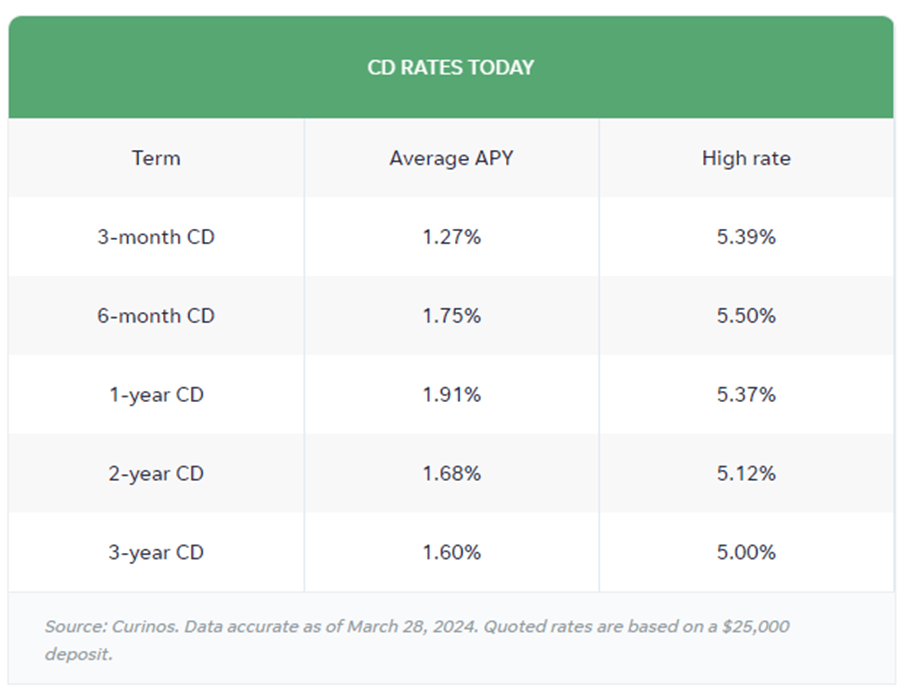
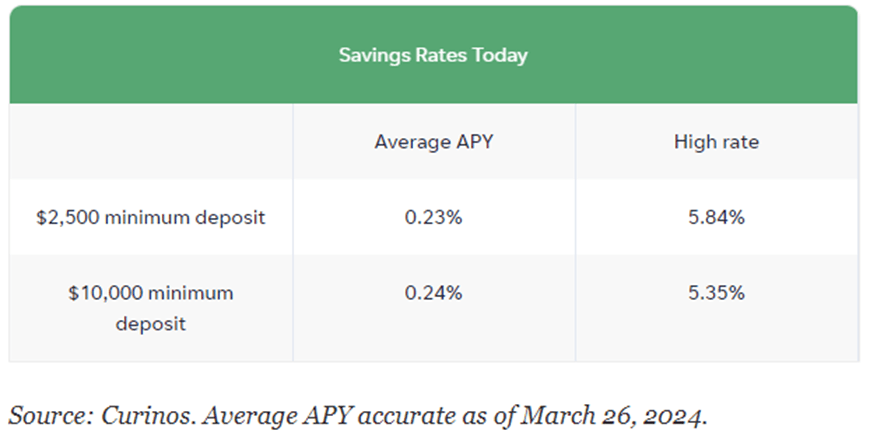
The best 1-year CD interest rate is currently at 5.37%. The best 5-year CD rate right now is around 5.15%. We should see the 5-year CD rate surpass the 1-year rate by the end of the year based on current interest rate trends.
1 year or less, and reevaluate when they mature. If you would rather have more liquidity, look into an MMA (still yielding well over 5% currently). Keep the total under $250,000 per person at any one bank to ensure you are fully covered by the FDIC. CDs and MMAs have become nice alternatives for risk-averse investors and have drawn money away from stocks because of their relatively high rates that carry virtually no risk.
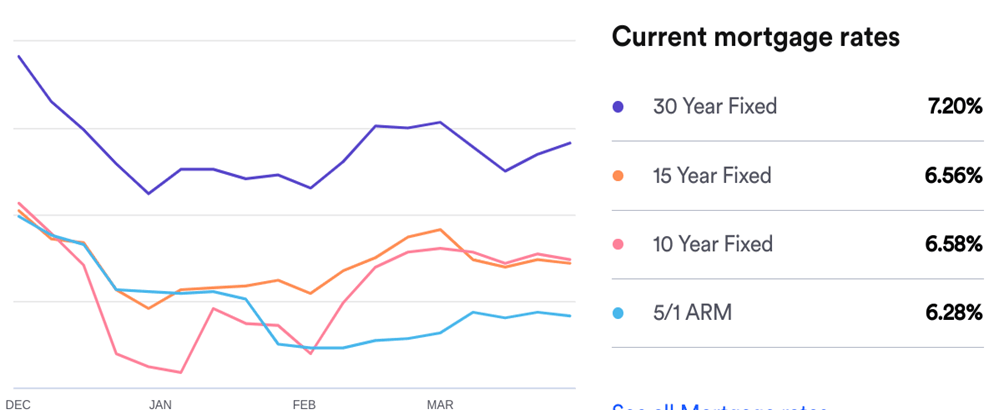
Mortgage rates dipped slightly in March as demand waned, probably due to low inventory and seasonal factors. Currently, the 30-year rate sits at 7.20%, slightly lower than a month ago, at 7.28%. The housing market is in such an unusual situation (high rates, low home inventory, strong demand) that the mortgage rate picture is murky at best. Most homeowners either own their home outright or have a mortgage below 3.5%. There is very little incentive to sell a home with rates where they are right now. That will not change until mortgage rates fall. For now, the industry is dependent on the Federal Reserve to get it squared away.
Oil prices soared higher in March, marking the third consecutive month of higher prices. Some of the reasons for the sustainedhigh prices:OPEC is standing firm on its production cuts. Also, Ukraine is targeting Russia’s oil infrastructure, which is pushing prices upward.
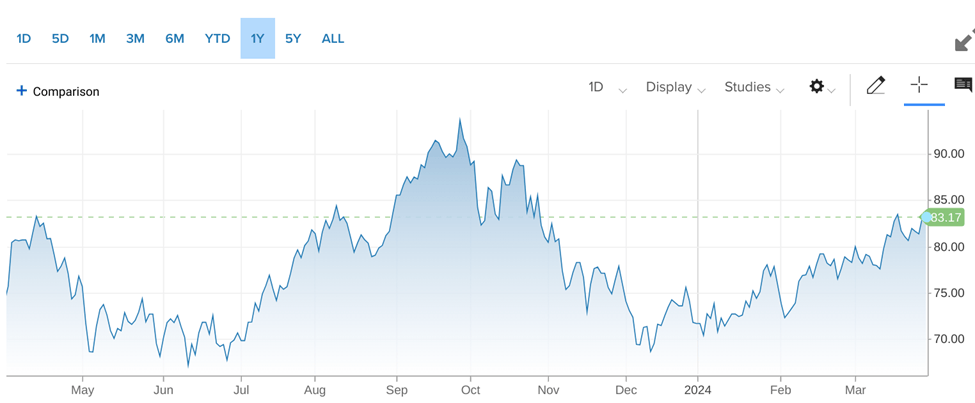
For the month, the price for a barrel of oil settled at $83.17, up from $78.25 at the beginning of March. For the year, it is up about 16%. This is the stickiest part of the inflation equation. And it could be tough to get prices lower with economies continuing to chug along at a strong pace. It is a quandary that might be resolved only through demand destruction, or put another way, the cure for high oil prices is high oil prices.
Here’s a look at the one-year chart for U.S. oil:
Gasoline prices tracked oil prices higher once again in March. Regular unleaded gasoline is now averaging $3.54 per gallon, up from $3.32 last month. Mississippi has the cheapest gas currently, checking in at $3.08 a gallon. California has the most expensive gasoline at $5.10 per gallon. FYI, a year ago, we were paying $3.50.
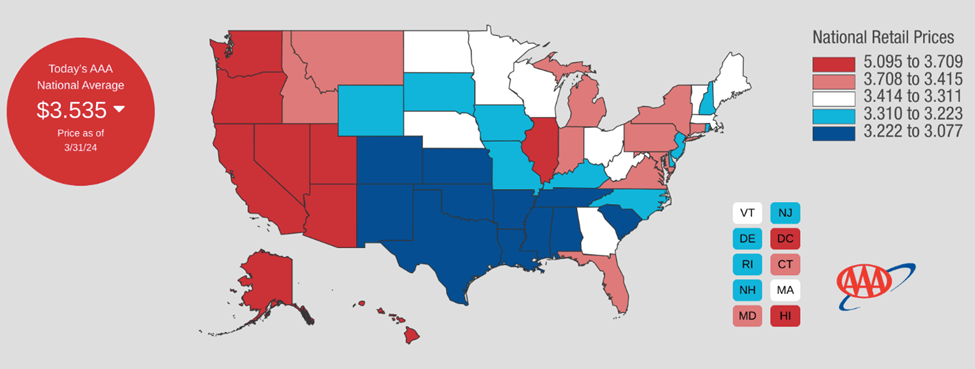
Check out the prices at the pump in your area: AAA Gas Prices.
Outlook
Events on the horizon that could move the markets in the near term:
- Fed & Inflation: The Fed met this past month and said all the things that we expected: inflation is coming down but still has some stickiness. The inflation data is trending down but prices that we see every day, like gasoline and groceries, are still higher than we would like. Regardless, stocks don’t seem to mind. That’s because the stock market is expecting inflation to continue to drop and is pricing in that action right now. Good stuff for the patient investor.
- Savings Rates Peak: This is still in play as savings rates seemed to have stalled and could be heading lower. There are a lot of financial companies competing for deposits so that is definitely helping to keep these rates high, which is great for savers and risk averse investors. If the Fed starts to cut rates sometime this summer, we should see money flowing out of money markets and CDs and back into stocks. This could fund another leg up for stocks over the next 12-18 months.
Joe Baker, CFP®
Baker Asset Management, LLC
joebaker@bakerassetmanagement.com

