
As everyone enjoys an extended spring break, one of the things that people have more time to focus on right now is watching their 401K and other investment accounts. First, let me say that this is something that you should not be doing every waking minute of the day. It will drive you crazy and cause you to make mistakes by selling good investments at a time when you should be probably buying more of them.
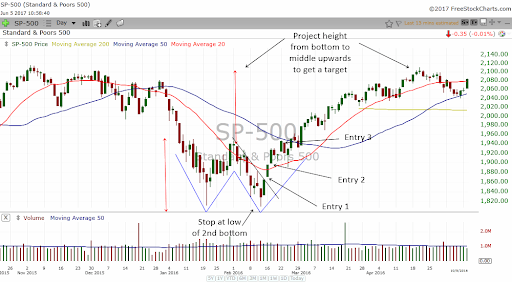
Every investor has made this mistake at some point. It also becomes a double whammy because now you have to figure out when to jump back in so you don’t go crazy again watching stocks shoot back up while you are sitting on the sidelines in cash. When I want to find a good spot to get back in, I like to use technical analysis to help me determine an entry point. One of the more common strategies is using what they call a double bottom chart pattern. This pattern can help you determine if the bottom is in and if stocks will begin to regain what they lost. A good example of a double bottom can be seen in the figure above. Here is a link that gives you a detailed explanation of this strategy: https://school.stockcharts.com/doku.php?id=chart_analysis:chart_patterns:double_bottom_reversal.
Of course, this is not a foolproof way to know when stocks have hit bottom but it surprisingly has shown up in most corrections of the S&P 500 since I have been in the business, including the tech wreck in 2000 and the Great Recession in 2008/2009. Currently, we are bouncing off the bottom that occurred just a few days ago. According to this pattern, stocks should go down close to this bottom level before moving back up for the long term.
So, if you bailed out during this downdraft and are worried that you already missed your chance to get back in, try using this tip to get yourself back into the market. It helps take the emotion out of the equation and lack of emotion is critical to being a good investor.
Stay safe and please let me know if you have any questions. Thanks.
Joe Baker, CFP®
Baker Asset Management, LLC
joebaker@bakerassetmanagement.com


THANK YOU JOE!! You are so GREAT at what you do for your Clients..
THANKFUL to have you as the gatekeeper for our INVESTMENTS 👏🏻
LikeLike