Monthly Update – May 2020

may

Stocks had one of their best months ever, rebounding in a big way as many parts of the world see signs that the worst is behind us regarding the number of infections and deaths from Covid-19. The S&P 500 finished April with a 12% gain but is still down about 10% for the year.  Incredibly, that is not bad considering how our economy has been decimated by this virus and by the restrictions that we put in place to combat it.

We are certainly not out of the woods yet but we are beginning to open the country back up in small increments. I am very interested in watching the infection rates over the next month of the states that are starting to loosen up restrictions. If there is not a big spike in new cases, this will be a very encouraging sign for the stock market. I think if we continue to do the things that help minimize the spread of Covid-19 (masks, washing hands, disinfecting surfaces), we may be able to avoid a jump in the infection rate as we reopen the country.

I feel the Fed is doing a great job of shoring up the financial markets by basically flooding them with cash. On the fiscal side, Congress seems to be playing nice and getting things done to bring some relief to the millions of unemployed and to owners of shuttered businesses.

There is a lot of talk about faster testing, treatments and vaccines that may be available soon. The big question is when. Once we get a clear outlook on when these will become readily available, we can start to return to some form of normalcy in our lives and in the financial markets.

Take a look at the Outlook section below to see what events could move the markets over the short term.

Bond prices moved higher across the board. Government bonds had just a slight move up but corporate bond prices had a big bump as the Fed began buying corporate bonds and bond exchange-traded funds.

The 10 year US Treasury note is yielding 0.61% and the 30 year is at 1.26%, amazing. These low yields force more money into the stock market because they are just too low to tie up money for such long periods of time.

Interest rates appear to be leveling off after the big drop off in March and based on the most recent Federal Reserve meeting, won’t be heading back up anytime soon.

On the savings side, short-term rates, like savings and money market accounts, as well as longer-term rates, like CDs, have more or less halted the downslide.

Currently, the average savings account is paying 0.66%, about the same from a month ago, 0.64%.  Nobody is making money in cash, but at least it is safe.

The 1-year CD interest rate is now averaging 1.19%, slightly less than the 1.25% it was yielding a month ago.  The 5-year CD rate is actually up in April, now at 1.36% from 1.25%. Regardless, these rates are brutal for savers and they may go even lower over the next 6 months, especially if stocks tank due to the virus.

Mortgage rates headed lower in April.  Currently, the 30-year rate is at 3.53%, down from 3.84% last month. This seems more normal due to what is going on in the world versus when they went up in March. Also, the Fed keeping rates low for the foreseeable future really helps borrowers with variable rates loans.

Oil prices fell off another cliff in April, at one point turning negative for a few days. It finished the month at just under $17 a barrel, about a 20% drop from where it started at the beginning of the month. The drop makes sense since most of the world is sheltering in place but it is still incredible to see. The only place where anyone can make money producing oil at these prices is Saudi Arabia. This is devastating for everyone else in the fossil fuels industry. Conversely, it really lowers input costs for almost every other industry, which is a huge positive for those companies’ earnings.

Gasoline prices continue to drop in unison with oil.  Prices at the pump are averaging about $1.77 per gallon, 23 cents lower than a month ago.  Wisconsin has the cheapest fuel, at $1.30.  FYI, a year ago, we were paying $2.88.

Check out the prices at the pump in your area: Gas Buddy.


Outlook

Events on the horizon that could move the markets in the near term:

  • Coronavirus: This past month seemed like 10 years to me as far as this virus is concerned. Unless you are on the front lines in hospitals, you don’t really see the devastation that this is causing, like you would during other catastrophes, such as hurricanes or earthquakes. But there is no doubt that Covid-19 is wreaking havoc on at least 2 major fronts: the health of the world’s population and the global economy. In the U.S., it’s weird to say that we are down to only 1,500 deaths per day. Even so, markets are cautiously inching upward as news continues to get better and better on testing, vaccines, and restarting America. To really get back to any kind of normalcy, we’ll need to have on-demand testing with accurate results within a day. To instill confidence in the public, however, we will need a vaccine. One could be ready within a year but how long it takes to mass produce will determine the timeline to whatever the new normal will be for us. The good news is that stocks and bonds will recover way before that, so if you’re on the sidelines now, you may want to start dollar cost averaging back into the companies and/or sectors that you think will perform the best in this environment.
  • Interest Rates: The Fed just met this week and they basically said that they will be keeping rates low for the foreseeable future. The last time that we had an economic shock similar to what’s happening now was back in 2008 and the Fed didn’t raise rates for over 7 years. This should help put a floor under stock prices for at least a few years.
  • Unemployment Rate: So far, there have been over 30 million Americans that have filed for unemployment since the Covid crisis began. Everyone will be watching the unemployment rate report that comes out next Friday to see how bad the damage is to our workforce. Any surprise, in either direction, will be a market mover.
  • Trade Wars/Tariffs: $370 billion of Chinese goods imported into the United States are still subjected to tariffs of up to 25%. Similarly, 25% tariffs on foreign steel and a 10% duty on aluminum imports remain in place. These tariffs are being paid by American businesses at a time of little revenue. This is ridiculous. Trump can suspend or remove these and it would be a huge relief for our companies. It would also give the markets a nice boost and even provide a nice and a political win for him.


Joe Baker, CFP®

Baker Asset Management, LLC

joebaker@bakerassetmanagement.com

3 Things to Consider When Generating Income From Stocks

what-is-investment-income

It has been a pretty long time since you were able to park some money in treasury bonds, CD’s, or savings accounts and get a decent interest payment.  Interest rates in these types of investments have been trending lower since the late 1980’s and are at the lowest they have ever been here in the U.S.  I certainly don’t see them rising anytime soon based on what is going on in the world right now.  So, how do you get a decent rate of return on your money without having to take on too much risk?

It is very tough to do in this interest rate environment, but if you don’t need the money for at least 2 years, you can find some decent places to park your money and get a reasonable rate of return for relatively low risk.  For the equity section of the investment universe, here’s what I look for in companies to help select a stock to put my low risk money into:

Industry sustainability – This should be an industry that is not likely to go away anytime soon.  Utilities, food producers, and mobile phone service providers are some good examples of industries that should be around for a while.

Payout ratio – This is the percentage of a company’s earnings that it pays out to its shareholders.  For instance, a stock that has a payout ratio of 50% means that the company takes 50% of its earnings and pays it to its shareholders in the form of a dividend.  I try to avoid stocks that have a payout ratio greater than 60%

Free cash flow – This is the amount of cash a company has left over after it pays for all of its operating expenses and capital expenditures.  Put simply, it’s the amount of cash remaining in the coffers after a company pays all of its bills.  I like companies that have free cash flow that is at least 5% of its revenue.

There are many other variables that I take into consideration but if I had to pick only three, I would use these.  To further reduce your risk, you should consider a basket of stocks that fit these criteria.  The easiest way to do this is via sector ETFs, like a utility ETF or a telecom ETF.

Stay safe and let me know if you have any questions.

Joe Baker, CFP®

Baker Asset Management, LLC

joebaker@bakerassetmanagement.com

Ways Covid-19 Will Change Our Future

change ahead.jpg

I have been doing some back porch sitting during my daily breaks thinking about how our lives may change as a result of the Covid-19 virus.  Many of these trends were already in motion prior to this year, but Covid has merely accelerated them.

Here are some changes that may take hold permanently:

  • Less office space needed as companies allow more employees to work from home – The advancements in video calling, internet bandwidth capacity, and security software make this decision easier for companies that have a large amount of white-collar desk jobs.
  • Less business travel, more virtual conferences and meetings – For the same reasons above and also the fear of catching the disease, many will opt to hold meetings and attend conferences virtually.
  • More tele-medicine – Most doctor visits will still be in person, but we will find ourselves having many routine doctor consults being completed online or via conference call.
  • More homeschooling, online college courses – Similar reasons as above and could save a lot of money, especially for college kids.
  • More streaming, less going to movie theaters – At least for our more senior population.
  • Less physical grocery shopping – I started doing curbside pickup of my groceries recently and it is very convenient and reduces your chances of contracting the disease. Plus, many stores also offer home delivery.

There are a whole bunch more but these are the ones that I have seen the most in action already.

Stay safe and let me know if you have any questions.


Joe Baker, CFP®

Baker Asset Management, LLC

joebaker@bakerassetmanagement.com

Now Is The Time To Update Your Health Care Documents

Medical equipment on doctor's office desk

These are some dark days that we are in right now.  This is full on Twilight Zone material.  The coronavirus pandemic is impartial and merciless in who it claims as its victims.  This should be a wake-up call to make sure that you have your health care documents all squared away.  The two most common health care documents that I am talking about are:

Living Will – This written document sets out how you should be cared for in an emergency or if you are otherwise incapacitated. Your living will sets forth your wishes on topics such as resuscitation, desired quality of life and end of life treatments including treatments you don’t want to receive. This document is primarily between you and your doctor, and it advises them how to approach your treatment.

Durable Power of Attorney for Healthcare – The durable power of attorney for healthcare is given to the person you want to make medical decisions for you in an emergency. Even though you set out your wishes in your living will, such documents can never cover every circumstance, and the person who has a durable power of attorney for healthcare can make decisions not covered by your living will.

In many states, these two documents are combined into one document called an advance health care directive.

Here are some steps to take now to get these documents in order:

  1. Locate these documents. If you never drafted any, then get it on your to do list.  You can get these done online and completed via electronic signature in most states.
  2. Once located, review them in detail to make sure that they still meet your wishes, particularly who you task to make decisions on your behalf.
  3. Let family members, your doctor, and your named agents listed in your documents know how they are involved. Give a copy to your named agents.  This web site is useful for assistance in getting this done: mydirective.com.
  4. Keep a copy of these documents in an easy-to-find location, along with a list of all prescriptions, supplements and dosage of each and an indication of known allergies. Also, put a copy of your insurance card with these documents. This could speed the hospital admission process.

Stay safe and let me know if you have any questions.


Joe Baker, CFP®

Baker Asset Management, LLC

joebaker@bakerassetmanagement.com

Monthly Update – April 2020

april

Stocks continued their descent but not without having record up days as well during this past month.  Still, the S&P 500 ended a bad month and a bad first quarter, dropping 13% and 20%, respectively.

In today’s day and age, the size of the market swings and the speed at which they occur are heavily influenced by some forces that weren’t even around just 20 years ago: quant funds using automated algorithmic traders and high frequency traders.  If you are watching these gyrations all day, you better have a crash cart next to you because they will wreak havoc on your physical and emotional well-being.  Paying too much attention will also cause you to make emotional, irrational investment decisions that could jeopardize your financial goals.  So, turn it off and take a break from it for a while.

It is going to take months before we can even think about going back to some kind of normal.  Having no national plan for the first few months when the virus was invading our shores really put us in catch up mode.  But now, actions are being taken to fight this enemy on all fronts.  On the economic front, the Coronavirus Aid, Relief, and Economic Security Act (CARES) was passed late last week which will provide much needed financial relief for individuals and small businesses.  Congress is already working on another bill for additional aid that will certainly be vital to help us climb out of this hole.  The Federal Reserve has also stepped up and is injecting massive amounts of capital into the money and fixed income markets to maintain liquidity.  They say that they have plenty more weapons to deploy, if needed.  I hope they are getting them ready.

There are so many unknowns about how widespread and deadly this virus will be and that is a big reason for keeping non-essential businesses in shut down mode and stay-at-home orders in place.  Only until this uncertainty clears up, can we start to see a recovery in the financial markets.

Take a look at the Outlook section below to see what events could move the markets over the short term.

Bond prices moved lower on the corporate side while government bonds rose as panicked investors flocked to safety.  March would have been a lot worse for corporate bond holders if it wasn’t for the Federal Reserve stepping in to say that they will be buying corporate bonds as well as other fixed income securities, including corporate bond ETFs.

The yield curve is no longer inverted, which is probably the only thing that is normal right now.  The benchmark US Treasury 10-year note hit a record low yield of 0.32% while the 30-year bond hit a record as well at 0.70% yield.  We even had a yield go negative for a few days: the 3-month T bill.  These are numbers that I did not think were possible just a few months ago.

Interest rates accelerated lower yet again in March to nobody’s surprise.  The Fed dropped the rate that banks use to lend money to each other down to 0%.  This rate, as I’ve talked about in the past, indirectly influences almost every other lending/borrowing rate out there.

On the savings side, short-term rates, like savings and money market accounts, as well as longer-term rates, like CDs, continued to trend down.

Currently, the average savings account is paying 0.64%, a drop from 0.94% a month ago.  At 0.64% savings rate, you can earn a whopping $6,400 a year with a $1 million deposit.  Ugggh.

The 1-year CD interest rate is now averaging 1.25%, less than the 1.81% it was yielding a month ago.  The 5-year CD rate is at 1.25%, down from 1.87%.  These rates are brutal for savers and they may go even lower over the next 6 months.

Mortgage rates reversed course and headed back up in March.  Currently, the 30-year rate is at 3.84%, up from 3.62% last month.  That doesn’t seem right since most rates have continued to decline.  One of the main reasons for this reversal is the lack of capacity for lenders to process loans.  They are doing 2.5 to 3 times what they were doing this time last year.  It is taking forever to close loans.  So, one way to reduce demand is for lenders to increase rates.  Even with this bump in mortgage rates, refi’s really look good right now, especially if you plan on being in your home for at least 5 more years.

Oil prices fell off a cliff in March, cratering below $20 a barrel at one point, but finished the month at $20.10.  The drop was an incredible 55% from where it started in the beginning of the month.  In Canada, oil went as low as $5 per barrel recently. We are now at price levels that are extremely damaging to the energy sector of the economy.  This could close down wells permanently and cause a tremendous amount of layoffs, particularly in certain sectors of the oil markets.  For instance, in Wyoming there is oil produced there used solely for asphalt paving that is selling at a negative price!  That means the producer is paying you to take the oil away because they have no more storage.  Looking at oil price futures, there is not a lot of faith that prices will rebound anytime soon either.  Plus, Saudi Arabia is still planning to flood the market with more oil in April.  Incredible.

Gasoline prices, as expected, are nose diving as well.  Prices at the pump are averaging about $2.00 per gallon, 44 cents lower than a month ago.  Oklahoma has the cheapest fuel, at $1.56.  FYI, a year ago, we were paying $2.69.

Check out the prices at the pump in your area: Gas Buddy.

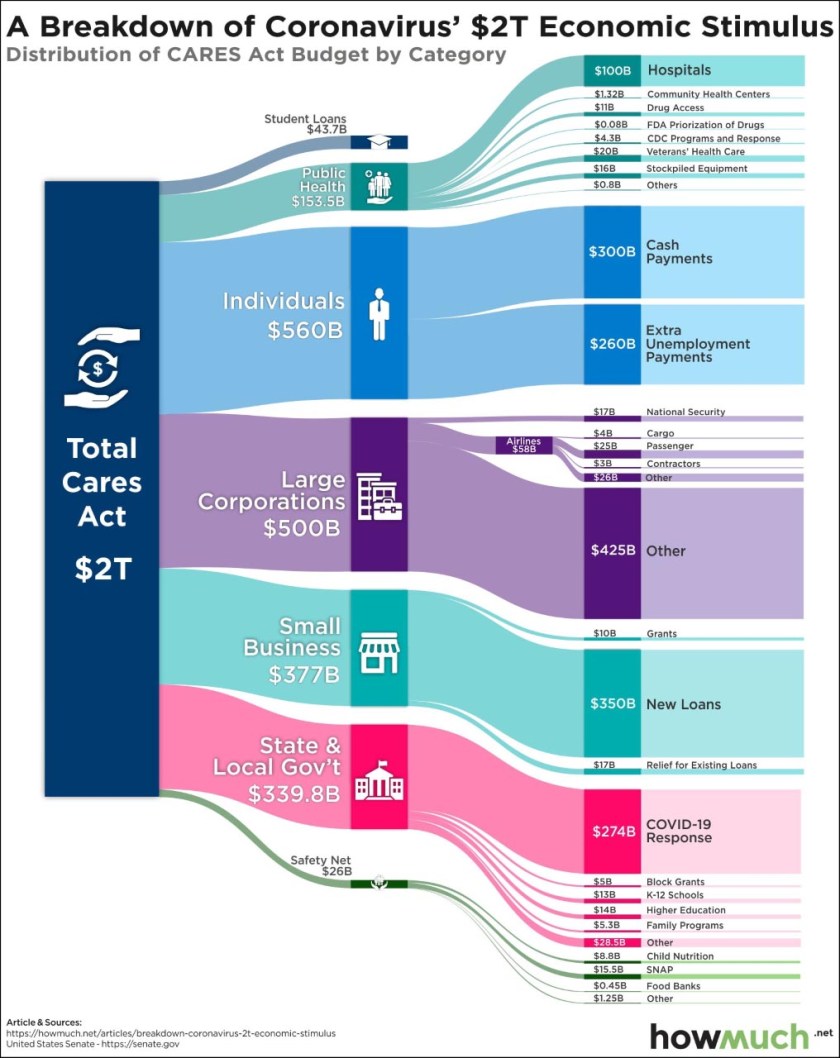
Finally, I thought this is an easy way to describe where all the money from the CARES Act is going:

11_CoronavirusEconomy

Outlook

Events on the horizon that could move the markets in the near term:

  • Coronavirus: Another month in the books and we still don’t have much clarity on when we will be able to control the spread of this virus. NYC is being overwhelmed by the number of cases and lack of healthcare equipment and personnel.  Will we see Chicago, LA, Atlanta and other large cities meet the same fate?  We hope not but there are still so many things that we don’t know about this virus that we have to prepare for the worst.  We really have to act as if we all have the virus.  That means social distancing, self-quarantine, and disinfecting.  The sooner that we act together for the greater good, the sooner that we can get out of this mess.
  • Interest Rates: The Fed did another cut to the Fed Funds rate, dropping it to 0%, just like back in 2008.  As I said last month, this may help stock prices a little in the very short term, but it won’t cure people infected with the virus and it won’t help reconnect supply chains.  However, when we do start to recover, lower rates will certainly help the speed at which we recover.
  • Unemployment Rate: This number will be an absolute shocker when it comes out this Friday. I can’t say that the stock market has already priced it in because the number of unemployed is increasing rapidly every day.
  • Trade Wars/Tariffs: I am shocked that Trump has not, at least, temporarily waived the tariffs that were imposed over the last year on our imported goods.  With these still in place, our companies are paying so much more for imports at a time that couldn’t be worse.  Take them off for the rest of the year and slap them back on in 2021.


Joe Baker, CFP®

Baker Asset Management, LLC

joebaker@bakerassetmanagement.com
How The CARES Act Affects Your Retirement Accounts

COVID Money

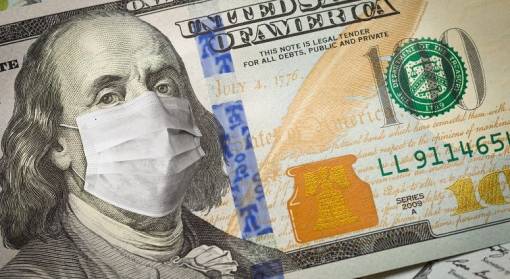
The Coronavirus Aid, Relief, and Economic Security (CARES) Act was recently signed into law this past week.  It is 800+ pages and focuses mainly on providing relief to individuals and businesses affected by the economic shutdown due to the virus.  There are also a few provisions that affect our retirement accounts.  Here is a quick summary of those changes:

  • For 2020, you won’t have to take a required minimum distribution from your IRA. This includes inherited IRAs.  If you don’t need the money, not taking an RMD will help lower your taxable income for 2020 and allow your money to recover from the market drop while remaining in your IRA.
  • During this year, you will be able to take out up to $100,000 from your IRA without having to pay the 10% penalty. Normally, the 10% penalty applies to IRA owners under the age of 59.5.  You will also be able to spread the taxes owed on that distribution over a 3-year period.  You can also put the money back into your IRA during that 3-year period if you didn’t need it and avoid taxes on that amount.
  • Until the end of the year, you can take a loan from your 401k up to $100,000. Normally, loans are capped at 50% of your balance or $50,000, whichever is less.  These limits are waived for this year.  Your plan must allow loans.
  • If you already had a 401k loan out and it was supposed to be paid off by the end of this year, you will have an extra year to pay it off.
  • Since the date to file your income taxes has changed to July 15, 2020, you have until that date to contribute to your IRA for 2019.

In order to qualify for these modified distributions or loans, they must be coronavirus-related.  The requirements are very broad so it will be relatively easy to qualify for these new provisions.

Stay safe and please let me know if you have any questions.  Thanks.

Joe Baker, CFP®

Baker Asset Management, LLC

joebaker@bakerassetmanagement.com
Technically Speaking

double bottom

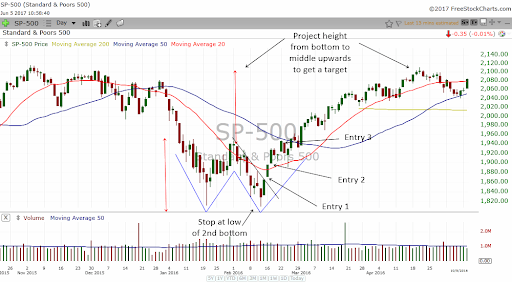
As everyone enjoys an extended spring break, one of the things that people have more time to focus on right now is watching their 401K and other investment accounts.  First, let me say that this is something that you should not be doing every waking minute of the day.  It will drive you crazy and cause you to make mistakes by selling good investments at a time when you should be probably buying more of them.

Every investor has made this mistake at some point.  It also becomes a double whammy because now you have to figure out when to jump back in so you don’t go crazy again watching stocks shoot back up while you are sitting on the sidelines in cash.  When I want to find a good spot to get back in, I like to use technical analysis to help me determine an entry point.  One of the more common strategies is using what they call a double bottom chart pattern.  This pattern can help you determine if the bottom is in and if stocks will begin to regain what they lost.  A good example of a double bottom can be seen in the figure above.  Here is a link that gives you a detailed explanation of this strategy: https://school.stockcharts.com/doku.php?id=chart_analysis:chart_patterns:double_bottom_reversal.

Of course, this is not a foolproof way to know when stocks have hit bottom but it surprisingly has shown up in most corrections of the S&P 500 since I have been in the business, including the tech wreck in 2000 and the Great Recession in 2008/2009.  Currently, we are bouncing off the bottom that occurred just a few days ago.  According to this pattern, stocks should go down close to this bottom level before moving back up for the long term.

So, if you bailed out during this downdraft and are worried that you already missed your chance to get back in, try using this tip to get yourself back into the market.  It helps take the emotion out of the equation and lack of emotion is critical to being a good investor.

Stay safe and please let me know if you have any questions.  Thanks.

Joe Baker, CFP®

Baker Asset Management, LLC

joebaker@bakerassetmanagement.com
Hope In Isolation

corona

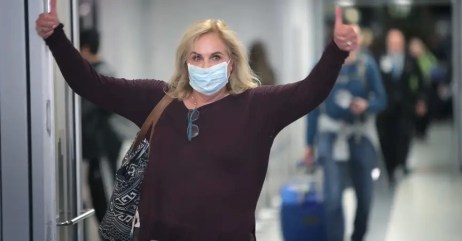
As I hone my social distancing skills along with almost everybody else in the world, I thought that I would share some facts and figures that I have come across while consuming all sorts of articles, blogs, web conferences and newspapers these past few days.

First, a quick PSA: IRS has pushed back the date for filing and paying your 2019 federal taxes to July 15, 2020.  Yay.

First, a blunt fact: The coronavirus has altered the world’s way of life permanently.  How we interact, travel, conduct conferences, buy food, take care of ourselves, etc. will all change.  I’m not saying this is a bad thing.  Usually, these changes are made so we don’t have a repeat of the event.  Vaccines are great examples of changes that have been made in our society to prevent diseases from running rampant.

The worst thing about this virus is the uncertainty that it carries.  We can’t see the light at the end of the tunnel.  With natural disasters and terrorism, you have the event and then you immediately start to recover.  This seems more like the Great Recession in 2008 when everyone thought all banks were going bankrupt and every stock and bond price was going to zero.

Will we get through this? Yes, we will.  Though the worst hasn’t hit us yet and it will take awhile for the world to get back on its feet, we will turn the corner and start to repair the damage.

I think now that both the media and the government are on board with the fact that this is serious, the public is finally starting to take the necessary actions to minimize the spread of the virus, the biggest one being social distancing, spring breakers notwithstanding.  This will help “flatten the curve” and hopefully keep our healthcare system from being overrun with too many infected people at one time.  The U.S. wants to follow the curve in South Korea, not Italy.

Speaking of the United States, we are testing more, which helps identify who has it and then we can isolate them from the rest of the healthy population.  We are going to see a lot more confirmed cases in our biggest cities because of the high population density.  For instance, the NYC area has a population density of almost 28,000 people per square mile, one of the highest in the world.  So, it is not surprising to see their numbers climb.

Still, overall as a nation, we only have 94 people per square mile.  This is very helpful in reducing the chance of spreading the virus throughout the entire country.  For comparison, Italy has 532 people per square mile.

If you want to track the virus across the globe, there are two sites dedicated to this task:

Johns Hopkins COVID-19 Dashboard

https://www.bing.com/covid

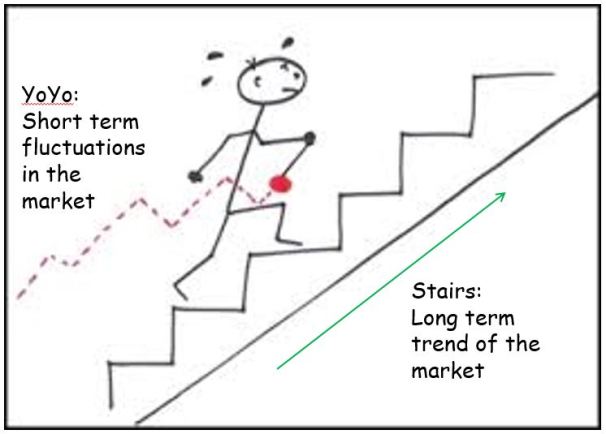
Finally, to put the financial markets in perspective, I dusted off this old “chart” to give a big picture view of how the stock market trends over the long haul.  I think the last time I brought this out was in 2008, during the darkest days of the financial crisis.  Even though right now this guy might be doing the “walk the dog” trick with that yo-yo, he’s still moving onward and upward.

yoyo

Stay safe and please let me know if you have any questions.  Thanks.

Joe Baker, CFP®

Baker Asset Management, LLC

joebaker@bakerassetmanagement.com
Recent Action To Combat Coronavirus Pandemic

coronavirus-fs


As the coronavirus pandemic sweeps across the globe, the US is taking several steps to try and get it under control.  Here’s some of the actions recently put in place:

  • The Federal Reserve lowered their benchmark fed funds rate to 0%. This helps maintain liquidity in the financial markets and reduces lending rates (business loans, mortgages, credit cards, etc.). This action usually is a big positive for stock markets.  I think the reason that it has not had the desired effect, at least not yet, is because lower interest rates aren’t going to stop the virus from spreading.  Lower rates also aren’t going to pay the bills of any workers that no longer have a paycheck because their company’s operations have been interrupted.
  • The Federal Reserve has restarted quantitative easing. If you were around in 2008/2009, you probably remember the term, quantitative easing, which is another weapon the Fed uses to combat a slowing economy.  They basically inject money into the economy by buying up various securities, typically treasury bonds and mortgage backed securities.  This works similarly to lowering interest rates, but the Fed usually does this after they have lowered rates down to 0%.  Stock markets have not responded well to this move either, for the same reasons as I stated above.
  • States are taking action to promote social distancing. Per the Centers for Disease Control and Prevention (CDC), one of the best ways to lower the rate of virus spread is to minimize interaction between people.  So, we are closing schools, working from home when possible, and canceling sporting events, festivals, conferences, etc.  I think this is the best way to flatten the curve, meaning, spreading out how many people get infected at one time.  There will be a lot of people that will get this disease here in the states, but the key to managing it is to not have everyone get it all at once.  Otherwise, our healthcare infrastructure will not be able to handle it (not enough beds, ventilators, medical personnel, etc.).
  • Emergency Coronavirus Bill in Congress right now. Congress is working on a bill as we speak that will hopefully provide immediate assistance to those that become infected and to those whose paychecks may be in jeopardy if shutdowns continue for an extended period of time. I believe if this bill passes soon, it would help stocks come out of their current freefall.
  • Vaccines are being worked on. Obviously, the sooner the better for this one. But the CDC says that it would be 12 to 18 months before it would be readily available to the public.
  • Considering military assistance. There’s no time to consider anymore. We should be harnessing the might of our military to help combat this disease.  We have 2 hospital ships that have 1,000 beds each that can be stationed in port near our hardest hit areas.  Each branch also has their own medical corps along with construction battalions that can set up temporary facilities in existing convention centers around the country.  These can ease the stress on existing hospitals if we do hit a spike of cases, similar to what is happening in Italy right now.

I’m no expert in controlling infectious diseases but it seems to be that these steps are getting us going in the right direction to protect our citizens and protect our financial systems.  I feel the biggest factor that will help the markets recover is when we can see a decrease in the rate of confirmed cases.  This can only happen if we start testing in large volumes.  Large scale testing hasn’t happened yet but we seem to be ramping up to start this week.  This will spike our confirmed cases pretty quickly, but at least we will have a better idea of where the biggest concentration of infected people are and can direct supplies and resources appropriately.

We definitely got a late start on corralling this virus, but we are taking action now.  We’ll get through this and get back to a more normal way of life, with more hand washing, of course.

Please let me know if you have any questions.


Joe Baker, CFP®

Baker Asset Management, LLC

joebaker@bakerassetmanagement.com
The Fed Lowered Rates – What That Means For You

interest rates lower

Earlier this week, The Federal Reserve Open Market Committee, aka The Fed, made a surprise move by lowering the Federal Funds Rate (FFR) by 50 basis points, or 0.50%, to 1.25%.  They made this move in response to how the coronavirus is disrupting the economy.

The FFR is the rate that banks charge each other for overnight loans.  Although this is the only interest rate the Fed actually ever changes, it influences other short-term rates such as savings accounts, loans, credit card rates, and adjustable-rate mortgages.  Modifying this rate is one of the Fed’s tools that they use to maintain a healthy economy.  They lower it if they feel the economy is slowing and raise it if the economy is heating up too quickly.

The Fed typically makes changes to the FFR following one of their scheduled meetings.  They also seldom change it more than 0.25%.  This time, they made the change without a scheduled meeting and it was twice the magnitude that they normally make.  The Fed felt that the timing and magnitude of the move was needed to help shore up financial markets as news of the virus broke out.

How effective this action will be remains to be seen.  Regardless, this unexpected rate change will lower the rates on many of the financial accounts that we interact with every day.  Here is a list of some of the more common ones:

  • Adjustable rate mortgages
  • Car loans
  • Home equity/HELOC loans
  • Credit cards
  • Savings and money market accounts
  • CD rates

In general, a lower FFR helps borrowers and punishes savers.

The big picture goal for the Fed is that this rate change will lower borrowing costs for businesses, which will help their cash flow if their sales are hurt by the coronavirus.  It will be interesting to see how this plays out.

Shoot me an email if you have any questions.


Joe Baker, CFP®

Baker Asset Management, LLC

joebaker@bakerassetmanagement.com