

Monthly Update – June 2018

june-calendar-clipart-18

Stocks managed to squeeze out another gain in May as it tries to claw back the losses from earlier in the year.  The S&P 500 ended the month of May up 2.3%. For the year, it is back in the green but still well off its January highs.

The on again, off again trade wars is making investors very nervous.  Now, Trump is going full protectionist mode, slapping tariffs on friends and foes alike.  The end result will be higher prices for pretty much everything and a lot of angry consumers.  It could also accelerate us into a recession. That would stink because the economy is humming along quite nicely right now despite all of the distractions.

Bonds moved up just a bit in price this May.  The best performers were the bonds with the lowest risk, such as US government bonds and bonds from high quality companies.

The yield on the 10 year US Treasury note retreated back below 3% as traders sought out safe havens for their money.  This yield is important because investors consider it the risk free rate and it is used to compare risk with other investments, such as stocks.  When this rate rises to a point where it isn’t worth the risk to own stocks, investors sell stocks and buy treasuries.

As I mentioned previously, rising interest rates is the path of least resistance over the next several years so if you are investing in bonds, make sure their maturity is 3 years or less and expect to hold the bonds until maturity.  Also, try to avoid investment vehicles that have no maturity constraints, such as bond mutual funds. Please read my recent blog on this topic for more details: Why Bonds May Be More Riskier Than Stocks.

On the savings side, rates held pretty steady this month.  This is a good thing. I don’t like seeing any kind of interest rate changing too quickly.  Slow and steady typically translates into a solid economy.

Currently, the average savings account is paying 0.09% and the average money market account is paying 0.18%.

The 1 year CD interest rate is now averaging 2.17% (up from 2.10% last month) and the 5 year CD rate is at 2.62%(up from 2.61% last month).

Mortgage rates remained above 4%, with the 30 year rate at 4.35%, down just a bit from last month.  These rates could accelerate higher if we start to see increased wage growth and consumer price inflation.  Historically, rates are still extremely low but the path of least resistance is still up, for right now.

Oil prices ended slightly down from where they began in May but not before hitting almost $73 per barrel about a week ago.  Price per barrel ended May at $67.04, down from $68.57 a month ago.

OPEC is still trying to remain relevant but they are becoming less so as the U.S. is set to become the largest oil exporter in the world.  As long as oil prices stay at these levels or higher, we will reach that milestone.

Nationally, gasoline prices are averaging about $2.97 per gallon.  FYI, a year ago, we were paying $2.39. New Orleans, LA has the cheapest gas in the country at $2.60.

Check out the prices at the pump in your area: Gas Buddy.

Outlook

Events on the horizon that could move the markets in the near term:

  • Russian Investigation: No major revelations in May.  Trump’s new lawyer, Rudy Giuliani, is saying that the investigation should be over in September.  Until then, expect an onslaught of tweets from Trump but nothing from the other side.
  • Negotiations with North Korea: It was looking pretty good until about a week ago.  The meeting was scheduled with Trump and Kim. Then it was canceled.  Any progress will be a positive for the markets. Personally, we should let NK and SK get to work resolving their problems.  We should step back and assist if requested by them.
  • Infrastructure Bill: I’m yanking this off the board until after the elections.  No chance they’ll get anything done before then.
  • Trade Wars: This is heating up big time.  The metal tariffs that were proposed earlier this year are set to go into effect today, 06/01/18.  Metal producers from Mexico, Canada, and Europe will be affected. Earlier this week, team Trump said it would proceed with tariffs against China as well.  Affected countries are already retaliating with their own tariffs. This will have a negative impact on the markets, at least in the short term.

Joe Baker, CFP®
Baker Asset Management, LLC
joebaker@bakerassetmanagement.com

No, Medicare Does Not Pay For Your Long-Term Care Expenses

nurse-blood-pressure-hypertension-elderly-black-man

Seventy percent of Americans who reach age 65 will at some point need long-term care, whether at home or in an assisted care or nursing home facility, according to the U.S. Department of Health and Human Services.

The big problem is how to pay for that care. Most people believe, incorrectly, that Medicare will pay for their long-term care expenses. Medicare will only pay for the first 20 days. The next 80 days you will have to pay $164.50 per day before any help from Medicare kicks in. After day 100, you are on your own as far as paying for long-term care.

Medicaid, which is a totally separate program from Medicare, will pay for your long-term care but only after you spend down almost of of your assets, depending on the state that you live in.  You definitely want to avoid this situation if you can because it is financially and emotionally terrifying for your entire family. Unfortunately, this option is the only option for the majority of Americans. Solving this dilemma is a whole other topic.

You can self fund your LTC expenses but you’ll have to plan accordingly. LTC can cost anywhere from $50,000 to $120,000 per year, depending on your location and the level of care that you’ll need. As you can see, if you will need LTC for more than a few years, it can be financially devastating if not adequately planned for in advance.

Another way to plan for the eventuality of long-term care is to purchase long-term care insurance. It is actually much more affordable than you might think. Plus, once you realize you can easily spend your entire retirement nest egg on long-term care, it makes even more sense.

For example, a couple in their mid-50’s can get a long-term care insurance policy on each of them for about $3,000 total annual premium. Keep in mind that there are many options to choose from when buying LTC insurance so you definitely want to do your homework. The biggest factors in determining your premium amount are your health, current age, and the length of the benefit period.

LTC insurance is very complex so make sure that you talk to a licensed adviser so you fully understand all of the ins and outs.

The biggest problem with LTC insurance, or any insurance for that matter, is writing that premium check every month to pay for something that you hope you will never use. But, when you consider that the average cost of a year’s stay in a LTC facility is about $100,000, cutting that premium check is a little less painful.

Planning for long-term care is probably the most avoided part of retirement planning but it could become the biggest obstacle in realizing your retirement dreams. Please let me know if you have any questions.

Joe Baker, CFP®
Baker Asset Management, LLC
joebaker@bakerassetmanagement.com

What You Should Do Every Time You Get a Medical Bill

medical bills

The cost of healthcare in America is taking a bigger and bigger chunk out of our annual income each year and is only expected to get worse.
Here are some stats:

In 2016, U.S. health care costs were $3.3 trillion. That makes health care one of the country’s largest industries. It equals 18 percent of gross domestic product. In comparison, health care cost $27.2 billion in 1960, just 5 percent of GDP. That translates to an annual health care cost of $10,348 per person in 2016 versus just $146 per person in 1960.  Health care costs have risen faster than the average annual income.


While our elected officials work on fixing our healthcare system (said with a lot of sarcasm), we can do some things to make sure we are getting what we pay for.  Here are some things that everyone should do each time they get a medical bill:

  • Check your personal information.
    Sometimes bills get mixed up and you may end up receiving one that doesn’t belong to you, especially if you have a common last name. This actually happened to us. There is a woman that lives about a mile from us that has the same first and last name as my wife and uses the same hospital as us since it is very close to both of us. We were receiving her medical bills as well as ours!
    Also, check all the identifiers, and be sure your health insurance policy number and medical record numbers are correct, otherwise you may be paying out-of-pocket when insurance ought to be covering your expenses.  Again, this happens to me frequently, particularly having an incorrect policy number, which then triggers huge out-of-pocket costs.
  • Request an itemized bill.
    Lots of medical billing companies will send out invoices with no information whatsoever about the services provided, just the amount you owe. Always request an itemized statement before you pay a dime, and double check what you’re being charged for.  To make this easier for you to verify, especially if you are seriously ill or injured, have a family member or friend present with you when you go in for a procedure to document what services were performed.
  • Question suspicious fees and billing codes.
    Your medical invoices should include the billing codes, which are typically combinations of letters and numbers, such as CPT, ICD-10-CM, DRG and so forth, which itemize the services you received. Check these to see if you have been double-charged for any items, or charged for services you may not have received. That includes tests that your doctor ordered but later cancelled.  I have found many of these errors when my dad was going back and forth to the hospital during his final months.  Make a list of any items with charges that seem way too high, such as a $3,500 for a 15-minute ER visit to evaluate an injured ankle or $20 for a single aspirin.  You need to be especially wary of your level of service charge, which is the code that determines the severity of your case and treatment.  Up-coding (the practice of entering in a higher level charge) can drastically increase your bill — and it’s illegal.
    If you’re not sure what the code means, just google it.  Then contact the billing office.
  • Follow up.
    Keep careful records of when you called, who you talked to, and the time frame in which they were supposed to get back to you.  It’s a pain in the butt, but the attention to detail could save you thousands.
  • If everything is legit, there’s still more that you can do to lower your bill.
    Negotiate. Negotiate. Negotiate.  You can often get a discount on your bill if you simply ask for one.  Also, you can request a payment plan, interest-free, to pay off large bills.  I have done both of these many times.
  • Be polite, but not a pushover.
    Be prepared when you call the billing office or your insurance company.  Explain why you are calling and what you are asking for.  Personally, I find that about 65% of my family’s medical bills have some form of error that results in a higher bill for me.  Incredible but true.

If you don’t have the desire or the time to do this stuff, you can always pay a professional to look over your medical bills.  A good place to help you find one is through the Alliance of Claims Assistance Professionals (ACAP), www.claims.org/refer.php.

Joe Baker, CFP®
Baker Asset Management, LLC
joebaker@bakerassetmanagement.com

Best Time To Sell An Investment

Image result for best time to sell stock

I get this question a lot and no, there isn’t a one-size-fits-all answer.  It really depends on the type of investor that you are, the risk tolerance that you have, and the objective of the investment.  Regarding types of investors, a day trader will have parameters for selling investments that are much different than someone putting away 10% of their paycheck to their 401k account, or what we call a long-term investor.  Most people are long-term investors but they can be influenced to act like short-term traders due to the constant flow of information with our 24 hour news cycle.

What is even more confusing to most investors is that most financial media outlets, such as CNBC, Bloomberg, etc., tout information that is mostly geared towards short term traders.  They rarely mention this and many viewers wrongly interpret what they hear as what they should be doing. For example, if I’m retiring in 10 years, should I really care what the employment numbers are for last month?  Of course not, but some business shows will make you think that it will be the end of days if the number is not what they expect.

So, instead of getting pushed and pulled by talking heads every day, here are a few things to consider when evaluating whether or not to sell an investment:

  • Are the reasons that I bought it still valid?  Remember Blockbuster Video? They ruled the movie rental market until Netflix came along and changed the industry.  Any Blockbuster investors would have saw that there reasons for owning that stock were no longer valid and hopefully sold.
  • Are there other opportunities that provide a chance for a higher return?  The Blockbuster scenario above can be used here as well but I like to ask this when an investment has already lost value.  Many investors will hold onto an investment that has lost value until it recovers to the price that they bought it at before selling it.  That’s emotional investing which is rarely a good strategy. Remember, you don’t have to make your money back the same place where you lost it.  If there are better opportunities, go ahead and cut bait and move on.
  • Has the return on investment met your expectations?  If it has, who says that you have to sell it all? Well, you could be a great market timer and get out at the top but most likely you will have seller’s remorse when the price continues to go up.  Not to worry. Simply sell a portion and set a higher goal for the next sell point.

The takeaway from this short blog is to have a standardized method to evaluate your investments periodically to determine if they still should play a part in your investment portfolio.
Joe Baker, CFP®
Baker Asset Management, LLC
joebaker@bakerassetmanagement.com

Monthly Update – May 2018

May

Stocks managed to squeeze out a tiny gain in April to snap its two month losing streak.  The S&P 500 ended the month of April up 0.5%. It is still negative for the year and well off its January highs.

There is just a lot of uncertainty out there and investors don’t like uncertainty.  The tariffs could be an issue but companies tend to find ways around government intervention.  For me, I think the big issue is Trump, the circus that is the White House, and most importantly, what the findings of the Mueller investigation are going to reveal.  As far as I am concerned, the sooner the investigation comes to a close, regardless of the outcome, the better. Otherwise, the markets are going to have a tough time.

Bonds moved down in price modestly in March.  This is normal behavior: bond prices tend to rise when stock prices drop and vice versa.  This is a good reason to be properly diversified in different asset classes (stocks, bonds, real estate, etc.).  You want to own stuff that zigs when your other stuff zags.

The 10 year US Treasury note finally crested above the 3% yield level late in April and now sits just below that rate.  This yield is important because investors consider it the risk free rate and it is used to compare risk with other investments, such as stocks.  When this rate rises to a point where it isn’t worth the risk to own stocks, investors sell stocks and buy treasuries. We are not at that point but it is something I am monitoring.

As I mentioned last month, rising interest rates is the path of least resistance over the next several years so if you are investing in bonds, make sure their maturity is 3 years or less.  Also, try to avoid investment vehicles that have no maturity constraints, such as bond mutual funds. Please read my recent blog on this topic for more details: Why Bonds May Be More Riskier Than Stocks.

On the savings side, rates are starting to creep up with a little more speed but they’re certainly in no hurry.

Currently, the average savings account is paying 0.09% and the average money market account is paying 0.18%.

The 1 year CD interest rate is now averaging 2.10% (up from 1.96% last month) and the 5 year CD rate is at 2.61%(up from 2.49% last month).

Mortgage rates remained above 4%, with the 30 year rate at 4.43%. These rates could accelerate higher if we start to see increased wage growth and consumer price inflation.  Historically, rates are still extremely low but the path of least resistance is still up, for right now.

Oil prices continued to move upward in April.  Price per barrel rose over 6% and now sits at $68.57.

OPEC is still trying to remain relevant but they are becoming less so as the U.S. is set to become the largest oil exporter in the world.  As long as oil prices stay at these levels or higher, we will reach that milestone.

Nationally, gasoline prices are averaging about $2.81 per gallon.  FYI, a year ago, we were paying $2.36. Lawton, OK has the cheapest gas in the country at $2.36.

Check out the prices at the pump in your area: Gas Buddy.

Outlook

Events on the horizon that could move the markets in the near term:

  • Russian Investigation: FBI seized documents from Trump’s lawyer, Michael Cohen, in April.  Since then, it has been relatively quiet with the exception of the President voicing his views on twitter.  The allegations of secret meetings with Russians and Arab princes is right out of Hollywood. The next big focal point is the Trump interview with Mueller.  When it goes down, get your popcorn ready!
  • Escalating Tensions with North Korea: Less than 6 months ago, Trump was calling Kim Jong Un “little rocket man” and we were talking about going to war with NK.  Now, Trump calls Kim Jong Un an honorable man and both Koreas are meeting to finally end the Korean War. This went from being a big negative for the markets to a nice positive.
  • Tax Law Effects: Companies are now reporting their Q1 results, their first since the new tax laws went into effect.  I’m sure much of this good news was already priced into the market but we still could see some decent surprises.
  • Infrastructure Bill: We can probably kiss this goodbye for this year.  Word is that Congress will not be able to agree on a bill before the end of the year.  I hope they can break it up into smaller bills and also make it budget neutral. They have 3 months before they take their month off in August to get something going.
  • Trade Wars: It looks like we are using the tariffs as a negotiating tool.  The tariff scare definitely had a bigger bark than its bite. Now, we’ll see which countries come to the table to level the playing field for us.  I know South Korea has already helped trade in our favor so it seems to be working.


Joe Baker, CFP®

Baker Asset Management, LLC

joebaker@bakerassetmanagement.com
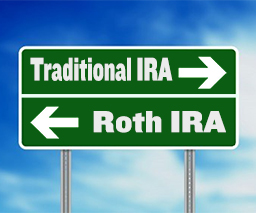
When Does It Make Sense to Convert Your IRA to A Roth IRA?

IRA-vs-ROTH-IRA

Have you ever wondered about whether it makes sense to convert your traditional individual retirement account, or IRA, to a Roth IRA?

The main difference between a Roth and a traditional IRA is when the money is taxed.  With a traditional IRA, the money goes in pre-tax and is taxed when you take it out of the account.  With a Roth, it is taxed before it goes in but is tax-free when you withdraw it.

With a conversion, you can move money out of a traditional IRA, pay ordinary income taxes on that money, and move it into the Roth where it will grow tax-free.

Therefore, the most important factor that you need to know before you convert your IRA to a Roth is what your tax bracket is going to be now versus in the future.  If you are nearing retirement, you’ll most likely be in a lower tax bracket in the next few years, so you might want to wait until after you have retired to do the conversion.  That way, the money that you convert will be taxed at a lower rate.

If you are not sure if you will be in a lower tax bracket in the future but you still want to do a conversion, you might want to consider converting small amounts of your traditional IRA each year instead of all at once.

I think the biggest benefit of converting to a Roth IRA is the ability to pass it on to your beneficiaries without them having to pay any taxes (as long as you had the Roth opened for at least 5 years).  The beneficiary will still have to take required minimum distributions (RMDs) but those distributions will be based on the beneficiary’s age, not yours.

If your spouse is your beneficiary, it gets even better.  Your spouse can make it their own Roth IRA and will not need to take any RMDs during their lifetime. Then, when your spouse dies, his/her beneficiaries can take the RMDs based on their ages. This is sometimes referred to as a Stretch Roth IRA.

There are plenty of conversion calculators on the web that can give you a general idea if it makes sense to convert all or a portion of your traditional IRA.  You’ll definitely want to check with you financial and/or your tax advisor to ensure you are making the right decision.


Joe Baker, CFP®
Baker Asset Management, LLC
joebaker@bakerassetmanagement.com

Amazing Progress in Treating Cancer

cancer cells

One of the great things about being in the investment business is that in the course of researching companies to invest in, you learn about all of the latest and greatest innovations going on in those companies’ respective industries.

Recently, I have been looking at potential investments in the biotechnology field and have been reading about some incredible progress being made in the field of cancer treatments.  First, here are some sobering statistics from the American Society of Clinical Oncology:

This year, more than 14 million people worldwide will learn they have cancer. According to the latest global statistics, nearly 9 million people a year lose their lives to cancer. That equates to approximately 22,000 cancer deaths per day.  The global cancer burden is expected to grow in the future, reaching 21 million patients with cancer and 13 million deaths per year by 2030, as the world’s population expands and ages.

Those stats really put the enormity of the disease in perspective.  The good news is that in the last 5 years, there have been huge strides made in how we treat cancer.  Prior to these breakthroughs, the typical course of action was to try and destroy the cancer cells by destroying all cells in the affected area via radiation and/or chemotherapy treatments.  This is analogous to the military finding a terrorist cell in Charleston, South Carolina and then carpet bombing the whole city to get rid of it!

Fortunately, now there are treatments, such as immunotherapy, that use our own bodies’ defenses to destroy the cancer cells, without destroying all of the other healthy cells.  It is amazing how immunotherapy works: cancer cells hide from our immune system by attaching themselves to certain proteins and sugars, creating a cloak that makes them invisible to our immune cells that want to protect us.  Immunotherapy drugs remove the cloaking device from the cancer cells, which then allows our immune system to locate and kill the cancer cells. So basically, we can now use our own built-in defense system to cure cancer.

Many of these immunotherapy drugs have been used in conjunction with chemotherapy but new tests have shown that they are just as effective on their own.  This is great news because then we don’t have to subjected to the horrible side effects of radiation and chemotherapy treatments.

Now, this isn’t quite the holy grail of cancer treatments yet since its effectiveness varies widely from patient to patient.  But, we are certainly headed in the right direction and the future is definitely looking brighter!
Joe Baker, CFP®
Baker Asset Management, LLC
joebaker@bakerassetmanagement.com

Monthly Update – April 2018

image

Stocks made it 2 months in a row of negative returns. The S&P 500 ended the month of March down about 3.1%, which in turn, caused stocks to turn negative for the year. A really big wrench got thrown into the economy and the stock markets when Trump slapped tariffs on some imports, specifically for products coming from China. They retaliated with import tariffs of their own on many of our exports. We need to get to the negotiating table instead of just shooting from the hip with these tariffs. China has a calculated strategy for these tariffs – targeting products from states that are first in the primary election cycle. The other problem is that our tariffs on China will hurt our economy much more than they will help it unless Americans are willing to pay more for their finished goods. Finally, China can easily outlast us in a game of tariff chicken. There’s no doubt that we have been taken advantage of over the years with our poor trading policies so this should be an ideal time to renegotiate those deals. However, throwing tariffs out there as our first move in the negotiating process is probably not the best way to go about it. I have to believe that we are doing some deals behind closed doors with China and other countries but I can’t help feeling skeptical with all the dysfunction coming out of DC on a daily basis.

Bonds moved up in price modestly in March. This is normal behavior: bond prices tend to rise when stock prices drop and vice versa. This is a good reason to be properly diversified in different asset classes (stocks, bonds, real estate, etc.). You want to own stuff that zigs when your other stuff zags.

I don’t think interest rates have stopped going up but nothing ever goes straight up or down during a long term trend. Rising interest rates is the path of least resistance over the next several years so if you are investing in bonds, make sure their maturity is 3 years or less. Also, try to avoid investment vehicles that have no maturity constraints, such as bond mutual funds. Please read my recent blog on this topic for more details: Why Bonds May Be More Riskier Than Stocks.

The new Federal Reserve chairman looks like he will be using the same playbook as his predecessor so at least we know what to expect over the rest of the year. They are looking to raise rates 3 more times this year. Remember, the Fed only controls the Fed Funds Rate, which is the rate banks charge each other for overnight loans. However, this rate does influence pretty much every other interest rate out there. So, when the Fed raises the FFR, you can be pretty certain your credit card rate and variable rate on loans will be going up as well. As an example, my HELOC’s variable rate has been increasing in step with the FFR increases, so I have been paying it down more aggressively.

For those who weren’t around in the late 70’s/early 80’s and think rates are getting too high, here’s a nice 55 year chart of the interest rate of the US Treasury 10 year note to put it into perspective how low rates are right now: http://www.macrotrends.net/2016/10-year-treasury-bond-rate-yield-chart.

On the savings side, rates are starting to creep up with a little more speed but they’re certainly in no hurry.

Currently, the average money market/savings account is paying 0.80%.

The 1 year CD interest rate is now averaging 1.96% (up from 1.92% last month) and the 5 year CD rate is at 2.45%(up from 2.39% last month).

Mortgage rates remained above 4%, with the 30 year rate at 4.27%. These rates could accelerate higher if we start to see increased wage growth and consumer price inflation. Historically, rates are still extremely low but the path of least resistance is up, for right now.

Oil prices resumed upward trend after taking a breather in February. Price per barrel rose about 4% and now sits at $64.38.

As little as 5 years ago, all the conflict occurring now in the in the Middle East would have caused oil prices to rise and stay high for a long period of time. It is very obvious now that the impact of increasing the production of our own oil, as well as Mexico and Canada, has dramatically lessened the affect that the Middle East region (OPEC) has on oil prices. Hopefully, this will continue even as we transition to cleaner and renewable energy sources.

Nationally, gasoline prices are averaging about $2.66 per gallon.  FYI, a year ago, we were paying $2.33.  Lubbock, TX has the cheapest gas in the country at $2.29.

Check out the prices at the pump in your area: Gas Buddy.

Outlook

Events on the horizon that could move the markets in the near term:

  • Russian Investigation: This has been kind of quiet other than Trump’s lawyer quitting. I suspect some plea bargains are being worked on right now. Whatever the outcome, it will be a major market mover when it hits the press.

  • Escalating Tensions with North Korea: This has calmed down quite a bit. North Korea has already met with China and when Trump meets with Kim Jong Un this month, it could be an historic moment that could defuse the whole Korean peninsula. Then, we can finally get out of there.
  • Tax Law Effects: Companies will be reporting their Q1 results over the next couple of months. This is the first earnings reports with the new tax laws in effect. Should be some pretty good comparisons between 2018 Q1 and 2017 Q1 which will bode well for stock prices.
  • Infrastructure Bill: Word is that Congress will not be able to agree on a bill before the end of this year. However, they might approach it as several smaller bills, like one just for bridges and another just for highways. That seems like it would be more doable.
  • Trade Wars: This could get ugly if we don’t sit down with China and the EU and negotiate some win-win deals.


Joe Baker, CFP®

Baker Asset Management, LLC

joebaker@bakerassetmanagement.com

Things to Think About When Stock Markets Tumble

crash

I thought this article by Ron Lieber (NY Times) had some very good general purpose tips to think about when stock markets are crashing all around you.  Although it was published back in January of 2016, the article is quite appropriate right now. I especially like the second paragraph of tip #2.

(here’s the link to the original article: 6 Tips for Investors When the Stock Market Tumbles)


  • You Are Not the Stock Market


Chances are, your portfolio is a diverse mix of investments. While stocks may be falling, you probably also have some bonds and cash. Perhaps there are some real estate mutual funds, too. Then there’s your home equity if you own a home, not to mention the value of your future earnings. These things probably won’t all fall simultaneously.


  • You May Have Done Quite Well in Stocks


If you were in stocks from 2009 to 2015 {or through 2018 for that matter}, or in the 1990s or consistently since the early 1980s, you are most likely a big winner. It’s generally a bad idea to look at your investment statements too often, but take a quick peek at your long-term performance. That outsize gain you see is one reason you were in stocks in the first place.

Plenty of research shows that if you miss just a few days of the market’s biggest gains, your long-term portfolio will suffer badly. If you decide to put a lot of your money in cash right now, how will you know when to get back in the market? You’ll probably be looking for a sign, and that sign will be the rebound days on which you missed out.


  • Your Goals Probably Have Not Changed


At some time in the past, when you were not scared, you made a decision to construct your portfolio a certain way. You knew that stocks involved risk and that the returns they have traditionally delivered, above and beyond what cash and bonds do, was the reward for your persistence.

Nothing about recent market events suggests that the fundamentals of capitalism have changed. So neither should your confidence in very long-term ownership of the pieces of the for-profit enterprises that benefit from your fortitude.


  • Most Investors Have Plenty of Time to Recover


Too many 70-year-olds sold all of their stocks in 2009 and are healthy enough to live to 100. They would be going on a lot more vacations now and be worrying less about long-term care if they had held firm.

Worried about a 529 college savings plan for a 12-year-old? Let’s hope you weren’t 100 percent in stocks with six years to go before needing money for tuition. Still, you have at least nine years for a portion of that portfolio to recover from any sustained downturn.


  • Some People Cannot Handle the Stress of Stock Investing


Maybe you are one of them. But try to give this more time, and consider the alternatives. There are few investments that can deliver the kinds of returns that stocks can without their own accompanying anxiety. An alternative is to save a lot more in safer investments like cash or certain bonds. Most people don’t have enough income to do that easily, so settling for lower returns will mean a combination of working longer and living modestly. For some people, that is a fine trade-off.


  • Dear New Investors: This Is Just What Markets Do


There is absolutely nothing abnormal about what is going on here. Most of us have to save somewhere, and history suggests that stocks are the most accessible route to getting the returns you will need to retire someday. It would take decades of systemic economic erosion to prove otherwise, and a few days of market declines do not suggest that anything like that is upon us.


Joe Baker, CFP®
Baker Asset Management, LLC
joebaker@bakerassetmanagement.com

Letter of Final Instruction – Don’t Leave This World Without It

Stairway to the sky

The Letter of Final Instruction (LOFI) should be a major part of everyone’s estate plan.  Unfortunately, I rarely see one when reviewing a client’s financial documents.

The LOFI isn’t a legal document like a will or trust.  It is simply a document that provides your family with guidance upon your death on little things that wouldn’t necessarily go into a legal document.  It is a godsend for family members, especially after a sudden, unexpected death. I have seen many a family become completely stressed out and overwhelmed when dealing with the aftermath of a death in the family.

The LOFI provides important information to heirs, such as location of safe deposit box keys, insurance policy info, financial account numbers, online passwords, etc.  It also allows you to direct where you want your personal belongings to go to, such as your 100 year old china set or your vintage ‘65 Mustang. These items typically aren’t specified in a will or trust.  However, you can reference a LOFI in a will or living trust. That way, if you need to make changes, you can simply change the LOFI without having to amend the will or trust, since that takes the assistance of an attorney.

The LOFI should be distributed to all immediate family members and updated annually, if needed.  I also keep mine as a pdf file on my computer as well as a hard copy that I leave on my desk when I travel. 

If you want to get started on writing up your LOFI, here is a link to a very comprehensive checklist of what you should include: https://www.cals.uidaho.edu/edcomm/pdf/CIS/CIS0958.pdf.

You can also just do an internet search for letters of final instructions and you’ll have a bunch of resources to use.

Get going on this, even if you don’t have a will.  Something is better than nothing. Having a LOFI for your family will give you peace of mind and will help your heirs deal with settling your estate without all the stress and confusion.

Joe Baker, CFP®

Baker Asset Management, LLC

joebaker@bakerassetmanagement.com