Tax Loss Harvesting – What It Is and When To Do It

American dollars grow from the ground

Tax loss harvesting (TLH) is a term used in the financial industry to describe strategies employed by investors to minimize their taxes due on any realized gains of investment sales for the year.  Realized gains occur when you sell an investment at a higher price than when you bought it.

Before reading any further, please note that TLH only applies to investments in taxable accounts, not retirement accounts or any other tax deferred accounts.  That said, let’s take a look at what this harvesting is all about.

I think an example is the best way to understand how this strategy works:

Suppose you sold shares of XYZ earlier this year for a $10,000 profit, also known as a realized gain.  Let’s say that you also have a stinker, ABC, in your account that is down $15,000 from when you bought it.  You can sell ABC and now have a realized loss of $15,000. This will offset the $10,000 realized gain. It will also offset up to $5,000 of any other realized gains that you have this year.  If you don’t have any other gains, you can apply $3,000 to reduce your taxable income and the remaining $2,000 of losses can be carried forward to next year.

In this example, you were able to avoid paying taxes on that gain of $10,000 by using the TLH strategy.

Most people like to do this strategy towards the end of the year but you can do it any time during the calendar year.  I like to do it for my clients during the slow summer months because that is one less thing to worry about during crunch time in December.

I also want to share with you some do’s and don’ts when you are considering TLH:

  1. Don’t sell losers just to offset gains.  Make sure that the investment no longer fits with your investment objectives.
  2. Do sell losers if they no longer fit your strategy, even if you don’t have any gains to offset.  You can always carry the losses forward to use in later years.
  3. Considering #1 above, do maximize your tax savings by using TLH when you have short term capital gains, since they are taxed at your ordinary income tax rate, which may be much higher than the long term capital rate.
  4. Don’t buy a substantially identical investment within 30 days before or after the TLH sale.  If you do, this will disallow the the loss.
  5. Don’t ever consider any tax strategy, such as TLH, as the sole reason to buy or sell any investment.  They should be incorporated into your investment decisions as part of your overall game plan.

Please let me know if you have any questions.

Joe Baker, CFP®
Baker Asset Management, LLC
joebaker@bakerassetmanagement.com

Monthly Update – August 2018

1_123125_123112_2240728_2262207_powell_august_lounging.jpg.CROP.promo-large

Stocks ended up a healthy 3.7% for the month of July. The S&P 500 is now up about 5.4% for the year and nipping at the heels of its January highs. It seems like nothing can keep this market down for any significant period of time. I, for one, am very impressed by its resiliency.

We are now officially in the midst of the dog days of summer. Congress is on vacation, European companies pretty much shut down in August, and all the big institutional traders head off to the Hamptons to do whatever they do in the Hamptons. But that doesn’t mean it’s going to be quiet and boring for the markets. As you’ll read in the Outlook section, there’s some things that could make the dogs bark in the next few months.

Bonds dipped a little once again in July as investors felt better about taking on more risk in their portfolios after the initial scare of the trade tariffs.

The yield on the benchmark 10 year US Treasury note climbed back up to almost 3% once again. This compares to a 2% yield for the S&P 500. For me, if I had an investment time horizon of 10 years, I’d still rather invest in stocks of high quality companies that pay a decent dividend than in government bonds. However, I would consider those bonds if the 10 year Treasury yield went above 4%. This yield is important because investors consider it the risk free rate and it is used to compare risk with other investments, such as stocks. When this rate rises to a point where it isn’t worth the risk to own stocks, investors sell stocks and buy treasuries.

As I mentioned previously, rising interest rates is the path of least resistance over the next several years so if you are investing in bonds, make sure their maturity is 3 years or less and expect to hold the bonds until maturity. Also, try to avoid investment vehicles that have no maturity constraints, such as bond mutual funds.

On the savings side, rates started to inch up a little bit, but nothing too dramatic. Of course, we would all like to have a savings account paying 5% interest, but this slow, steady advance is a good thing. I don’t like seeing any kind of interest rate changing too quickly. Slow and steady typically translates into a solid economy.

Currently, the average savings account is paying 0.09% and the average money market account is paying 0.20%.

The 1 year CD interest rate is now averaging 2.41% (up from 2.30% last month) and the 5 year CD rate is at 2.77%(up from 2.76% last month).

Mortgage rates are firmly above 4%, with the 30 year rate at 4.47%, up 0.07% from last month. These rates could accelerate higher if we start to see increased wage growth and consumer price inflation. Historically, rates are still extremely low but the path of least resistance is still up, for right now. Recently, there have been signs of downward pricing pressure in the housing industry, particularly in California and the New York Metropolitan area. This should help keep mortgage rates from rising too quickly.

Oil prices did a huge about face in July, sinking 7.3%, its worst monthly decline since 2016. Price per barrel ended July at $68.76, down almost six bucks from a month ago.

Who knows if this is just a pause in the oil price rise or if it is something more. Typically, oil prices tend to peak in August/September so we’ll see if this seasonal trend holds true this year.

Nationally, gasoline prices are averaging about $2.87 per gallon.  FYI, a year ago, we were paying $2.32.  Spartanburg, SC has the cheapest gas in the country for a second month in a row at $2.52.

Check out the prices at the pump in your area: Gas Buddy.

Outlook

Events on the horizon that could move the markets in the near term:

  • Russian Investigation: There are now 32 indictments and 5 guilty pleas so far. Manafort’s trial has started but it now looks like Mueller will be working on his investigation well into 2019.  In any case, it is highly doubtful that Trump will be indicted.  Also, I believe Manafort and others might clam up and take their chances at trial, in the hopes of getting a presidential pardon.

  • Trade Wars: Reality will be setting in as a result of US tariffs: expect higher prices for cars, TVs, beer, soda, etc., expect company earnings to drop during the rest of this year, and expect layoffs. Of course, this could all go away if we do some negotiating.  There’s good odds that Trump will make these tariffs go away before the November elections.  If so, a lot of uncertainty will be removed from the stock market and we should get another leg up as a result.


Joe Baker, CFP®
Baker Asset Management, LLC
joebaker@bakerassetmanagement.com

What A Potential Government Shutdown Means For Your Investments

gov't shutdwon
I thought I would dust this old blog off and repost since there is a possibility of another government shutdown. The last time the government shutdown was way back in January of this year (please note the sarcasm).
This isn’t because we ran out of money again. This one will be caused by the president and congress squabbling over an immigration bill. I’m not even sure if you’re allowed to shutdown the government over this but anything is possible with this administration.
Regardless of the reason, if a shutdown occurs, the federal government will cease all but essential services until someone tells them to get back to work.
Here’s a quick synopsis of what this means for you and me:

Non-essential government employees are furloughed, meaning they are told to not report to work. These employees include the Internal Revenue Service and Centers for Disease Control and Prevention among many others.
Mail will still be delivered, and airports will operate as normal. The military will not shut down—it is considered an essential function, so all active duty members will work as usual.
Medicaid and Medicare will continue to insure senior, low-income and disabled people during the shutdown.

A government shutdown costs an estimated $2 billion in economic output daily. If this happens again, I think stocks will take a dip initially. Then, once they come to an agreement and everyone comes back to work, the markets will recover. So, if you’re worried about the shutdown hurting your investments, don’t. Unless you need that money in the next couple of months, it will be easier for you to stay invested than selling and trying to time the market to get back in.
Please let me know if you have any questions.

Joe Baker, CFP®
Baker Asset Management, LLC
joebaker@bakerassetmanagement.com
Apps To Make Life Easier

apps

Here are a couple of apps that I thought could be helpful in making your life a little bit easier around the home:

Centriq (https://www.mycentriq.com)

A virtual user’s manual to the home, Centriq gathers appliance instruction guides and warranties with just a snapshot of the product nameplate, while managing service providers and sending you reminders for product upkeep.  I think this is not only great for appliance maintenance and manuals but also very useful for insurance claims purposes.

Dinner Spinner (http://dish.allrecipes.com/mobile-apps)

Deciding what to make is easy when you can find, manage and save recipes right on your phone. And once you land on a menu, just tap to add the ingredients to your shopping list. The app will even recommend new dishes based on which ones you actually make.

HomeZada (https://www.homezada.com/homeowners)

HomeZada’s like a personal assistant for your house. You can track assets for insurance and maintenance purposes, and keep scans of important documents all together in one place.

Wunderlist (https://www.wunderlist.com)

Instead of leaving your partner a “honey do list,” send ’em a digital nudge instead. Wunderlist lets you share tasks, set reminders and plan projects from your phone, tablet or computer so you’re always on the same page.


Sortly (https://www.sortly.com)


Create a digital inventory of any of your collections, whether it be wine or sporting goods, with Sortly’s app and custom QR code labels. A quick scan will help you track details like quantity, price, warranty status, and location.

Joe Baker, CFP®
Baker Asset Management, LLC
joebaker@bakerassetmanagement.com

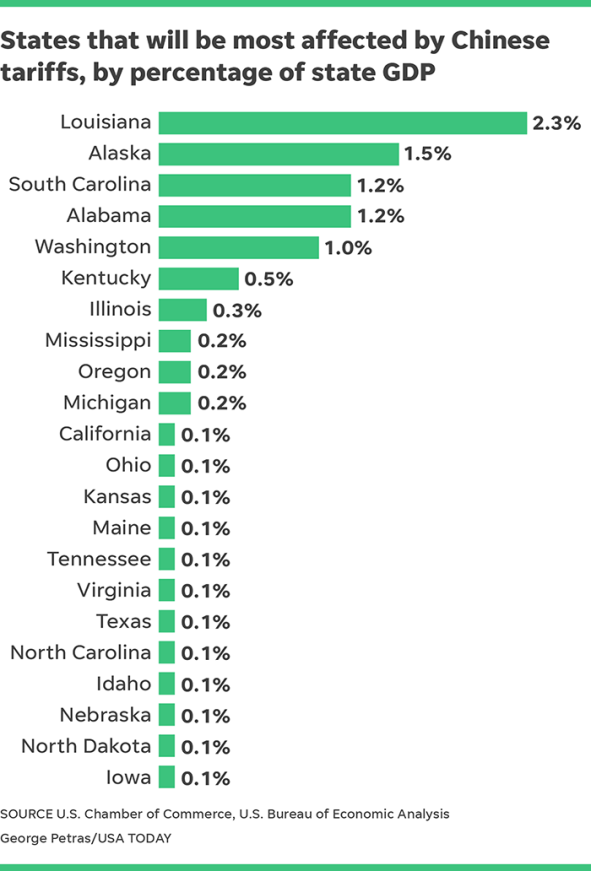
How Tariffs Might Affect Us, In Pictures

t0

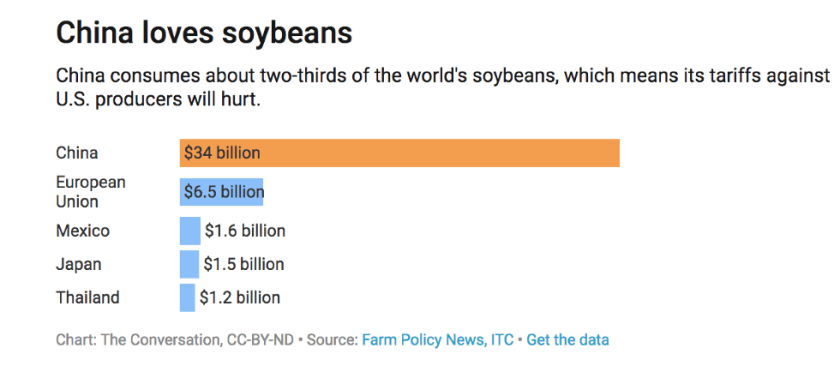
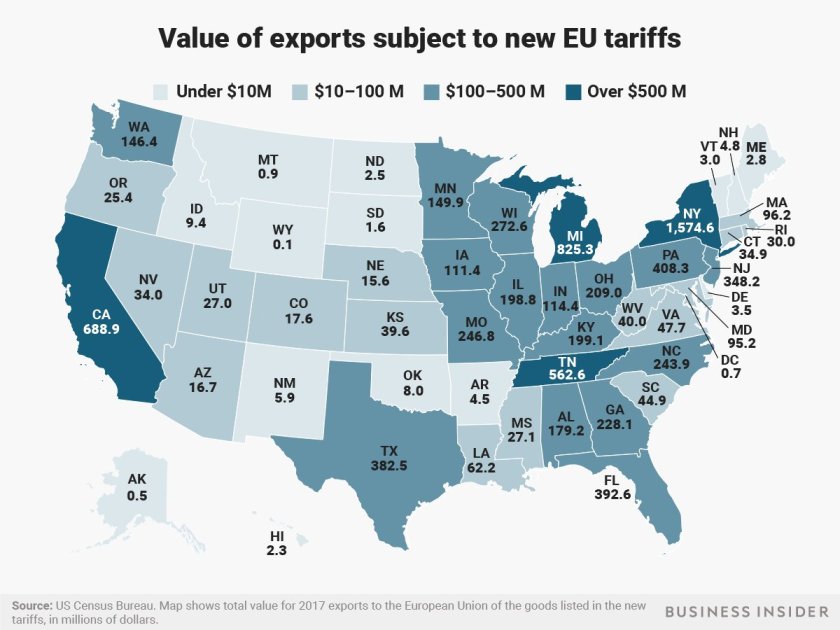
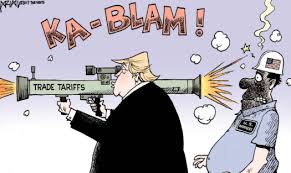
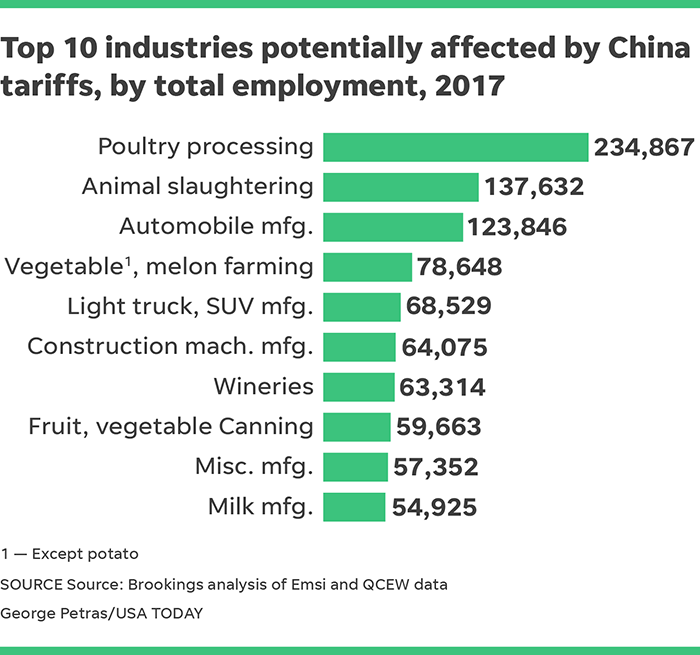
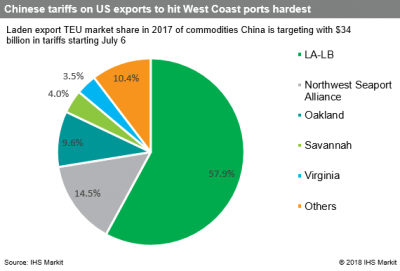
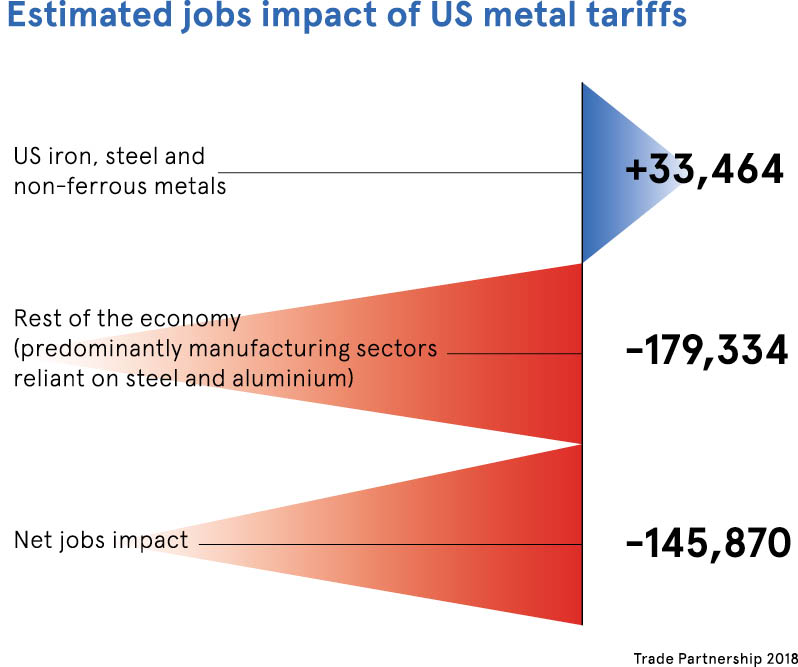
I put together a bunch of charts and other graphics that I have seen over the past few months that give a pretty good picture of how tariffs might affect our economy here in the U.S.  Based on these, it could get ugly.

Here you go:


t1
t2

t3


t4


t5


t6


Joe Baker, CFP®
Baker Asset Management, LLC
joebaker@bakerassetmanagement.com
Monthly Update – July 2018

july


Stocks ended the month flat after having a nice run up in the beginning of June.  However, once tariff talk became reality, stocks settled back down but did manage to squeeze out a tiny gain in June.  The S&P 500 is still up about 1.7% for the year but still well off its January highs.

If you’re wondering why stocks have floundered recently, look no further than the White House.  Trump’s ready, fire, aim strategy with tariffs will pretty much negate any of the benefits that the corporate tax reform had on our economy.  Also, the contradictory economic policy statements between the president and his advisers are not a confidence builder for investors. All of this coupled with indictments in the Mueller investigation and daily tweet storms make for a lot of uncertainty.  And stock markets do not like uncertainty. I suspect this is going to go on until the elections in November so invest accordingly.

Bonds dipped a little in June except for long term government bonds.  As in May, the best performers were the bonds with the lowest risk, such as US government bonds and bonds from high quality companies.

The yield on the 10 year US Treasury note drifted lower yet again in June.  When the big money gets nervous, this is their safe haven. A lot of money left the stock market this past month so that is one of the reasons this rate is staying low.  This yield is important because investors consider it the risk free rate and it is used to compare risk with other investments, such as stocks. When this rate rises to a point where it isn’t worth the risk to own stocks, investors sell stocks and buy treasuries.

As I mentioned previously, rising interest rates is the path of least resistance over the next several years so if you are investing in bonds, make sure their maturity is 3 years or less and expect to hold the bonds until maturity.  Also, try to avoid investment vehicles that have no maturity constraints, such as bond mutual funds.

On the savings side, rates held pretty steady this month.  This is a good thing. I don’t like seeing any kind of interest rate changing too quickly.  Slow and steady typically translates into a solid economy.

Currently, the average savings account is paying 0.09% and the average money market account is paying 0.18%.

The 1 year CD interest rate is now averaging 2.30% (up from 2.17% last month) and the 5 year CD rate is at 2.76%(up from 2.62% last month).

Mortgage rates remained above 4%, with the 30 year rate at 4.40%, up just a bit from last month.  These rates could accelerate higher if we start to see increased wage growth and consumer price inflation.  Historically, rates are still extremely low but the path of least resistance is still up, for right now.

Oil prices jumped up big time in June, hitting prices not seen since November 2014.  Price per barrel ended June at $74.15, up from $67.04 a month ago.

A lot of this price rise is due to OPEC keeping their output low and also the sanctions on Iran.  If prices stay this high for awhile, road warriors are going to be feeling it at the pump.

Nationally, gasoline prices are averaging about $2.86 per gallon.  FYI, a year ago, we were paying $2.23. Spartanburg, SC has the cheapest gas in the country at $2.46.

Check out the prices at the pump in your area: Gas Buddy.


Outlook

Events on the horizon that could move the markets in the near term:

  • Russian Investigation: There has been over 20 indictments and 5 guilty pleas so far.  Trump continues to call it a witch hunt. On the other side, Mueller is very quiet.  Something has got to give but probably not until after the summer. This will be a pretty good market mover, especially if they go after Trump.
  • Negotiations with North Korea: This is coming off the board since nothing of substance came out of the meeting that was held in June.  In fact, the CIA says that NK is still generating nuke fuel for bombs.
  • Trade Wars: I said this was heating up last month.  Now, it’s becoming a full blown dumpster fire. US companies are already talking about moving production overseas and/or laying off workers.  Hopefully, we have smart people at the table trying to negotiate a mutually beneficial outcome for this trade war. Otherwise, it looks like we’re going to go back and forth with more tariffs until someone breaks.  Regardless, this will have a negative impact on the markets, at least in the short term.

Joe Baker, CFP®
Baker Asset Management, LLC
joebaker@bakerassetmanagement.com
Adviser Designations – What Do They Mean?

designations.png

I wanted to share the following article to help you get a better understanding of the many designations out there for professionals in the financial services industry.  As you’ll see, it is kind of crazy to have so many designations, certifications, licenses, etc. for one industry.  Unlike the accounting (CPA) and physician (MD) fields, we have a myriad of designations that completely confuse the general public, including myself!

Check this article out and let me know if you have any questions.  Thanks.

The Top 10 Financial Certifications
Danielle Klimashousky MAY 21, 2018

When you are looking around for a financial adviser to hire, you’re likely to encounter an assortment of initials after each financial professional’s name. CFA, CPA, CLU. These letters signify different financial certifications. Curious to know more? Read on and allow us to explain.


Financial certifications are signifiers of expertise in a certain aspect of the financial industry. Those seeking a certification typically need to complete hours of coursework and then pass an exam. They also need to abide by professional ethics standards. Holders of certifications need to take continuing education courses in order to maintain their knowledge as well as their certification.

There are many different certifications out there, but which are the best? Here are the top 10 financial certifications to look for when working with a financial adviser.

1. CPA – Certified Public Accountant
A CPA license is for accountants, tax preparers and financial analysts. It is one of the more widely recognized financial certifications in the industry. This certification is administered by the American Institute of CPAs (AICPA). It requires 150 hours of coursework and then passing a rigorous exam. A CPA can be helpful for those looking for financial advice regarding reducing taxes and organizing investments.

2. CFP – Certified Financial Planner
Certified financial planners are well-versed in topics across the financial field. They assess their clients’ full financial portfolio and then provide personalized financial plans. To become a CFP, a professional must complete a set of courses, then pass a seven-hour test. The test is administered by the CFP Board. The pass rate is below 70%. If you work with financial planners with a CFP, you know they know their stuff!

3. ChFC – Chartered Financial Consultant
The ChFC certification was created as an alternative to the CFP certification. The program offers specialties beyond the CFP’s essentials. A charted financial consultant is who you should work with if you have a niche need, such as financial planning for divorce or small business planning. The course is run by the American College of Financial Services and requires four months of study and testing.

4. CFA – Chartered Financial Analyst
A CFA, or chartered financial analyst, is an expert in investments and securities. The certification is administered by the CFA Institute, which calls the CFA credential “the most respected and recognized investment management designation in the world.” The program requires candidates to master 10 investment topics and also pass three levels of rigorous exams. Working with a CFA is an excellent choice if you are looking for an investment manager.

5. CIC – Chartered Investment Counselor
A CIC is a subset of the CFA designation specifically for those working in investment counseling and portfolio management. To be eligible to earn a CIC designation, a candidate must be working at an Investment Adviser Association-member firm and have at least five years’ experience. Candidates also need character and professional references and to work as a fiduciary. You should seek a CIC if you have a large portfolio and need an experienced, high-level expert to manage your investments.

6. FRM – Financial Risk Manager
An FRM is a risk-management specialist. Holders of this certification are likely to be found working in banks as risk analysts. They can also deal with private clients needing investment advice. To earn an FRM, candidates must pass a two-part, eight-hour multiple choice test administered by the GARP. The pass rates are often below 50%.

7. CLU – Chartered Life Underwriter
A CLU is the best certification for insurance agents. There is no comprehensive exam, but candidates have to take eight courses administered by the American College of Financial Planning. Chartered life underwriters are experts in life insurance, estate planning and risk management.

8. CAIA – Chartered Alternative Investment Analyst
The CAIA is for professionals managing alternate investments, such as hedge funds and real assets. The charter program, run by the CAIA Association, takes about a year to complete and includes coursework as well as exams. If you are interested in putting some of your portfolio into alternate investments, these are the experts to work with.

9. CMFC – Chartered Mutual Fund Counselor
If you are looking to invest specifically in mutual funds, you may want to work with a charted mutual fund counselor. Holders of this designation are experts in mutual funds. To become a CMFC, candidates must complete a 10-week course and then pass exams administered by the College for Financial Planning. Coursework specifically prepares designees to understand the complexities of the field of mutual funds and other packaged investment products.

10. CMA – Certified Management Accountant
A CMA is an expert at management accounting. These individuals often work on the corporate side, rather than in a private accounting practice. They use their skills in both accounting and management to make strategic financial business decisions. The IMA administers the CMA exam, which has two parts and tests for 11 financial competencies.

DANIELLE KLIMASHOUSKY
Danielle Klimashousky is a freelance writer who covers a variety of personal finance topics for SmartAsset. She is an expert on topics including credit cards and home buying. Danielle has a BA in English from Wesleyan University.


Joe Baker, CFP®
Baker Asset Management, LLC
joebaker@bakerassetmanagement.com
Retaliatory Tariffs – What Will Be Affected

tariffs
Now that we appear to be going through with tariffs on other countries, here’s a list of products that the U.S. produces that will be hit by tariffs before they enter these other countries:

Canada

  • Chocolate
  • Whiskey
  • Maple syrup
  • Washing machines
  • Cucumbers
  • Sailboats
  • Roasted coffee

European Union

  • Peanut butter
  • Motorcycles
  • Cranberry juice
  • Denim
  • Corn
  • T-shirts

Mexico

  • Apples
  • Blueberries
  • Pears
  • Sausages
  • Pork
  • Lamps

China

  • Soybeans
  • Cars
  • Frozen orange juice
  • Fresh beef
  • Frozen boneless beef and beef chops
  • Aircrafts


These tariffs will be devastating to small businesses that rely heavily on exports.  For example, I could see a small Vermont maple syrup producer that exports to Canada losing a ton of revenue to domestic producers in Canada due to this tariff.

But, based on this list, I think the people that are going to be hit the hardest in the U.S. are the farmers.  Just look at the tariffs on corn, soybeans, pork, and beef. They are probably the weakest group that can weather this storm.

I don’t know if tariffs are the best way to help our economy grow but I do know that, historically, there are no winners in a trade war and I think these countries, especially China, can outlast us in a game of chicken.

For Trump, tariffs are a weapon for his type of negotiating style, which is what I call the Highlander technique – There can be only one.  This is a binary outcome. You’re either a winner or a loser. He does not believe in a win-win outcome when negotiating, although this strategy is much more beneficial to both parties in the long run.  Hopefully, his advisers know this and can steer him in the right direction. If not, he’ll be making America Not So Great Again.

Joe Baker, CFP®
Baker Asset Management, LLC
joebaker@bakerassetmanagement.com
How The Trump/Kim Summit Will Affect Your Investments

Trump-administration-releases-North-Korea-summit-coin

The Donald Trump-Kim Jong Un summit in Singapore ended earlier this week.  It shouldn’t really be called a summit. It was more of an introduction meeting between the POTUS and the brutal dictator of North Korea.

It ended with very little accomplished, other than a somewhat surprising move by Trump: the U.S. will  end military exercises with South Korea as a gesture of goodwill to the North Koreans.

We still can take away some good insights from this meeting to see how it could affect our investments from a macro point of view.

First, let’s look at the results of this historic meeting:

  • Kim got two huge wins out of this meeting without giving up anything.  He was able to get a huge propaganda triumph by having the leader of the free world fly halfway around the world to meet him and give him an unusually large amount of lavish praise.  Kim also got Trump to suspend military exercises with South Korea.
  • Trump didn’t get anything in return except for a vague agreement to “denuclearize”.  I’m not sure if the president was aware, but this promise has already been in effect for decades through various documents and decrees from past summits.
  • Trump did get a nod for ratcheting down the escalation of war by attending this meeting.  Remember, just six months ago, he was threatening Kim with his bigger nuclear button!

With regards to your investment portfolio, the outcomes from this meeting should be considered a positive influence.  Odds of a war on the Korean peninsula has gone down substantially. This reduces uncertainty in the stock market, which is good, because the stock market does not like uncertainty.  Also, I would hope it could open up trade between the Koreas and us but it is way too early to speculate on that.  Plus, North Korea is a pretty small country so even if they did open up and started buying our stuff, they’re such a small country that any increased trade wouldn’t really help our economy.

Only time will tell if Kim will keep his promise but at least this summit was a good start.  Now, I feel South Korea should take the lead and work with North Korea to get some peace on their peninsula.

Joe Baker, CFP®
Baker Asset Management, LLC
joebaker@bakerassetmanagement.com
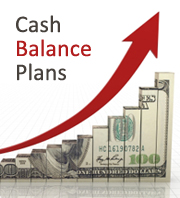
Small Business 401k on Steroids, aka, the Cash Balance Plan

Cash-Bal-Plan_arrow+bar180x

Small business owners wear many hats and are often so focused on making their companies successful that they forget to take care of their retirement and their employees’ retirement as well.  Also, when just starting out, owners typically have to take little or no salary and reinvest any profits back into the company to get it up and running. Therefore, there is little, if any, money that can be set aside for retirement.  

Subsequently, many small business owners find themselves way behind in preparing for retirement.  So, to catch up, they contribute to the most popular retirement vehicle, a 401k plan. This type of plan allows them to put away a maximum of $61,000 annually.  This is the total of both employer and employee contributions. That sounds pretty good. But there is another retirement plan available that can really turbocharge your retirement savings.  That plan is known as a Cash Balance (CB) plan.

There are a couple of major differences between these plans.  First, only the employer can contribute to the CB plan, whereas both employer and employee can contribute to the 401k plan.  Second, contributions can be much greater in a CB plan, as much as $310,000+, depending on the age and the salary of the participant.  It gets even better: you can also have a 401k plan in place at the same time, allowing you a total annual contribution amount of up to $371,000!

CB plans are not for everybody but they work well for businesses with the following characteristics:

  • Consistently profitable
  • Plenty of free cash flow
  • Small number of employees
  • Desire to defer as much taxable income as possible.

CB plans are a great way for small business owners to get on track for retirement.  Also, they are a great employee recruiting and retention tool. Keep in mind that these are complex plans so you’ll need to work with experts in the field to set up the plan correctly but it will be well worth the time and effort.  Please let me know if you have any questions.

Joe Baker, CFP®
Baker Asset Management, LLC
joebaker@bakerassetmanagement.com