
Monthly Update – December 2020

Fun Facts about December

  • Birthstone: Turquoise, zircon, or tanzanite
  • Flower: Narcissus or Holly
  • Zodiac signs: Sagittarius or Capricorn
  • December was originally the tenth month of the year in the Roman calendar. It gets its name from the Latin word “decem” which means tenth. However, when the Romans added January and February to the calendar, it became the twelfth month.
  • It is the first month of winter and the last month of the year.
  • National Cookie Day is December 4th.
  • The first day of Winter is on either December 21st. This is the shortest day of the year and the longest night. It is called the Winter or Southern solstice in the Northern Hemisphere.

Stocks bounced back smartly in November, chalking up one of its best performances for the month in decades. The S&P 500 index rose almost 11% for the month of November and now sits at a positive 12.5% for 2020.

There were a couple of reasons for the surge. The big one was the positive news coming out of the vaccine front. The other was the outcome of the elections, where the results were already factored into the stock market for the most part.

The kickoff to the holiday shopping season on Black Friday was met with very little consumer enthusiasm as compared to the past, to the surprise of absolutely nobody. With that said, there are early indications that online shopping was robust during the same period. The big question is will it be enough to offset the brick and mortar buying that has been thwarted by the pandemic this year.

Take a look at the Outlook section below to see what events could move the markets over the short term.

Bond prices rose slightly across the board. I believe this price rise can be attributed to the increase in Covid cases and the subsequent restrictions by municipalities across the country to curb them. If you are a bond buyer, try and keep your bond maturities short, no more than 2 years, to reign in the risk in this abnormal environment.

The 10-year US Treasury note is yielding 0.84% and the 30 year is at 1.57%, both lower from last month. After they had an initial spike after the elections in the first week in November, they drifted lower the rest of the month.

Interest rates continued to trend lower this past month once again. They followed the same pattern as last month: a quick rise in the early part of the month and then drifted lower the rest of the month. These extremely low rates are great for borrowers but just horrible for savers.

On the savings side, short-term rates, like savings and money market accounts, as well as longer-term rates, like CDs, all trended lower once again as the pandemic continues to surge unchecked in the United States.

Currently, the average savings account is paying 0.33%, the same as a month ago. Although it is safe, it’s not the place to put all of your retirement savings, that’s for sure.

The 1-year CD interest rate is now averaging 0.52%, lower than the 0.54% it was yielding a month ago.  The 5-year CD rate is tracking lower as well, now at 0.71% from 0.73%. As of September 2020, the average savings rate across the U.S. is still way above average at 14.3%, but much lower than the high it reached in April of 34%. This makes sense since the federal stimulus is gone, layoffs have become permanent, and businesses have permanently closed. Still, the money saved by staying home is keeping this savings rate elevated for the time being.

Mortgage rates have pushed down against their all-time lows once again. Currently, the 30-year rate is at 2.92%, down from 3.01% a month ago. The Fed flooding the market with liquidity plus worries of a stalled economic recovery are helping to keep these rates extremely low, particularly for the variable rate mortgage loans. It is definitely a seller’s market in the housing sector as these low rates are enticing first time homebuyers as well as city workers moving out to the burbs due to work-at-home mandates.

Oil prices halted their 2-month slide to make some nice gains in November. This was mostly due to OPEC countries looking to curb output even more to help support prices as the world shuts down again due to a surge in Covid cases.

Oil shot up about 27% for the month. Oil prices in the U.S. are still down 26% for the year.

Gasoline prices did not mirror the sharp rise in oil prices. Prices at the pump are averaging about $2.13 per gallon, a penny lower than a month ago.  Demand for diesel has been rising, though, as more goods are being moved throughout the country as buying picks up for the holidays. Missouri has the cheapest fuel, at $1.77. FYI, a year ago, we were paying $2.59.

Check out the prices at the pump in your area: Gas Buddy.

Outlook

Events on the horizon that could move the markets in the near term:

  • Election: It’s over, finally. Democrats will be taking over the Executive branch and still have a slim majority in the House of Representatives. We still have a couple of senate races in Georgia that will determine which party will be the majority in the Senate. If the republicans keep the Senate, I think the markets will like that balance of power. If the democrats take over the Senate, there is a better chance of things actually getting done in Congress, which may or may not be good for stocks over the next few months.
  • Coronavirus: In my update last month, I talked about how the death rate has been slowly decreasing. Well, that is no longer the case. The death rate had, unfortunately, slowly climbed throughout November to well over 1,000 deaths per day in the U.S.. I use this site to track these types of Covid trends: https://bing.com/covid. The great news is that vaccine approvals are coming soon. You can track where we are in this process here: https://www.nytimes.com/interactive/2020/science/coronavirus-vaccine-tracker.html. I think a vaccine approval has already been priced in to the stock market, as evidenced by the large gains in the major market indices in November.
  • Stimulus Bill: Congress comes back to work this week (where were they?) to try and get another stimulus package together to help Americans as the country shuts back down to try and curb the increasing rates of hospitalizations and deaths due to the pandemic. The House of Representatives has 9 official in-session days and the Senate 14 days before both chambers break for the new year. Even with this short of a timeframe, Congress is expected to work overtime, including weekends, in the effort to get a deal done. I would hope that they would do whatever it takes to get a check in the mail to people that desperately need it. This will be a positive for stocks if Congress can make it happen.
  • Trade Wars/Tariffs: With a new administration coming into the White House, there is a good chance that the tariffs imposed on our imports will be removed, thus lowering U.S. companies’ costs, which will help them stay in business. This would give markets a nice bump.

Joe Baker, CFP®

Baker Asset Management, LLC

joebaker@bakerassetmanagement.com
Random Thoughts

This is a nice, easy short week so I thought I’d just jot down some nice, easy subject matter as we head into a much-needed Thanksgiving Day weekend.

Vaccine progress is coming in at a feverish pitch, pun intended. We talked about Pfizer’s and Moderna’s vaccines earlier this month. More recently, Astazeneca and Oxford University in England have had success as well in clinical trials. The even better news with this vaccine is that it is far cheaper ($2.50 per dose versus $20 for the others) and can be stored at normal refrigeration temperatures, about 40° F.

If you want updated information on covid vaccine progress, click here: NY Times Vaccine Tracker.

Air travel is picking up in the U.S. I’ve made 6 separate trips since September, traveling to the northeast and the coast. In September, my planes were not even 30% full. Last week, my planes were full and the airports were much more crowded. TSA is still reporting passenger volume down 40% from a year ago, but it is recovering at a pretty good clip and could be back to normal by this summer if vaccines get rolled out quickly during the winter months.

Restrictions have loosened up for U.S. citizens wanting to travel abroad. Here is a great article from U.S. News and World Report that has been recently updated (11/23/2020): https://travel.usnews.com/features/where-can-americans-travel-right-now. It lists countries in alphabetical order that are permitting us to enter their country and the requirements needed.

Covid testing sites are getting slammed. Everyone wants to get tested so they can spend time with family and friends for the holidays. Wait times in Brooklyn were 7 hours this past weekend! Supplies for tests are running low again and delays in test results are increasing. With so much more testing, it should come as no surprise that positive cases being reported are rising dramatically.

Seasonal stock rally. I’d thought I would end on what I think is a positive note. Historically speaking, the best time to invest in stocks has been during the months of November through April. We have a lot of consumer holiday spending, corporate spending, adding to retirement accounts to max out for the year, etc. If anyone wants to look at the charts and data that support this claim, follow this link: https://extradash.com/en/strategies/models/2/best-six-months/.

Stay safe, have a great Thanksgiving weekend, and let me know if you have any questions.

Joe Baker, CFP®

Baker Asset Management, LLC

joebaker@bakerassetmanagement.com
Retirement Plan Contribution Limits for 2021

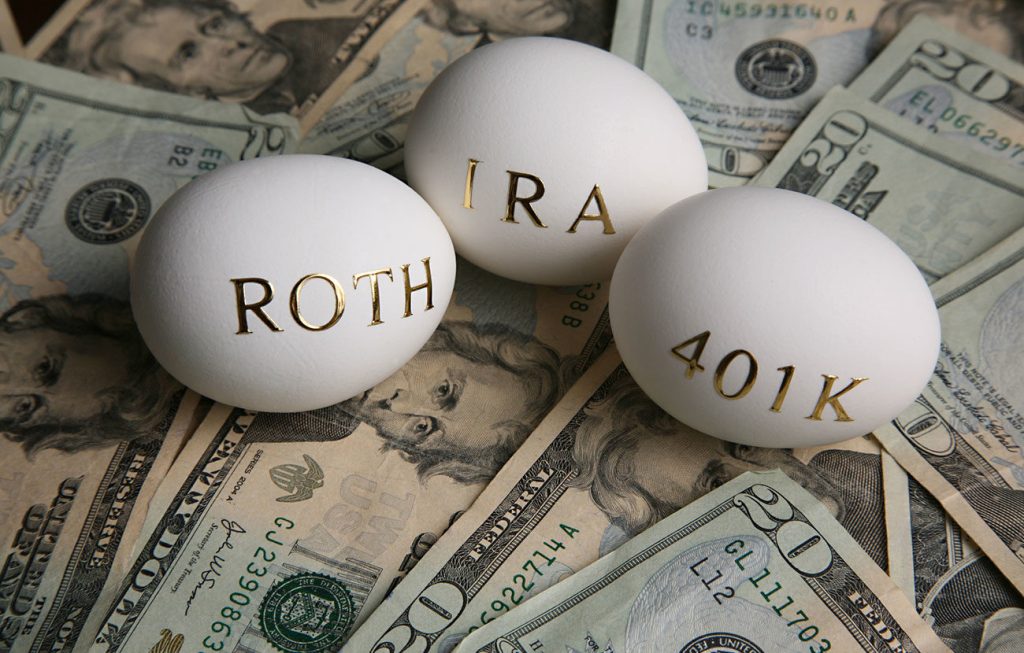
Late last month, the IRS put out the annual limits for retirement plan contributions for 2021. For the most part, everything remained the same as the limits for 2020. This is because interest rates and cost of living rates have remained extremely low.

IRA contribution limits for traditional and Roth accounts in 2021 will be the same as 2020’s. If you are under age 50, you can put in up to $6,000 in 2021. If you’re 50 or older, you get a $1,000 catch-up that raises this limit to $7,000.

The following table summarizes the 2021 changes compared to 2020 for 401k’s as well as other types of retirement plans:

401k Plan Limits for Year20212020
401k Elective Deferrals$19,500$19,500
Annual Defined Contribution Limit$58,000$57,000
Annual Compensation Limit$290,000$285,000
Catch-Up Contribution Limit$6,500$6,500
Highly Compensated Employees$130,000$130,000
 
Non-401k Related Limits
403b/457 Elective Deferrals$19,500$19,500
SIMPLE Employee Deferrals$13,500$13,500
SIMPLE Catch-Up Deferral$3,000$3,000
SEP Minimum Compensation$650$600
SEP Annual Compensation Limit$290,000$285,000
Social Security Wage Base$142,800$137,700

Please let me know if you have any questions.

Joe Baker, CFP®

Baker Asset Management, LLC

joebaker@bakerassetmanagement.com
Covid Vaccines Are Almost Ready, But It’s Complicated

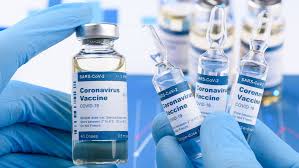
Earlier this week, there was news of a covid vaccine with a 90% effective rate. This gave a big lift to global morale as well as stock markets around the world and it couldn’t have come at a better time. Covid-19 is raging across the globe once again, especially here in the U.S. and Europe.

Assuming we get this vaccine, being developed by Pfizer, approved by the FDA by the end of the year, we still have some distribution issues to contend with that are not typical, compared to other familiar vaccines:

Double Dose – This particular vaccine requires 2 doses, which means that we’ll need twice as many of everything that is required to administer a single dose (syringes, needles, etc.). Also, the doses need to be given 3 weeks apart. We won’t be able to self-administer because of the next issue below.

Super Fridge – The vaccine has to be kept at a chilly 100°F in order to remain effective. That removes the mass self-injection solution. This also complicates the supply chain logistics for getting this stuff from point A to point B.

Marketing To The Masses – You can lead a horse to water, but you can’t make it drink. Once we start vaccine mass production and distribution, we still have to convince people to get the vaccine. The normal timeline for a vaccine to get to the end user (me and you) from inception is several years. The “oldest” vaccines are at 8 months, at best. Additionally, the Pfizer vaccine and a few others are based on messenger RNA, which has never been used in large scale human vaccinations. This means that we are not certain of the long-term effects this may have on our bodies. That’s a tough sell.

These aren’t obstacles that we can’t overcome. We just have to know that it will take longer than we want, and that patience will be needed along the way.

Stay safe, have a great weekend, and let me know if you have any questions.

Joe Baker, CFP®

Baker Asset Management, LLC

joebaker@bakerassetmanagement.com
Election Implications

We are a few days past election day and they are still counting votes across the country. There are a handful of states that are too close to call for the presidential race. Even with the counting done, there will be lawsuits, recount requests, etc. so a confirmed winner may not be known for a while.

The stock market, after having its worst week since the spring, is on track for its best week since then. Many investors are confused as to why. The consensus reason is based on the likely outcome of the elections and the resulting change in party representation on Capitol Hill and in the White House.

As it stands right now, the Senate will remain in the hands of the Republicans, the House of Representatives will still have a democratic majority, and there will be a democrat in the White House. The markets interpret this as no major changes in tax laws and corporate governance. The stock market likes this because it removes uncertainty. With the government out of the way, investors can focus on how companies s are doing without having to guess if Congress will move the goal posts.

Regardless, well run companies adapt to changes in government, so if you believe in the management of the companies that you invest in, you should not worry about what political party is in control of any branch of our government.

Also, if we can get control of the pandemic and get a vaccine distributed sometime next year, stocks should respond positively, and it will not matter who is in DC.

Stay safe, have a great weekend, and let me know if you have any questions.

Joe Baker, CFP®

Baker Asset Management, LLC

joebaker@bakerassetmanagement.com

Monthly Update – November 2020

Fun Facts about November

  • Birthstone: Topaz and citrine
  • Flower: Chrysanthemum
  • Zodiac signs: Scorpio and Sagittarius
  • In the original Roman calendar, November was the ninth month of the year. It got its name from the Latin word “novem” which means nine. However, it became the eleventh month when the Romans added in January and February to the start of the year.
  • It is the last month of the Fall season.
  • November in the Northern Hemisphere is similar to May in the Southern Hemisphere.
  • Veterans Day is held in honor of all those who served in the United States Armed Forces. It is on November 11th. This is different from Memorial Day which honors those who died while serving.
  • In the United States Thanksgiving is observed on the fourth Thursday in November. In Canada it occurs on the second Monday of October.
  • Elections are held in the United States on the Tuesday after the first  Monday in November.
  • The third Thursday of November is the Great American Smokeout. Smokers are encouraged by the American Cancer Society to stop smoking on this day.
  • Some Christian churches celebrate All Saint’s Day on the first day of November and All Souls Day on the 2nd.

Stocks continued their fall swoon, with the S&P 500 index dropping 2.8% in October. The index is still positive for the year but just barely, at 1.2%. It might not get any easier for the markets with the elections coming up next week and regions across the globe shutting down again due to renewed spikes in covid cases.

Stocks have dropped about 9% since their 2020 high in early September. This just doesn’t seem that bad considering how poor our economic numbers are and all the chaos that the elections and the pandemic are bringing to the table.

Speaking of elections, many of them coming up this week are tight races, and the winners might not be determined for several days or weeks. This uncertainty will probably cause some near-term volatility in the markets. Additionally, the first holiday shopping season of the covid era could see big gains for online retailers, i.e., Amazon, and will most likely be a major disappointment for many brick and mortar stores.

Take a look at the Outlook section below to see what events could move the markets over the short term.

Bond prices moved around a bunch in October but ended up pretty much flat by the end of the month. You could say government bonds were the exception, as their prices dropped and both short term and long-term rates rose from ludicrously low levels to just ridiculously low levels. If you are a bond buyer, try and keep your bond maturities short, no more than 2 years, to reign in the risk in this abnormal environment.

The 10-year US Treasury note is yielding 0.87% and the 30 year is at 1.66%, both significantly higher from last month. Even with this rise in yields, they are at such low levels that investors will continue to look at dividend-paying stocks as an alternative to bonds to generate income.

Interest rates continued to trend lower this past month. They started to go up a little bit in the beginning of October as inflation started to appear in consumer prices but quickly reversed lower as covid cases surged across the country. I’m not sure how rates will respond to the election results next week, but we could see some whipsawing in November.

On the savings side, short-term rates, like savings and money market accounts, as well as longer-term rates, like CDs, all trended lower once again as the hope of an economic recovery faded.

Currently, the average savings account is paying 0.33%, down slightly from a month ago, 0.39%. Nobody is making money in cash, but at least it is safe.

The 1-year CD interest rate is now averaging 0.54%, lower than the 0.62% it was yielding a month ago.  The 5-year CD rate is tracking lower as well, now at 0.73% from 0.77%. The average savings rate across the U.S. is still way above average at about 14%, but much lower than the high it reached in April of 34%. This makes sense since the federal stimulus is gone, layoffs have become permanent, and businesses have permanently closed. Still, the money saved by staying home is keeping this savings rate elevated for the time being.

Mortgage rates have pushed down against their all-time lows once again. Currently, the 30-year rate is at 3.01%, down from 3.09% a month ago. The Fed flooding the market with liquidity plus worries of a stalled economic recovery are helping to keep these rates extremely low, particularly for the variable rate mortgage loans. It is definitely a seller’s market as these low rates encourage first time homebuyers as well as city workers that are moving to pretty much anywhere else due to work-at-home mandates.

Oil prices slipped lower for the second month in a row as expectations of an economic recovery are being stymied by another wave of covid-19.

Oil fell 10% in October to $36.29, following a 7% drop in September. For the year, oil has dropped about 40%. With hurricane season almost over (hopefully), a glut of oil still floating around the world, relative peace in the Middle East, and covid-19 still raging globally, it is hard for oil bulls to get excited.

Gasoline prices moved as expected and dipped in October. Prices at the pump are averaging about $2.14 per gallon, $0.05 cents lower than a month ago.  Missouri has the cheapest fuel, at $1.81. FYI, a year ago, we were paying $2.61.

Check out the prices at the pump in your area: Gas Buddy.

Outlook

Events on the horizon that could move the markets in the near term:

  • Election: Just a few days until election day. It is highly doubtful that we will know who the winners are by the morning of November 4th. Recounts, challenges, and all sorts of other stuff could drag the results out to the end of the month, at least. This uncertainty will whipsaw the markets so buckle up if you watch it every day.
  • Coronavirus: The death rate due to covid has been slowly decreasing, as our treatments have improved since March and April. Unfortunately, there are still a lot of deaths, now over 233,000 in the U.S. On the plus side, we are getting some good news on the vaccine front. You can track where we are in this process here: https://www.nytimes.com/interactive/2020/science/coronavirus-vaccine-tracker.html. More outbreaks in Europe and other parts of the world are causing countries to reinstate lockdowns. Good for technology companies and online shopping; bad for everybody else.
  • Interest Rates: Rates are the lowest they have ever been but there has been some datapoints showing that inflation may be rearing its ugly head in some areas of the economy, causing experts to question if we should continue to keep rates this low. Remember last month, the Fed wasn’t looking to do anything with rates until 2023 but they may be changing their outlook if prices continue to rise. The trend is still to the downside, so we just have to monitor the data until we see a solid reversal. Any positive vaccine announcement could cause a spike in rates.
  • Trade Wars/Tariffs: The latest economic numbers coming in show that we are losing pretty bad in the trade war, especially with China. Tariffs have hurt U.S. companies as this tax has made their production costs rise and cut their profit margins. Hopefully, we can get this problem resolved, especially for our farmers and importers, after the elections.

Joe Baker, CFP®

Baker Asset Management, LLC

joebaker@bakerassetmanagement.com

Observations From The Flight Deck

I have been flying throughout the country the past 6 weeks and wanted to share my observations with you.

First, the rules are pretty much standard throughout the country in airports and airplanes: must wear a mask from the time that you enter the airport until the time that you exit the final destination airport. This includes on board any planes. The only time that the mask can be removed is when you are eating or drinking.

Most airports that I visited were sparsely populated compared to pre-Covid days. The TSA lines were very small, if any. The one exception that I noticed was Denver International Airport. It was packed!

As far as airlines go, I flew American, Delta, and Southwest. Delta and Southwest did not allow any middle seats to be occupied, which made for very comfortable flights. American was selling every seat that they could so the flights that I was on with them were packed. The plane won’t leave the gate unless everyone is wearing a mask. The airlines won’t let you board with a bandana or a scarf mask or any mask that has ventilation ports in it.

The airlines that I flew on only gave you a cup of water and a little snack bag of pretzels or cookies. You can remove your mask when you are eating or drinking on the plane. By the way, they will not let you open any of your own liquor that you bring on board.

Every flight that I was on boarded so much quicker than normal. That makes sense since they were, at most, 67% full, but many times less than 50% full. They all left the gate early or on time and every one of my flights arrived early to their destination.

It was so much more enjoyable flying in a less crowded airplane and less crowded airports. Obviously, it is devastating to the airline industry so I know this can’t last. The good news is that the more recent flights that I took, I noticed that the airports were a little bit more crowded and the flights were almost at their capacity with middle seats open.

Stay safe and let me know if you have any questions.

Joe Baker, CFP®

Baker Asset Management, LLC

joebaker@bakerassetmanagement.com
Ways Covid-19 Will Change Our Future – 6 Month Update

I was reading some interesting articles this past week about how various components of our economy/society will be permanently affected by the pandemic. I remember writing about this back in mid-April and wanted to check and see if some of my prognostications were still holding up.

Here are some of the norms and routines that I listed back at the beginning of the pandemic that I thought could see permanent changes:

  • Less office space needed as companies allow more employees to work from home – The advancements in video calling, internet bandwidth capacity, and security software make this decision easier for companies that have a large amount of white-collar desk jobs. This is definitely holding true. Many companies are keeping the WFH edict in place all the way through next summer. Some have even given employees the option of WFH from home a permanent solution. This will cause ramifications down the line for office space owners, parking garages, the F&B industry that cater to these workers, public transportation, office cleaning services, office security companies, dry cleaners, utilities, and fuel companies. It will benefit most technology firms, especially software and video conferencing firms. Home improvement companies will see increased revenues as well.
  • Less business travel, more virtual conferences and meetings – For the same reasons above and also the fear of catching the disease, many will opt to hold meetings and attend conferences virtually. This is decimating the travel industry: airlines, hotels, and rental cars are getting hit the worst. Technology services will be the beneficiaries.
  • More tele-medicine – Most doctor visits will still be in person, but we will find ourselves having many routine doctor consults being completed online or via conference call. My PCP has gone back to in-person visits but many are keeping tele-health visits in place for patients. The biggest beneficiary of this trend is, once again, technology firms, such as video conferencing and security software companies.
  • More homeschooling, online college courses – Similar reasons as above and could save a lot of money, especially for college kids. Most school systems now have the dual option of in-person or virtual classroom learning from elementary up through college. Less school employees needed for cleaning, security, meal service, etc. Beneficiaries? You guessed it, technology firms.
  • More streaming, less going to movie theaters – At least for our more senior population. Since April, many theaters have closed, including all of Regal Cinemas’ theaters. Being in enclosed spaces for long periods of time is not a good way to minimize your exposure to covid so this comes as no surprise. Devastating for outside-the-home-entertainment but for internet service providers, cable companies, content providers, and online streaming services, it is a boon.
  • Less physical grocery shopping – I started doing curbside pickup of my groceries recently and it is very convenient and reduces your chances of contracting the disease.  Plus, many stores also offer home delivery. I would think this would be neutral as far as revenue for grocery stores, whether they outsource the delivery service or not. It would be beneficial for delivery service companies like Instacart and Shipt.

The common theme to take away from this is that technology firms are going to be the big beneficiaries of this covid pandemic. Most of the above was probably going to happen eventually. The pandemic just accelerated the timelines.

Stay safe and let me know if you have any questions.

Joe Baker, CFP®

Baker Asset Management, LLC

joebaker@bakerassetmanagement.com
Traditional IRA v Roth IRA: What’s The Difference?

I field this question a few times a month and I always start my answer with this question – When do you want to pay the taxes?

The main difference between a Traditional IRA and a Roth IRA is when you pay taxes on the contributions and earnings. With a traditional, you defer paying taxes on contributions and earnings until you take withdrawals. If you have a Roth, you pay taxes on the contributions before they go into the account, but your withdrawals are tax-free, including any earnings.

If you think that you’ll be in a lower tax bracket when you start taking withdrawals from your account, then you should use a Traditional IRA when making contributions. For younger savers just starting out in the workforce, I usually recommend using a Roth since their income is typically low which puts them in a very low tax bracket. Once their income starts to ramp up, they may save more on taxes by switching to a Traditional.

Here is a nice summary of the features of each type of IRA:

FeatureTraditional IRARoth IRA
Tax benefitsTax-deductible contributions and tax-deferred growthTax-free growth potential and qualified withdrawals are tax-free
Age requirementsPrior to 2020, individuals over 70½ could not make contributions. Under the SECURE Act of 2019, contributions are allowed at any age.Contributions are allowed at any age.
Income requirementsAnyone over 18 with any amount of earned income can contribute. However, income limits may decrease or eliminate the amount that is tax-deductible.A single taxpayer with a modified adjusted gross income of $139,000 or more is not allowed to contribute. The limit is $206,000 for married taxpayers who file jointly. Single taxpayers earning between $124,000 and $139,000 can make only partial contributions. The same is true for married taxpayers who file jointly earning between $196,000 and $206,000.
Contribution limitsFor 2020, the total contribution limit for all IRAs is $6,000, or $7,000 for individuals 50 and older.The same IRA contribution limits apply. You cannot contribute more than your taxable compensation for the year.
Taxes upon withdrawalWithdrawals are taxed for pre-tax contributions and earnings.Earnings can be withdrawn tax-free as long as you are over 59½ years old. Your contributions can be withdrawn any time without penalties or taxes.
Early withdrawal penaltiesIf you withdraw funds before age 59½, you may be subject to tax on your contributions and earnings plus a 10% additional tax.Withdrawals before age 59½ may incur a 10% tax penalty in addition to taxes on your earnings.
Required minimum distributionsA required minimum distribution (RMD) must be taken during the year you turn 72.There are no required distributions during your lifetime.

In summary, you’re going to get taxed either way, but if you plan accordingly, you can use both of these IRA options to maximize your retirement savings.

Please let me know if you have any questions.

Joe Baker, CFP®

Baker Asset Management, LLC

joebaker@bakerassetmanagement.com
Monthly Update – October 2020

Stocks do not like September, for whatever reason. Historically, it is the worst month for stocks, with the S&P 500 averaging a decline of 0.5%. This September, the S&P dropped 4.3%. This puts the index up about 8.5% for the year.

Anything related to Covid and its treatments are still the main market movers but the election news cycle is starting to claim more frontpage space as we near November, as evidenced by the fallout from the dumpster fire that was the first presidential debate this week.

Progress continues on several vaccines for this disease. You can track where we are in this process here: https://www.nytimes.com/interactive/2020/science/coronavirus-vaccine-tracker.html.

Realistically, a vaccine could be approved by the end of the year, which would be the biggest step for getting back to some sort of normalcy. It would take much longer to have it available to everybody but just knowing it’s out there will boost markets.

Interest rates continue to plummet. Although horrible for savers and risk averse investors, low rates put a hard deck under stock prices because investors want to make money and when rates are so low, they always come back to the stock market.

Even with the drop in September, I feel like stocks still need to come down a little bit more, based on technical analysis of the markets.

Take a look at the Outlook section below to see what events could move the markets over the short term.

Bond prices had little action in September and ended up flat or slightly lower in the case of high yield, or junk, bonds. The Fed is going to continue to buy up bonds as part of their Covid response, so this should help keep prices stable going into the end of the year.

The 10-year US Treasury note is yielding 0.69% and the 30 year is at 1.47%, both lower from last month. These low yields continue to force more money into the stock market because they are just too low to tie up money for such long periods of time.

Interest rates trended lower over the last month as the economy is trying to figure how to exit from the pandemic. There is no reason for rates to go up at this time. In fact, the Federal Reserve stated in their September meeting that they don’t plan on raising the federal funds rate until at least 2023. The uncertainty of Covid and all the shuttered or semi-open businesses is ensuring rates stay low.

On the savings side, short-term rates, like savings and money market accounts, as well as longer-term rates, like CDs, all trended lower, particularly after the Fed meeting.

Currently, the average savings account is paying 0.39%, down from a month ago, 0.43%.  Nobody is making money in cash, but at least it is safe.

The 1-year CD interest rate is now averaging 0.62%, noticeably lower than the 0.72% it was yielding a month ago.  The 5-year CD rate is tracking lower as well, now at 0.77% from 0.91%. With people saving their income at an unprecedented high rate, these rates will continue to stay historically low. The good news for stock investors is that all this cash is going to have to go somewhere and this usually is a precursor to higher stock prices and a lot of home improvement projects.

Mortgage rates continued to trend downward. Currently, the 30-year rate is at 3.09% down from 3.13% a month ago. The Fed flooding the market with liquidity is helping to keep these rates extremely low, particularly for the variable rate mortgage loans. I wanted to point out that the 15 year fixed mortgage remains at 2.59%. Never thought I would see mortgage rates this low. With rates this low, it is no surprise that new home sales are still on fire this year.

Oil prices finally halted their rise on expectations of a reopening economy. Reality might be setting in that the economy is going to take a bit longer to return to normalcy and that there is still a glut of oil sitting in storage around the world. The price for a barrel of crude dropped almost 7% in September to $39.74. I don’t want to jinx us, but the tropics seemed to have calmed down so that factors into lower oil prices as well.

Gasoline prices conformed with the drop in oil prices in September as opposed to the previous 2 months. Prices at the pump are averaging about $2.19 per gallon, $0.04 cents lower than a month ago.  Mississippi takes the crown again with the cheapest fuel, at $1.85. FYI, a year ago, we were paying $2.65.

Check out the prices at the pump in your area: Gas Buddy.

Outlook

Events on the horizon that could move the markets in the near term:

Coronavirus: New cases in the U.S. have started to head back in the wrong direction. However, this was expected due to schools opening back up across the country. Fortunately, hospitalizations and deaths continue to trend down as more Covid data has helped improve prevention and treatments. Front page news has shifted away from the pandemic and now is focused on the supreme court nomination and the November elections. Pro sports are up and running with little disruption from the disease. The conferences in college football that canceled their seasons have a severe case of FOMO and plan to start play in October. Unless deaths spike, any new news regarding Covid should be positive for the markets.

Interest Rates: Historically, low rates are bad for savers, pension plans, and those on a fixed income. They are great for borrowers and for those that want to invest in riskier assets, such as stocks. During their September meeting, the Federal Reserve forecasted inflation remaining below 2% until 2023. They also projected the unemployment rate will remain relatively high during this period as well. As a result, they don’t plan on raising rates until at least then. This certainty in their stance is a big positive for the markets.

Election: Debates have started (please God, no more), and we are going to be in full election mode from here on out until November. Depending on what version of reality that you believe, most voters have already decided who they are siding with come November 3rd. Based on the amount of money pouring in for candidates, the real winners are going to be the media, TV networks, and online advertising.

Trade Wars/Tariffs: I don’t expect any progress on these issues until after the election. It is all about Covid and the elections right now.

Joe Baker, CFP®

Baker Asset Management, LLC

joebaker@bakerassetmanagement.com